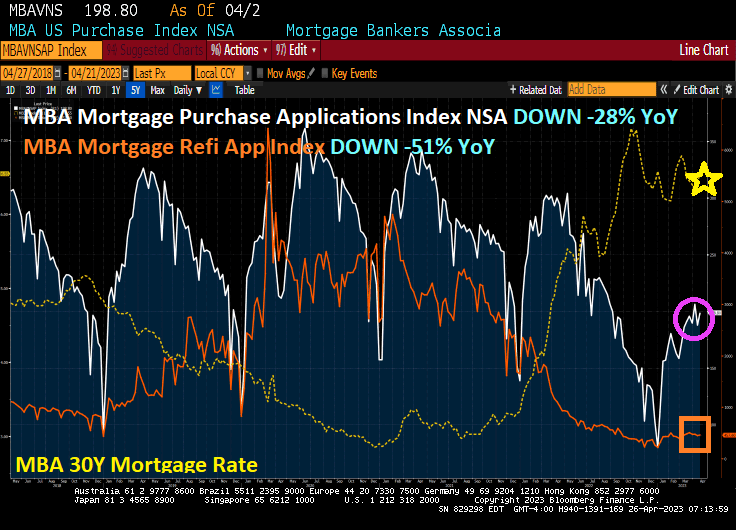
Mortgage applications increased 3.7 percent from one week earlier, according to data from the Mortgage Bankers Association’s (MBA) Weekly Mortgage Applications Survey for the week ending April 21, 2023.
The Market Composite Index, a measure of mortgage loan application volume, increased 3.7 percent on a seasonally adjusted basis from one week earlier. On an unadjusted basis, the Index increased 5 percent compared with the previous week. The Refinance Index increased 2 percent from the previous week and was 51 percent lower than the same week one year ago. The seasonally adjusted Purchase Index increased 5 percent from one week earlier. The unadjusted Purchase Index increased 6 percent compared with the previous week and was 28 percent lower than the same week one year ago.
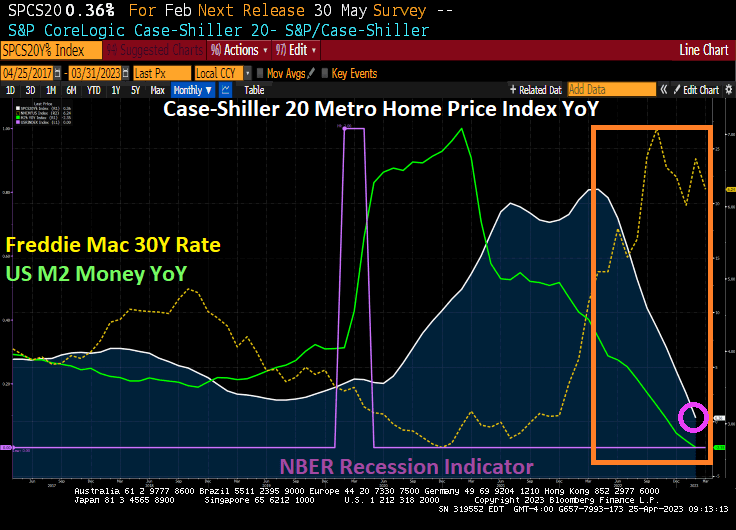
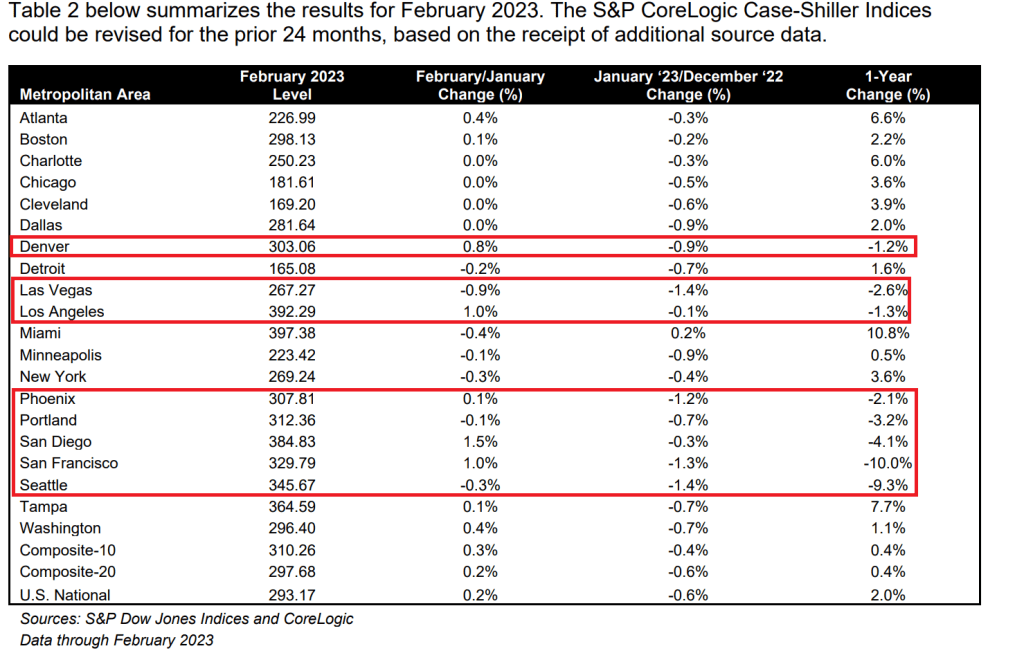
Drifting into darkness, we have the West getting battered with my old hometown of San Francisco leading the pack at -10% YoY with Seattle down -9.3% YoY.
You know things are bad out west when Cleveland, Detroit and Chicago are gaining ground in prices. And Miami was up 10.8% YoY.
US Producer Price Index (PPI) final demand YoY fell to 2.7% in March as The Fed withdraws its massive monetary stimulus.
Final demand MoM fell -0.5% in March. But the interest number is CORE PPI ex food and energy actually down but at 3.6%. So, CORE PPI final demand growth is higher than the aggregate.
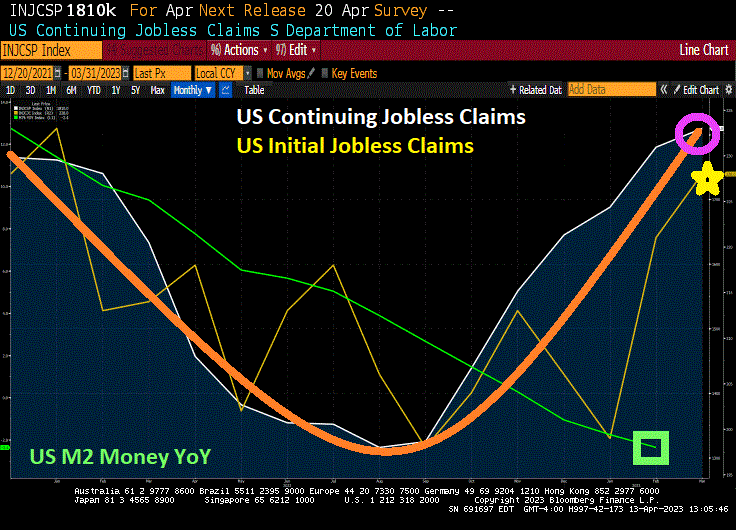
Do I detect a trend in US continuing jobless claims?
At least Biden is in Belfast Ireland making his usual gaffes, telling outrageous lies and looking totally lost. As usual. He can do less damage to the US by being in Ireland.
Between inflation under Biden and The Fed’s counterattack to get inflation to 2%, I call this the Biden Blitz.
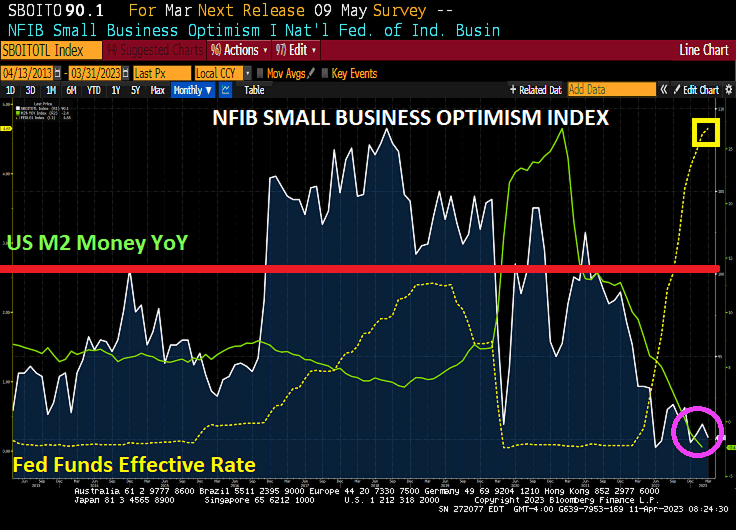
Unlike what the elites in Washington DC think, small business are the cornerstone of the US economy. Unfortunately, small business optimism is getting crushed and just fell in March to a level lower than that found during the Covid economic shutdowns of 2020. HOW is it possible for small businesses to be even less optimistic than it was in April 2002, the nadir of the Covid economic shutdown?
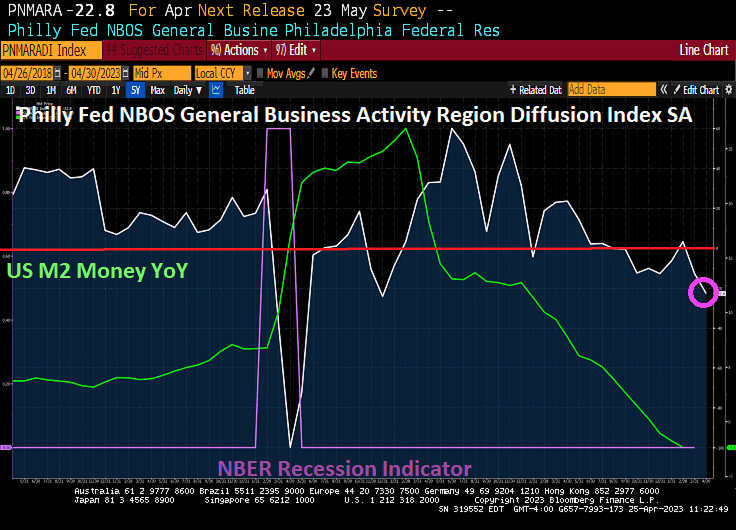
Small business optimism soared in November 2016 after the election of Donald Trump and remained high (above 100) until Covid struck in March 2020. Small business optimism rose above 100 again with the massive money printing by The Fed (green line) and Federal spending spree. But as M2 Money growth slowed, small business optimism hasn’t been above 100 since August 2021. It has been all downhill since then as The Fed started to raise The Fed Funds Target Rate quite rapidly.
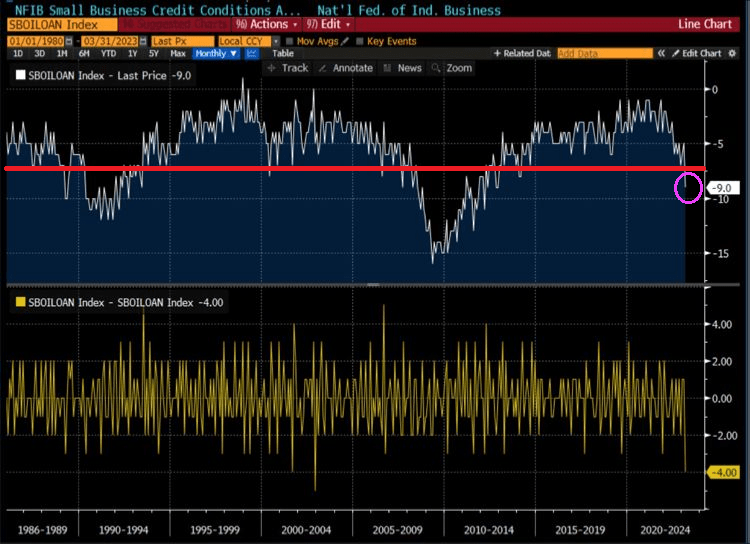
NFIB small business credit conditions are negative at -9.0 and sinking like The Titanic.
Biden is the face of big business (big banks, big pharma, big tech, big defense, big labor unions, big media, etc.). Biden just told Al Roker that he is indeed running for reelection, supported by …. big banks, big pharma, big tech, big defense, big labor unions, big media, etc.
Biden is no longer a President, but an old-time preacher screaming about MAGA Republicans as if they were demons. This is called Blitzkrieg Biden.
Inflation started with Biden’s misguided war on US energy, then Biden/Congress helped inflation with an epic spending splurge. The Federal Reserve counterattacked with Fed rate hikes.
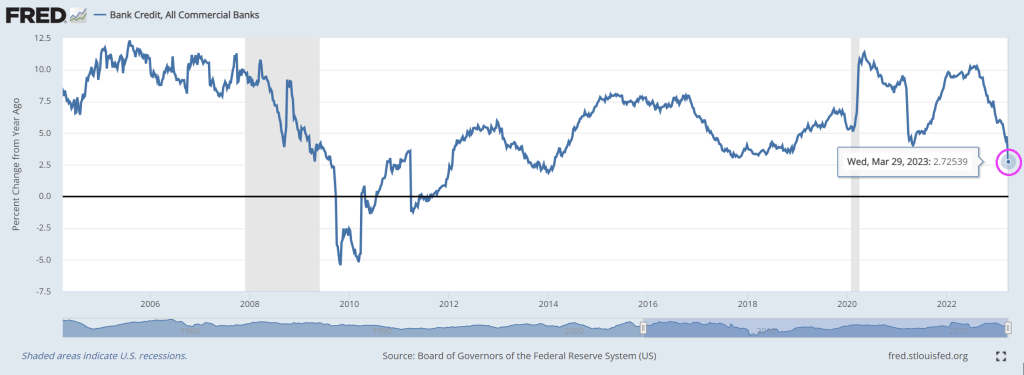
Over the past year, The Fed Funds Effective rate has risen and US bank credit has crashed to 2.73% year-over-year.
Do I detect a trend?
Since 2005, the crash in US bank credit is looking like 2008/2009 all over again.
Whether Biden is Cap’n Crunch or Jerome Powell or Janet Yellen, they are all crunching the US economy.
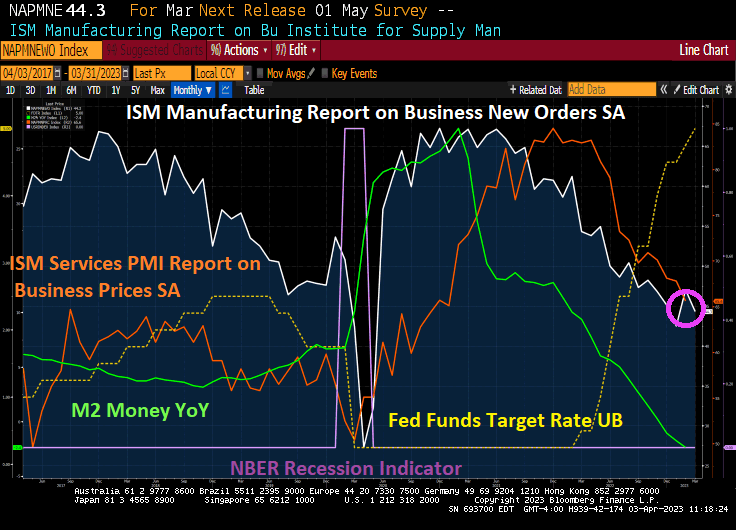
Not only did the ISM Manfacturimng Report on New Business Order fall to 44.3, but price PAID also fell as The Fed hikes rates (yellow line) and slowing M2 Money growth (green line).
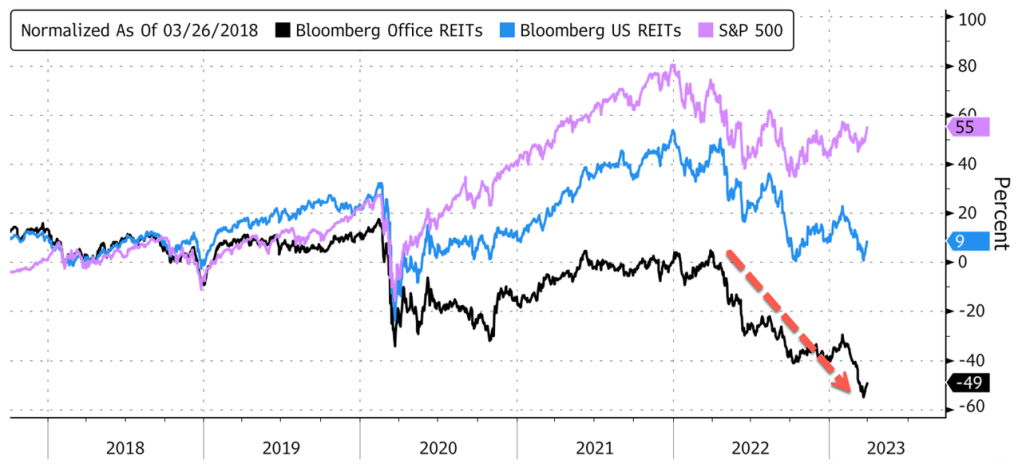
Office REITs are really hurting as Count Powellula sucks the blood (liquidity) from the market.
Count Powellula. “I vant to suck the blood from your economy.”
While Resident Biden is on good terms with the Mexican drug and sex trafficing cartels that control our southern border, the oil cartel just stuck their fingers in Biden’s eyes by cutting oil productions. Riyadh, Saudi Arabia was irritated last week that the Biden administration publicly ruled out new crude purchases to replenish SPR
Cartel removes more than 1 million barrels a day from market
Analysts say the decline in oil inventories will accelerate
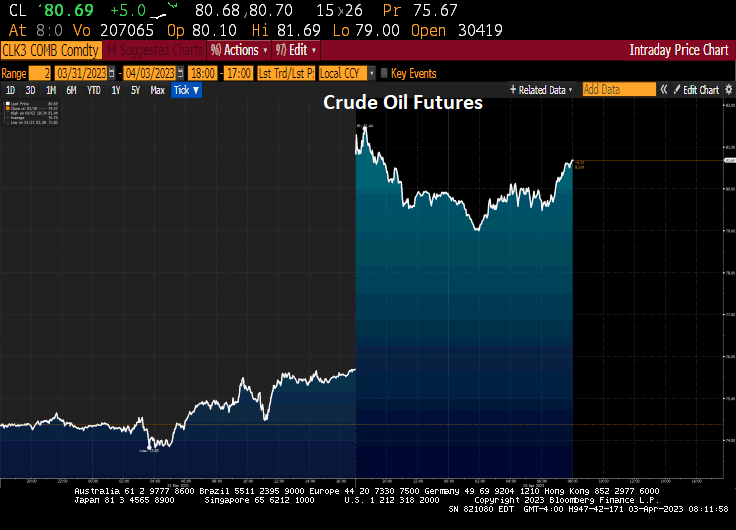
Today, crude oil futures are up 6.62% to over $80 per barrel.
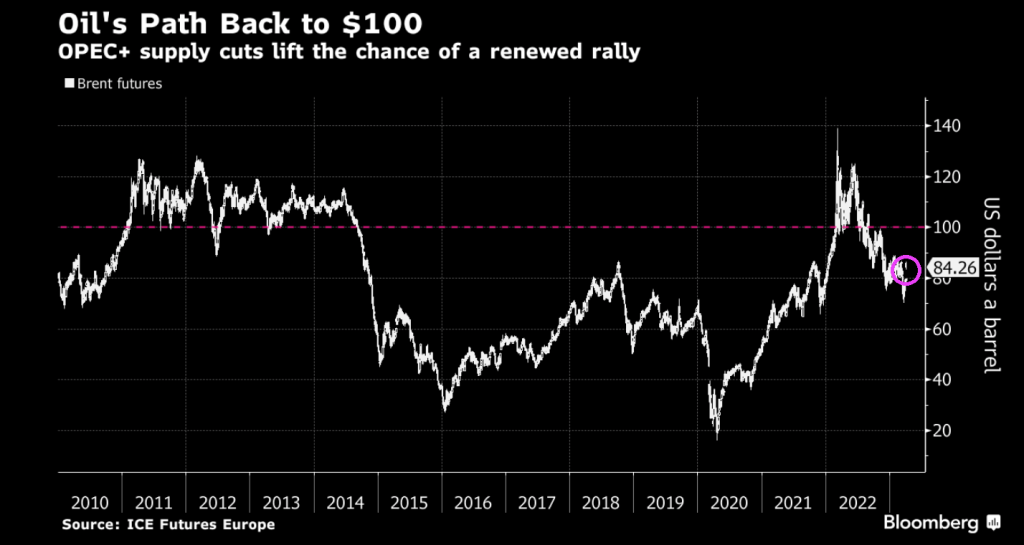
Sunday’s surprise OPEC+ production cuts have redefined the outlook for crude prices, bringing $100 a barrel back into the frame.
Prior to the announcement, the cartel’s own numbers suggested the group would need to pump more oil, not less, in the second half. With the International Energy Agency expecting a demand surge later this year, there’s now renewed risk of a fresh inflationary impetus for the global economy.
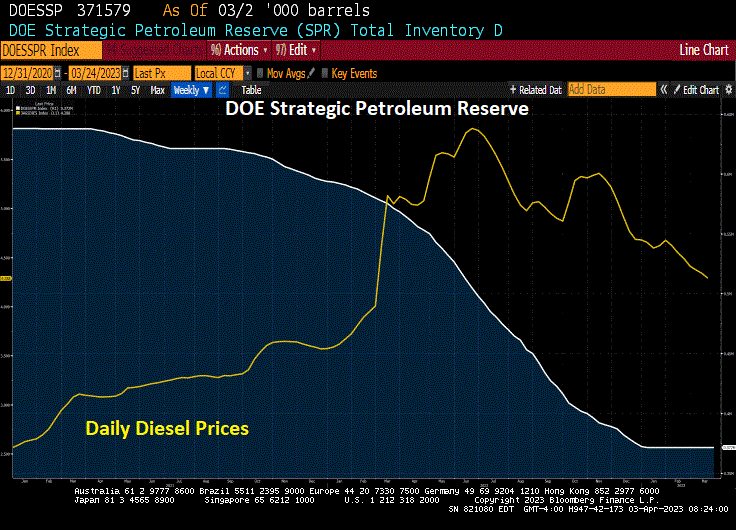
Under Biden’s Reign of Error, diesel prices are up 64% while the Strategic Petroleum Reserves (SPR) have been drained by -42%.
St. Benedict, help protect us from Biden and The Federal Reserve.
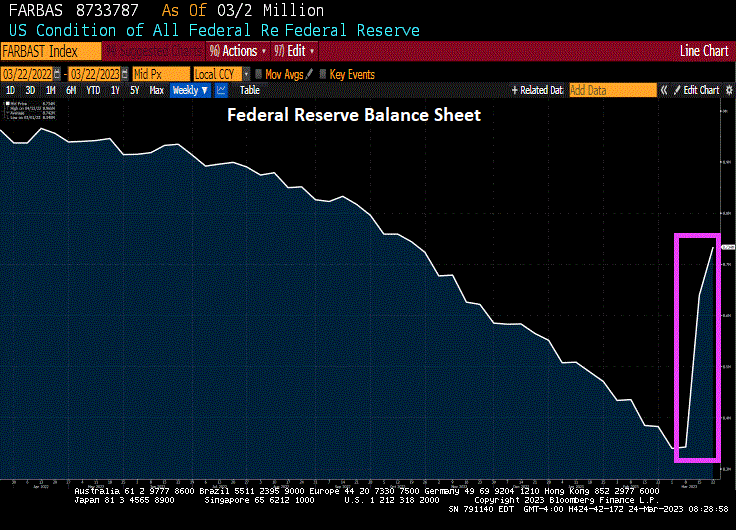
The Federal Reserve never died. In fact, The Fed is growing its balance sheet again. Why? A slowing economy and weakness in the banking sector (thanks to inflation and the Fed trying to get inflation back to 2%.
And the banking fiasco keeps rolling, particularly in Europe where Credit Suisse has been in the news for failing and now my former employer, Deutsche Bank (aka, The Teutonic Titanic).
Deutsche Bank AG became the latest focus of the banking turmoil in Europe as ongoing concern about the industry sent its shares slumping the most in three years and the cost of insuring against default rising.
The bank, which has staged a recovery in recent years after a series of crises, said Friday it will redeem a tier 2 subordinated bond early. Such moves are usually intended to give investors confidence in the strength of the balance sheet, though the share price reaction suggests the message isn’t getting through.
“It is a clear case of the market selling first and asking questions later,” said Paul de la Baume, senior market strategist at FlowBank SA. “Traders do not have the risk appetite to hold positions through the weekend, given the banking risk and what happened last week with Credit Suisse and regulators.”
Deutsche Bank slumped as much as 15%, the biggest decline since the early days of the pandemic in March 2020. It was the worst performer in an index of European bank stocks, which fell as much as 5.7%. Crosstown rival Commerzbank AG, Spain’s Banco de Sabadell SA and France’s Societe Generale SA also saw steep drops.
The widespread declines undermine hopes among authorities that the rescue of Credit Suisse Group AG last weekend would stabilize the broader sector. Central banks from the Federal Reserve to the Bank of England this week raised interest rates once again, keeping their focus on inflation amid hopes that the worst of the financial turmoil was past.
All week, regulators and company executives have sought to reassure traders about the health of the banking industry. Deutsche Bank management board member Fabrizio Campelli said Thursday that the government-brokered takeover of Credit Suisse by UBS is “no indication” of the state of European banks.
Standard Chartered Plc Chief Executive Bill Winters said Friday that while there are still some issues to be addressed, “it seems that the acute phase of the crisis is done.”
The latest moves in Europe follow losses in US banks, which tumbled Thursday even after Treasury Secretary Janet Yellen told lawmakers that regulators would be prepared for further steps to protect deposits if needed.
And apparently bank bailouts never died. They just got relabeled.
And on growing banking fears, the 10-year Treasury yield is down -11.7 basis points.
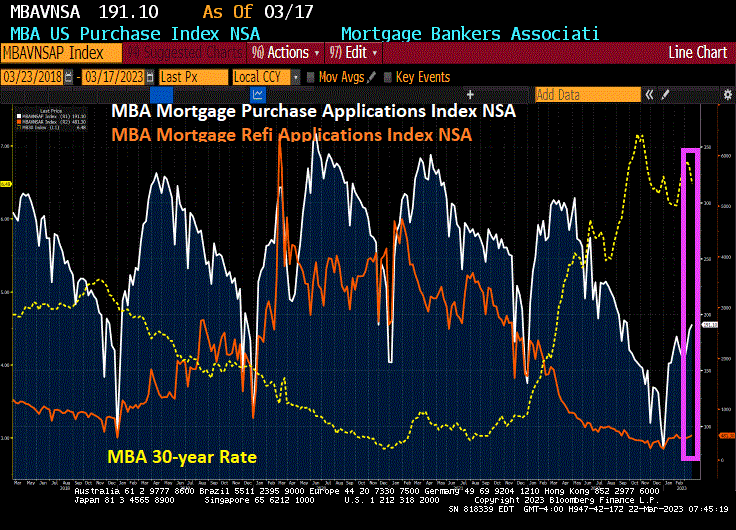
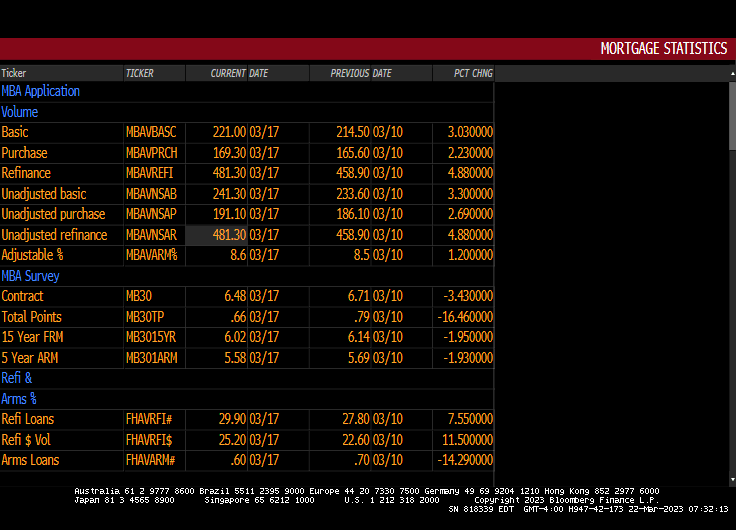
The deposit runs and Federal bailout at Silicon Valley Bank and Signature Bank has a positive silver lining: mortgage rates dropped -3.43% from the previous week. As such, we got an increase in mortgage demand.
Mortgage applications increased 3.0 percent from one week earlier, according to data from the Mortgage Bankers Association’s (MBA) Weekly Mortgage Applications Survey for the week ending March 17, 2023.
The Market Composite Index, a measure of mortgage loan application volume, increased 3.0 percent on a seasonally adjusted basis from one week earlier. On an unadjusted basis, the Index increased 3 percent compared with the previous week. The Refinance Index increased 5 percent from the previous week and was 68 percent lower than the same week one year ago. The seasonally adjusted Purchase Index increased 2 percent from one week earlier. The unadjusted Purchase Index increased 3 percent compared with the previous week and was36 percent lower than the same week one year ago.
The rest of the story.
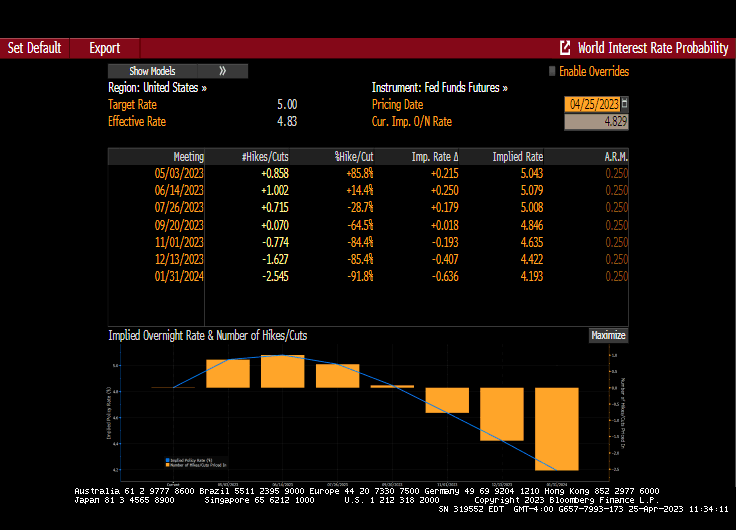
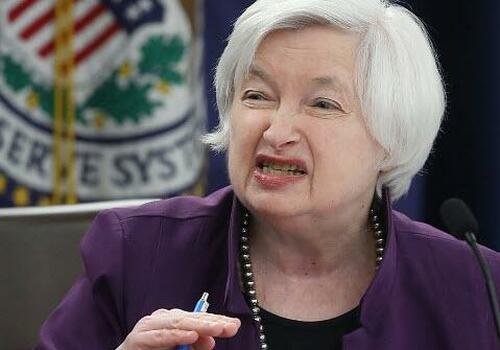
How I will feel if The Fed raises rates today more than 25 basis points. Or if Treasury Secretary Janet Yellen gets on TV lecturing us again.












 Confounded Interest - Anthony B. Sanders
You must be logged in to post a comment.