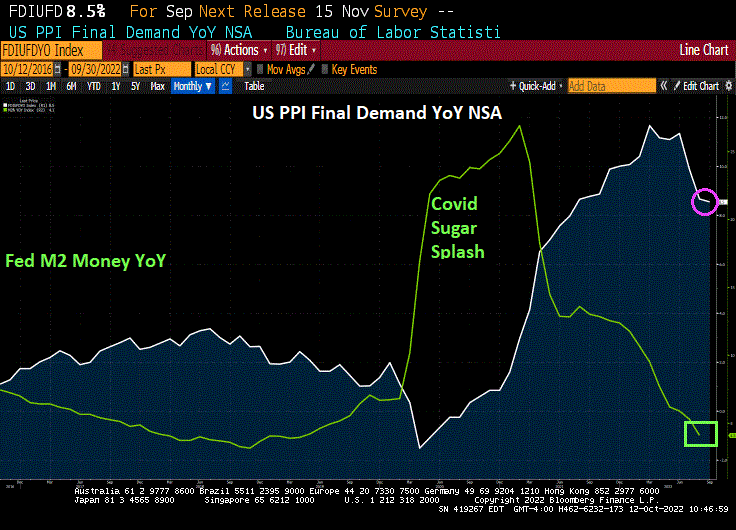
The US Producer Price Index (Final Demand) printed at a higher than expected 8.5% YoY, throwing cold water on the notion that inflation is “transitory.”
A key US inflation measure due Thursday is set to return to a four-decade high, underscoring broad and elevated price pressures that are pushing the Federal Reserve toward yet another large interest-rate hike next month.
The so-called core consumer price index that excludes food and energy is projected to rise 0.4% in September from the prior month and 6.5% from a year earlier, matching the rate seen in March that was the highest since 1982.
The overall CPI, however, is expected to decelerate to a still-rapid 8.1% annual pace, restrained by a decline in gasoline prices, based on the median estimate.
I feel sorry (sort of) for people like White House Press Secretary Karine Jean-Pierre who has to read ridiculous scripts in defense of awful Federal policies. For example, yesterday she touted Biden’s “accomplishments” of rising real disposable US income and declining gasoline prices. What? Doesn’t she read Confounded Interest?? /sarc
First, REAL disposable personal income growth for the US is NEGATIVE and has been since Biden and Congress embarked on their green energy crusade driving US inflation to its highest level in 40 years. Not exactly a great sales point for the midyear elections.
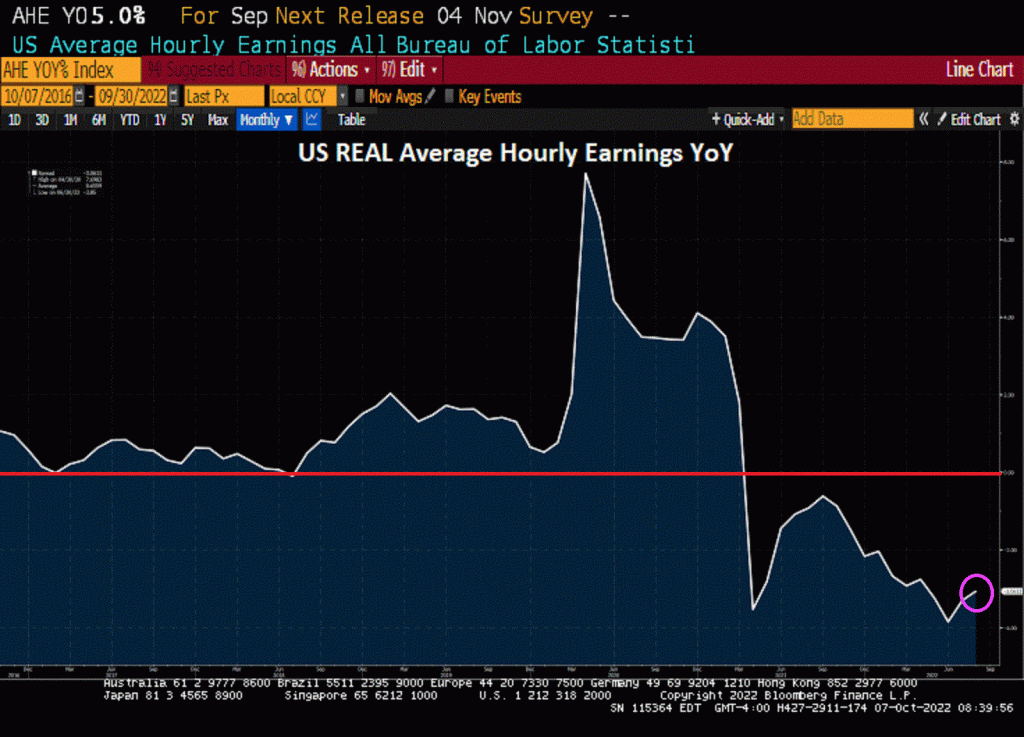
If we look at REAL average hourly earnings growth, a similar measure, we see that it is negative also. So, what on earth is Jean-Pierre talking about?
She also mentioned that gasoline prices are falling. Except that they are rising again. Apparently her talking points were from September.
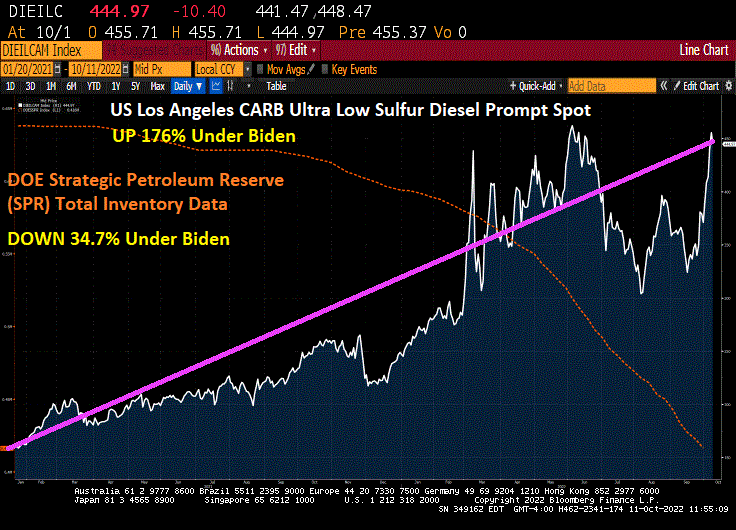
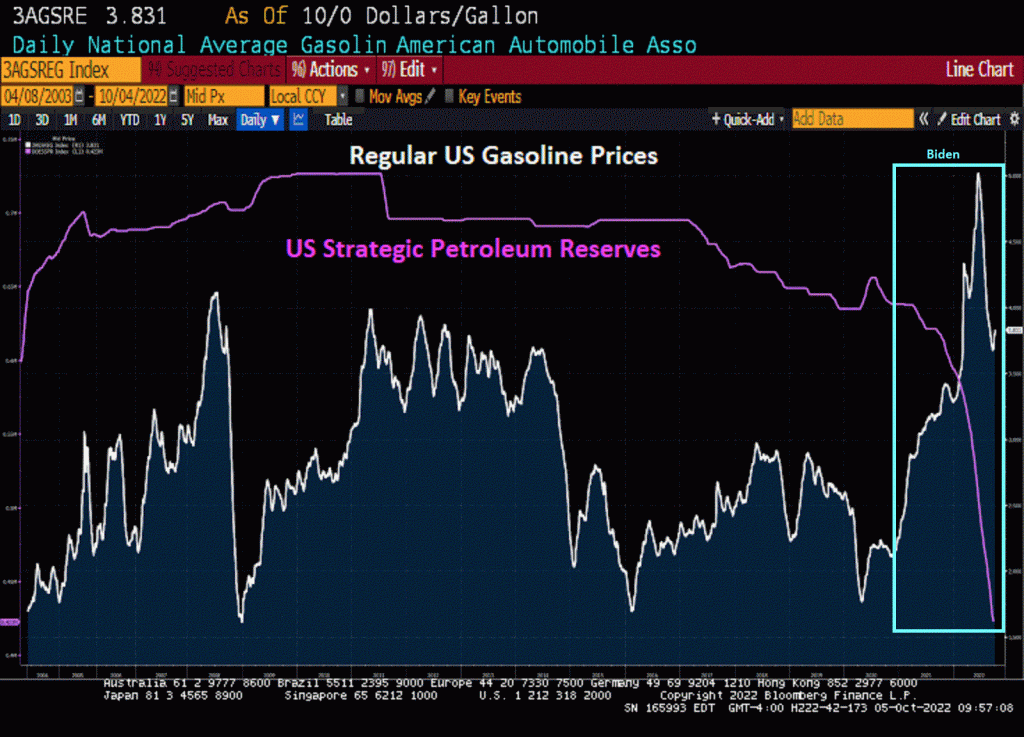
Then we have diesel fuel prices, the backbone of the shipping industry, rising like crazy as Biden drains the strategic petroleum reserve.
Meanwhile, The Federal Reserve is tightening their uber-loose monetary policies (thanks Bernanke, Yellen and Powell). Will The Fed pivot to help with the midterm elections OR will The Fed keep trying to extinguish inflation by raising rates and withdrawing Fed monetary stimulus?
Yesterday, I told my family “The good news is that Rotolo’s Pizza tastes even better reheated in the morning. The bad news? I ate the only two piece left.”
Which brings me to the September jobs report. The good news is that 263k jobs were added to the US economy. That means 10,521k jobs have been added in the 21 months under Biden! (Bear in mind that 12,100k jobs were added in the 7 months under Trump following the Covid economic shutdown, yet no media outlet trumpeted that accomplishment).
The bad news? While nominal average hourly earnings grew by 5% YoY, when I subtract Bidenflation from that number I get -3.06% growth. Or should I say that REAL wages are shrinking under Biden.
Now for the “Biden Miracle” of jobs being added. Here is a chart of NFP jobs added (white line) against M2 Money and headline inflation. Both The Fed and the Federal government pumped trillions into the economy leading to the highest inflation rate in 40 years. Once governments stopped with their Covid shutdown nonsense, jobs would return regardless of who was President. BUT Federal spending and Fed money printing went off the rails in early 2020.
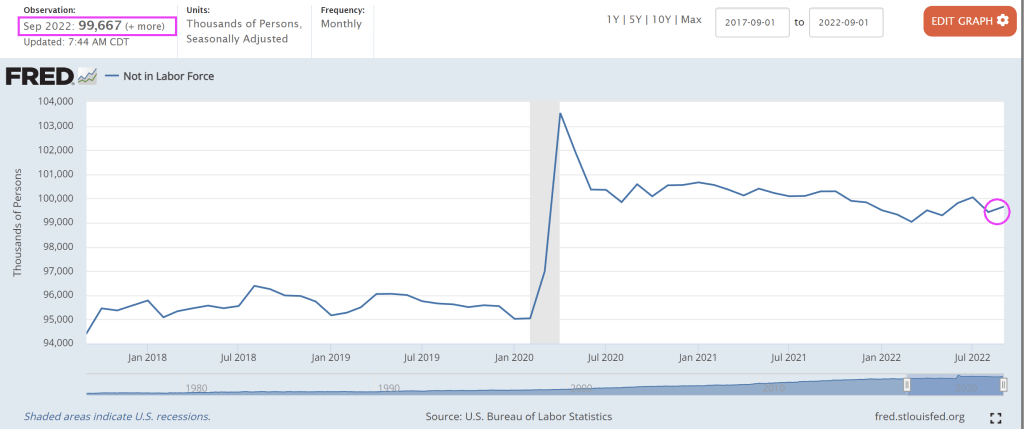
As Paul Harvey used to say, “Here is the rest of the story.” Labor force participation fell in September and the U-3 unemployment rate fell slightly to 3.5%.
But labor force dropouts increased leading U-3 unemployment to decline. The number of people NOT in the labor force grew to nearly 100 million. Nothing has been the same since Covid.
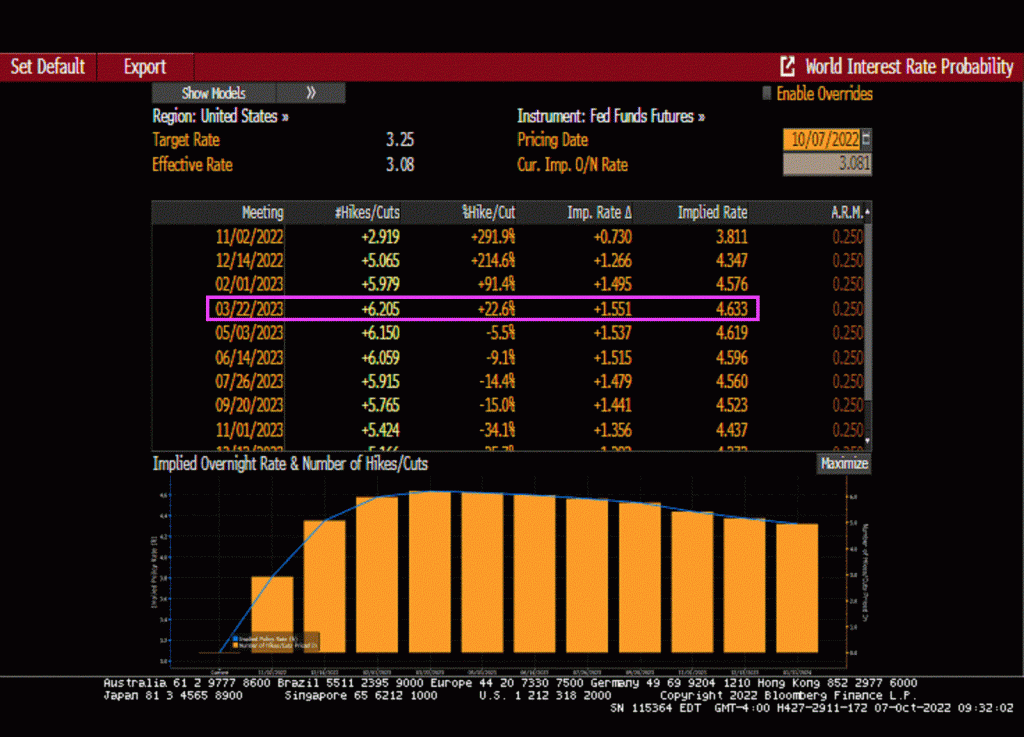
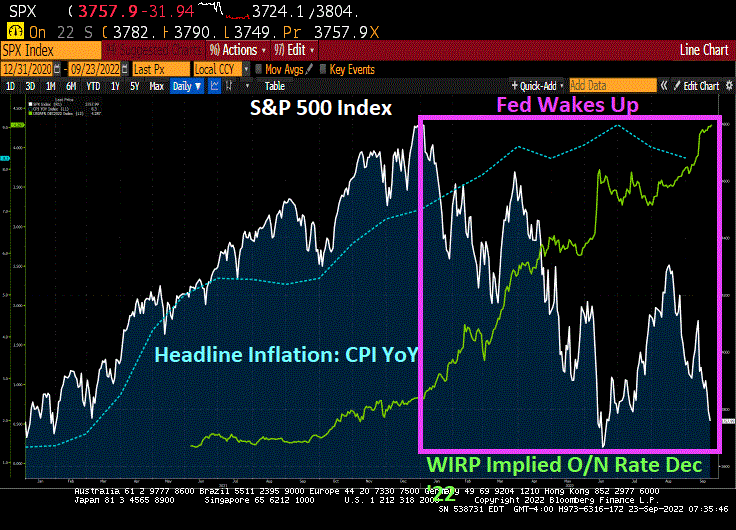
So what will The Fed do? According to Fed Funds Futures data (WIRP), The Fed will keep raising rates until March ’23 then slowly start lowering interest rates again.
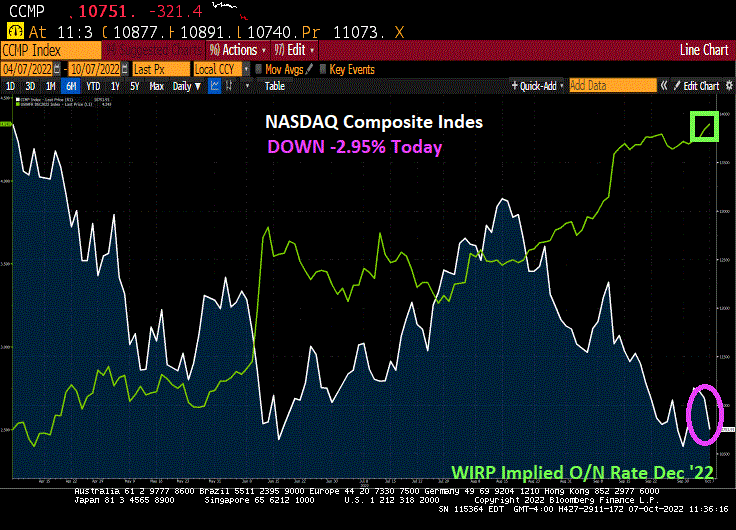
And with that “positive” jobs report, The Dow is down almost -500 points and the NASDAQ is down over -3%.
And with Fed tightening, we are seeing a collapse in M2 money supply.
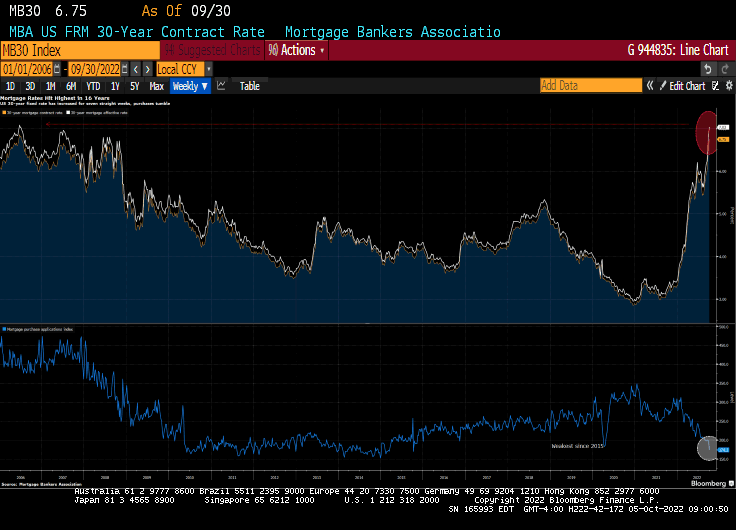
In addition to creating the highest inflation rate in 40 years, we are now seeing the highest mortgage rate in 16 years. I feel like we are all on a chain gang.
(Bloomberg) — US mortgage rates jumped to a 16-year high of 6.75%, marking the seventh-straight weekly increase and spurring the worst slump in home loan applications since the depths of the pandemic.
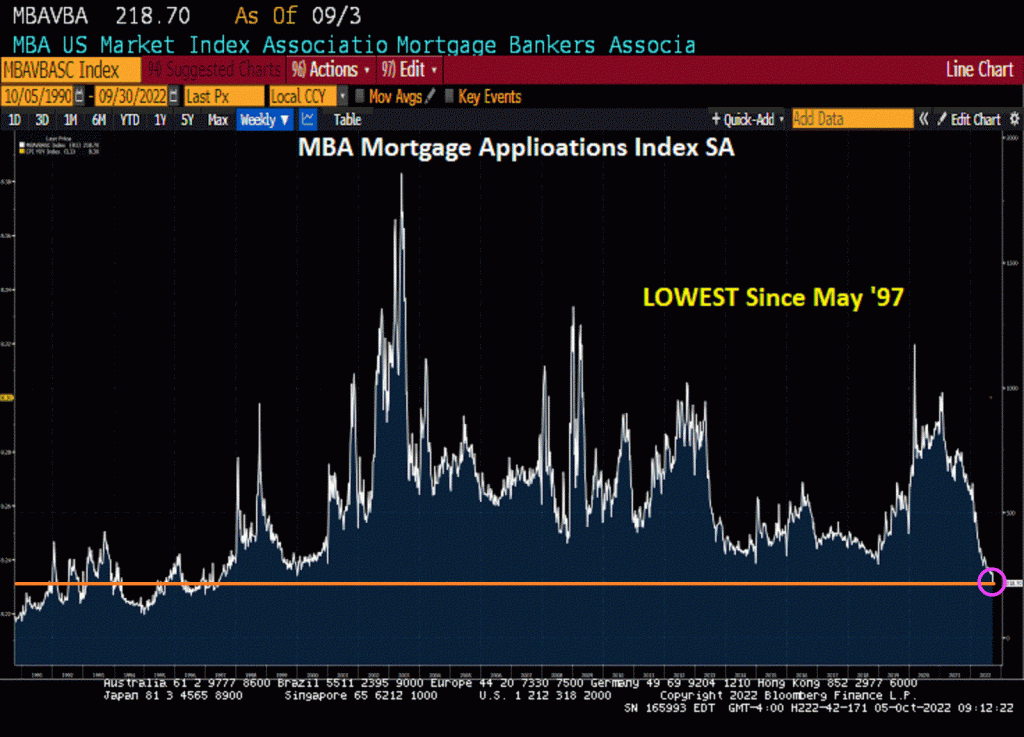
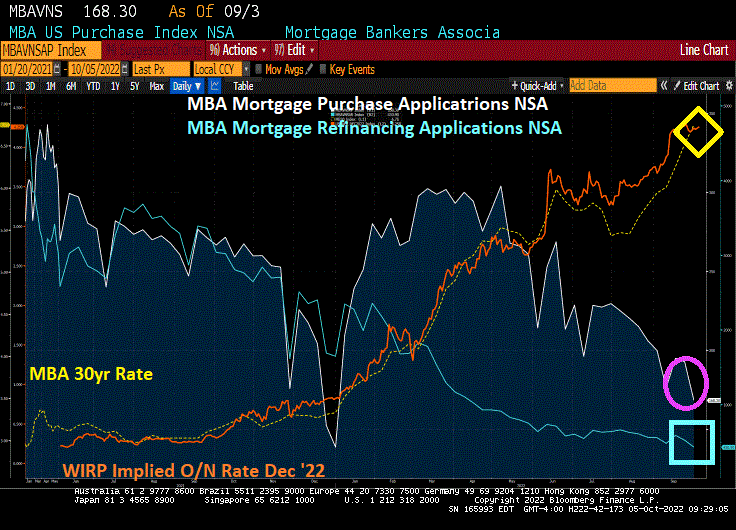
In fact, mortgage application just fell to the lowest level since May 1997.
The contract rate on a 30-year fixed mortgage rose nearly a quarter percentage point in the last week of September, according to Mortgage Bankers Association data released Wednesday. The steady string of increases in mortgage rates resulted in a more than 14% slump last week in applications to purchase or refinance a home.
Over the past seven weeks, mortgage rates have soared 1.30 percentage points, the largest surge over a comparable period since 2003 and illustrating the abrupt upswing in borrowing costs as the Federal Reserve intensifies its inflation fight.
The effective 30-year fixed rate, which includes the effects of compounding, topped 7% in the period ended Sept. 30, also the highest since 2006.
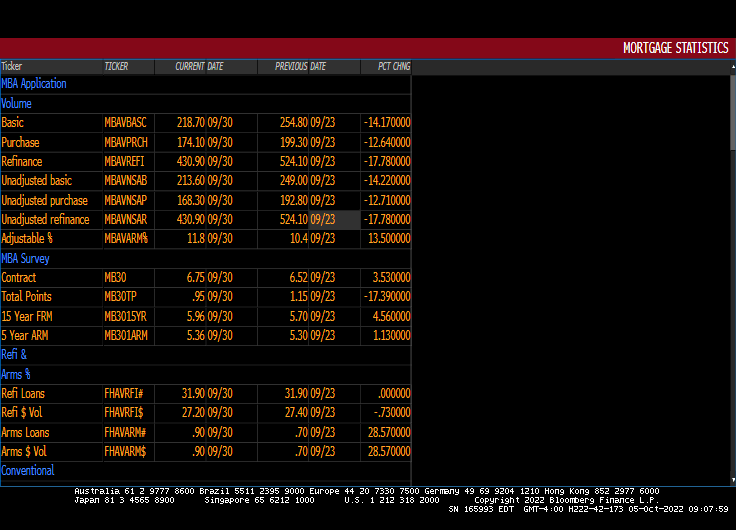
The Refinance Index decreased 18 percent from the previous week and was 86 percent lower than the same week one year ago. The seasonally adjusted Purchase Index decreased 13 percent from one week earlier. The unadjusted Purchase Index decreased 13 percent compared with the previous week and was 37 percent lower than the same week one year ago.
Here is today’s table of MBA mortgage applications and its ugly.
Unfortunately for the US chain gang, gasoline prices are rising again as the US drains its petroleum reserve. Because, that’s the way … uh-huh … they like.
As I frequently told my investment and fixed-income securities students at Chicago, Ohio State and George Mason University, any 10 basis point change in the US Treasury 10-year yield is significant.
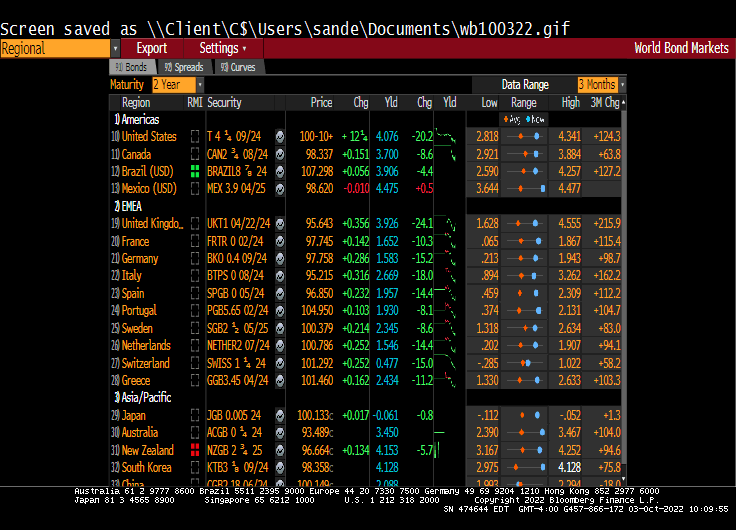
But how about today’s 20 basis point decline in the US Treasury 10-year yield?
The UK’s 10-year yield is down even more at -24.1 basis points. Germany is down -18 bps and France is down -10.3 bps.
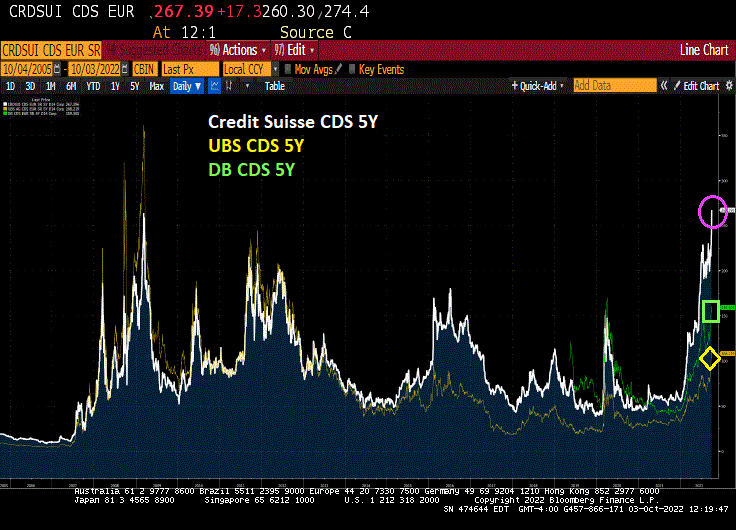
Speaking of credit default swaps, Credit Suisse is back to financial crisis levels while UBS and Deutsche Bank are not … yet.
With all the turbulence in markets thanks to the war in Ukraine and Biden’s green energy mandates and spending (not to mention Statists like Klaus Schwab screaming about a Great Reset), I was reminiscing about more simple times.
$32 TRILLION of global stock value has been wiped out since December 2021.
Today’s core PCE deflator reading of 4.9% YoY shows that the inflation surge is not over. With a core PCE deflator of 4.9%, the Taylor Rule suggests that The Fed Funds Target Rate should be at 9.65%, far below its current level of 3.25%. So, IFF The Fed is following any sort of rule, rates should continue to soar.
And if we use headline inflation of 8.30% YoY, the Taylor Rule suggests hiking the target rate to 14.75%.
Mortgage applications have fallen to the lowest level in 25 years, in part due to The Federal Reserve’s tightening of monetary policy in an attempt to combat inflation.
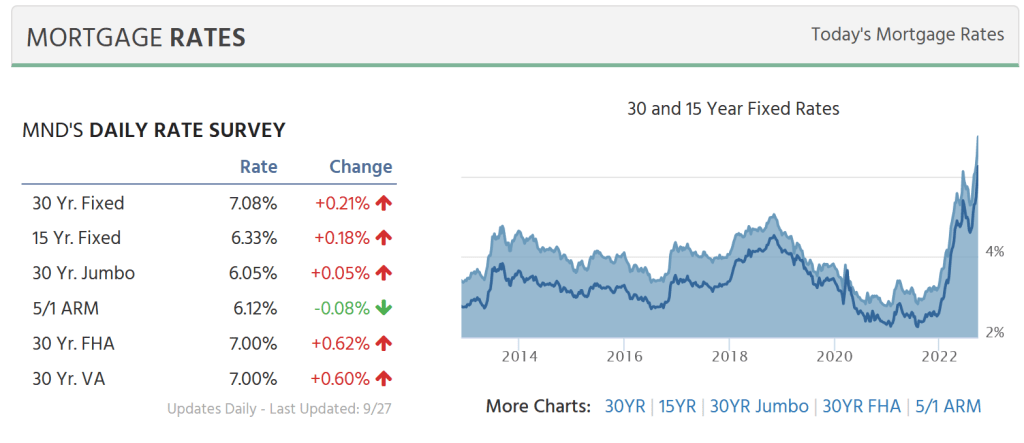
Mortgage Net Daily is showing that 30-year fixed mortgage rates are 7.08%.
Mortgage applications decreased 3.7 percent from one week earlier, according to data from the Mortgage Bankers Association’s (MBA) Weekly Mortgage Applications Survey for the week ending September 23, 2022.
The Refinance Index decreased 11 percent from the previous week and was 84 percent lower than the same week one year ago. The seasonally adjusted Purchase Index decreased 0.4 percent from one week earlier. The unadjusted Purchase Index decreased 1 percent compared with the previous week and was29 percent lower than the same week one year ago.
According to the BLS, US core inflation is 6.3% and headline inflation is 8.3% YoY. But everything I consume seems to be going up at a much faster rate?
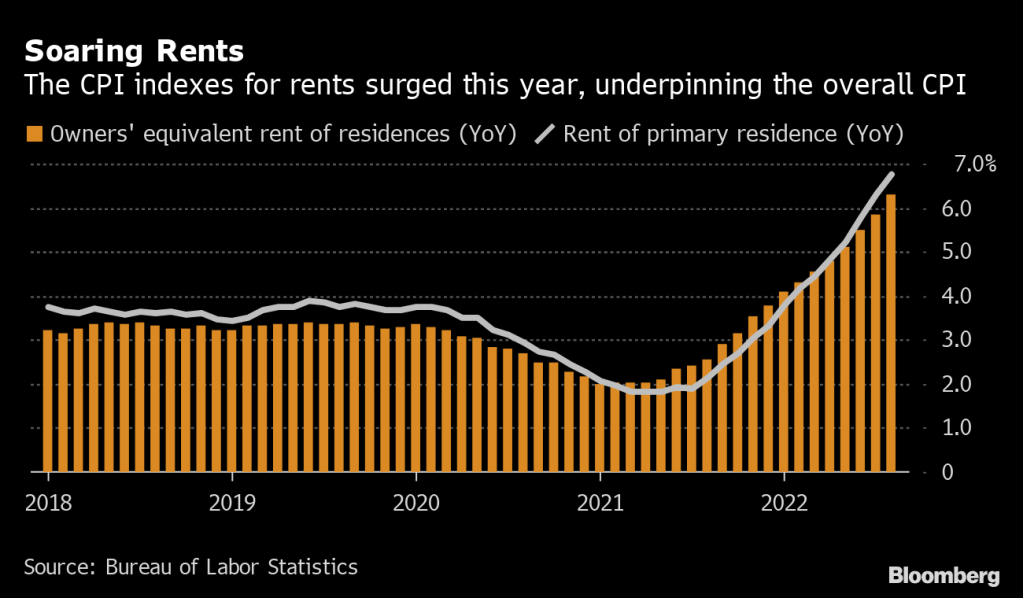
Under Biden, regular gasoline price is UP 55%, CRB Foodstuffs UP 47%, rents UP 12.5% YoY and electricity is UP 957%.
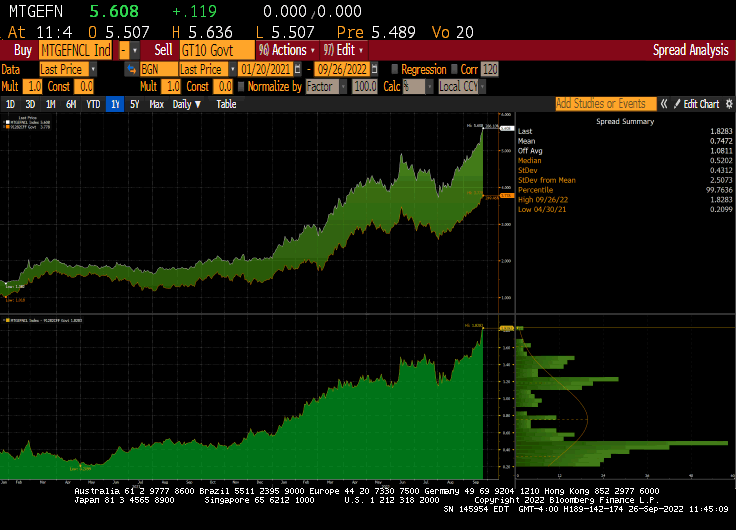
And as The Fed continues to signal monetary tightening, the spread between 30Y FNCL Par Coupon and the 10-year Treasury yield keeps growing.
In case you watched the Buffalo Bills play the Miami Dolphins yesterday, you may remember this punt by the Dolphins. It almost perfectly represents what The Federal Reserve and Biden Administration are doing to the American middle class and low-wage workers.
Pension funds hold large positions in US Treasuries and Agency Mortgage-backed Securities (MBS). As does America’s central bank, The Federal Reserve. All are suffering losses as The Fed fights inflation.
(Bloomberg) — Week by week, the bond-market crash just keeps getting worse and there’s no clear end in sight.
With central banks worldwide aggressively ratcheting up interest rates in the face of stubbornly high inflation, prices (created by The Fed, Biden’s Green Energy Follicies and reckless Federal spending) are tumbling as traders race to catch up. And with that has come a grim parade of superlatives on how bad it has become.
On Friday, the UK’s five-year bonds tumbled by the most since at least 1992 after the government rolled out a massive tax-cut plan that may only strengthen the Bank of England’s hand. Two-year US Treasuries are in the middle of the the longest losing streak since at least 1976, dropping for 12 straight days. Worldwide, Bank of America Corp. strategists said government bond markets are on course for the worst year since 1949, when Europe was rebuilding from the ruins of World War Two.
The escalating losses reflect how far the Federal Reserve and other central banks have shifted away from the monetary policies of the pandemic, when they held rates near zero to keep their economies going. The reversal has exerted a major drag on everything from stock prices to oil as investors brace for an economic slowdown.
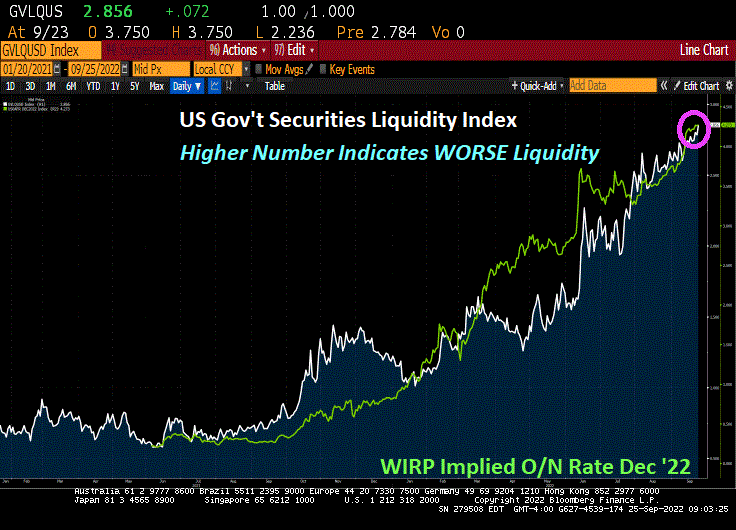
And as The Fed tries to combat stubborn inflation (caused by The Fed, Biden’s Green Energy folly and reckless Federal spending), you can see the US government security liquidity is worsening.
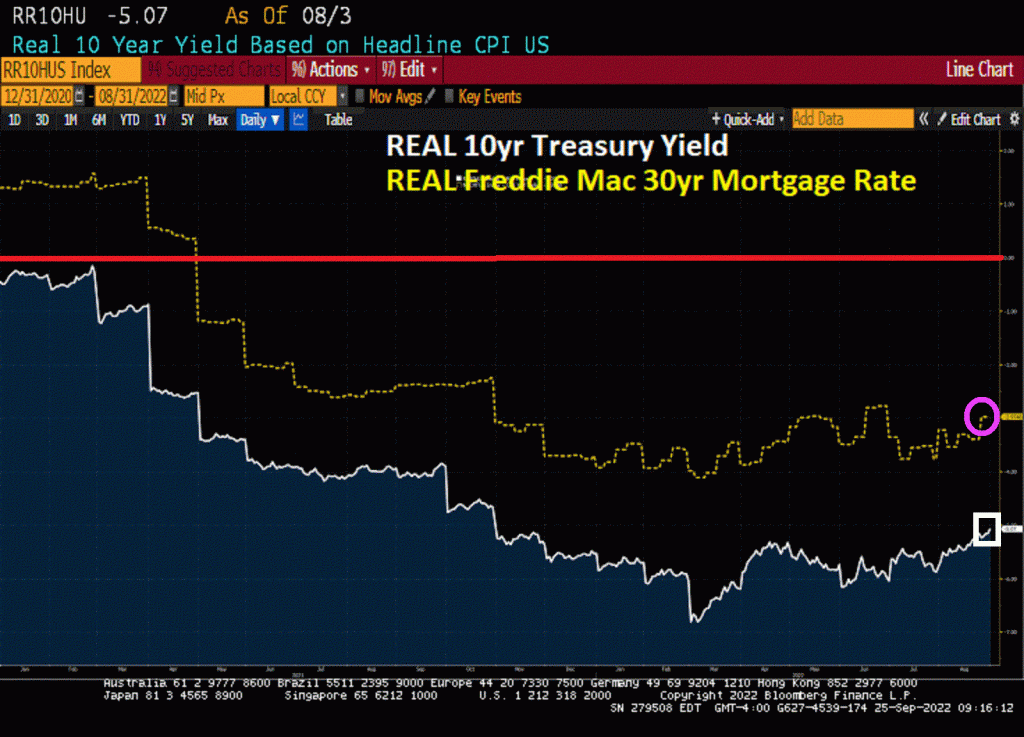
At least inflation has produced one “positive.” REAL mortgage rates are NEGATIVE since Freddie Mac’s 30-year mortgage rate less headline inflation is currently -2.975%.
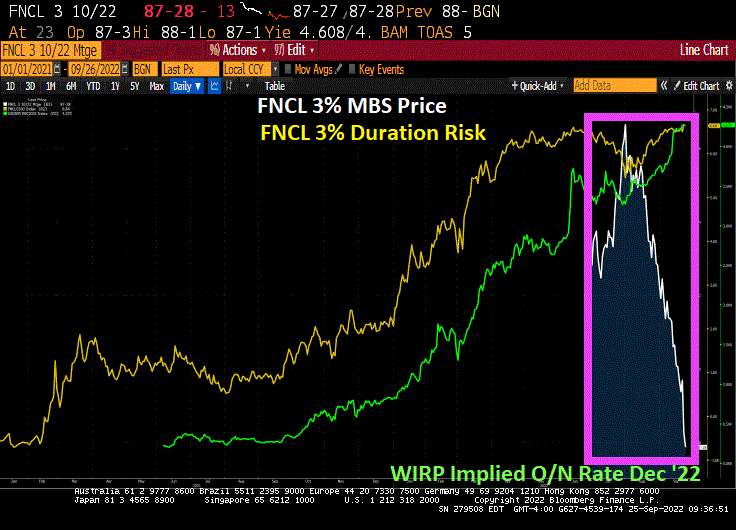
Then we have Agency MBS (example, FNCL 3% MBS) plunging like a paralyzed falcon as duration risk increases with Fed rate tightening.
Fed Funds Futures data points to tightening until May ’23, then a reversal of rate hikes.
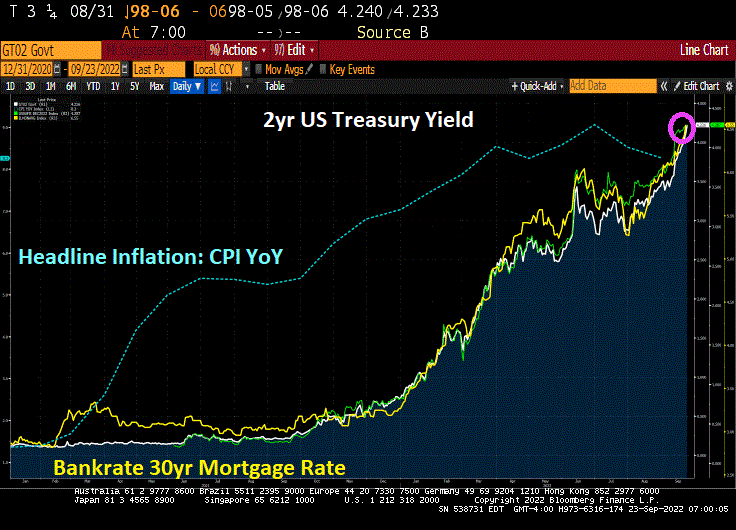
Rampant inflation is really hurting American households (even Fed Chair Powell admitted as much yesterday), but because of inflation, The Fed’s counter-punch has resulted in 1) declining equity prices, declining bond prices and increase mortgage rates. In fact, over the past 12 months, the 2-year US Treasury yield is up over 15 times (0.262% to 4.226%), Bankrate’s 30-year mortgage survey rate up 116.2%.

















 Confounded Interest - Anthony B. Sanders
You must be logged in to post a comment.