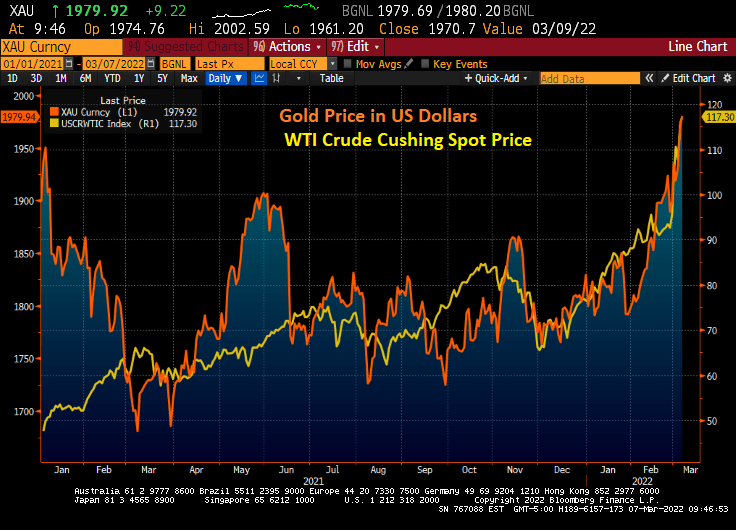
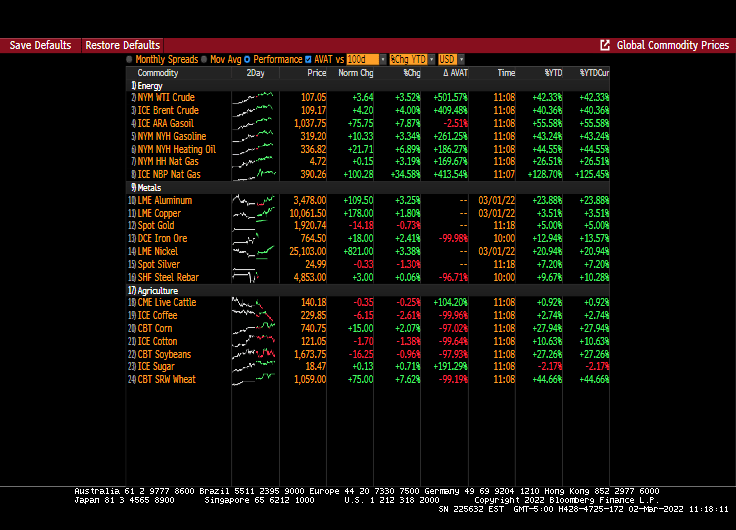
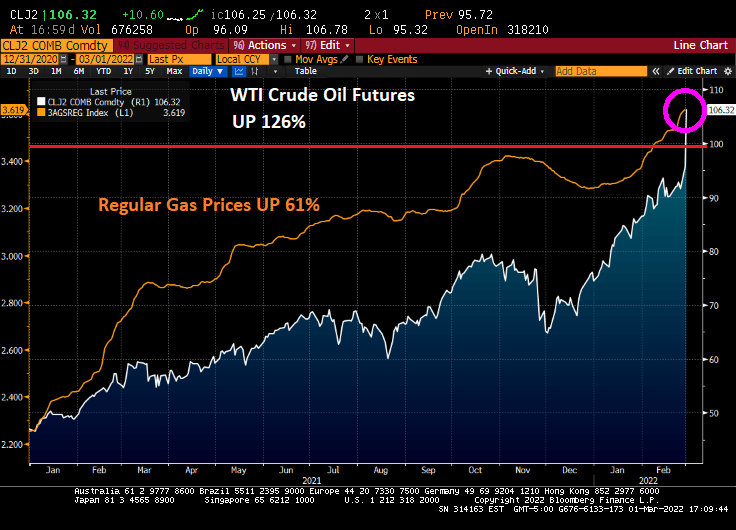
WTI Crude Oil spot price was up 91% from the beginning of 2021 to the Russian invasion of Ukraine. Now it is up 142% thanks to the invasion of Ukraine.
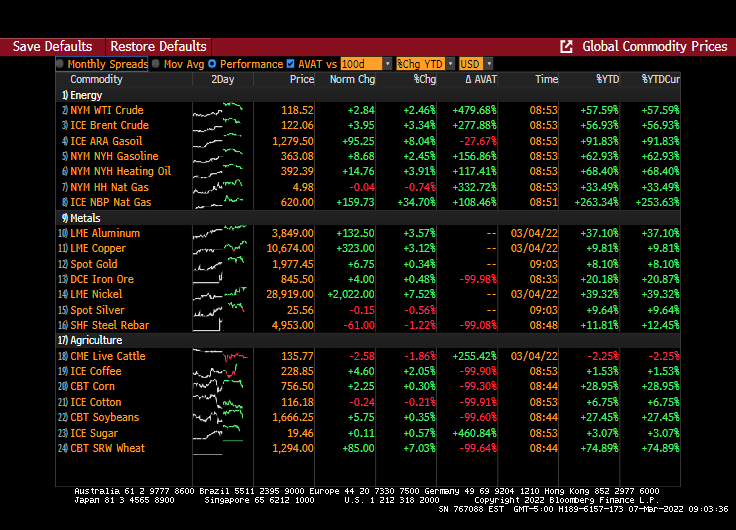
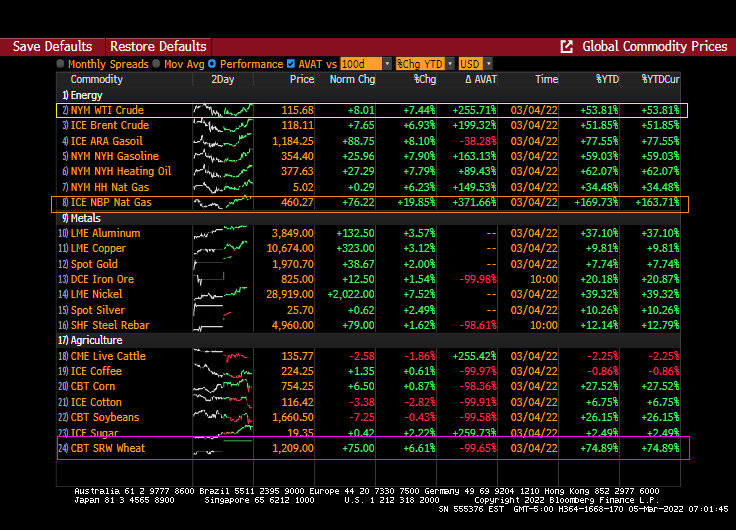
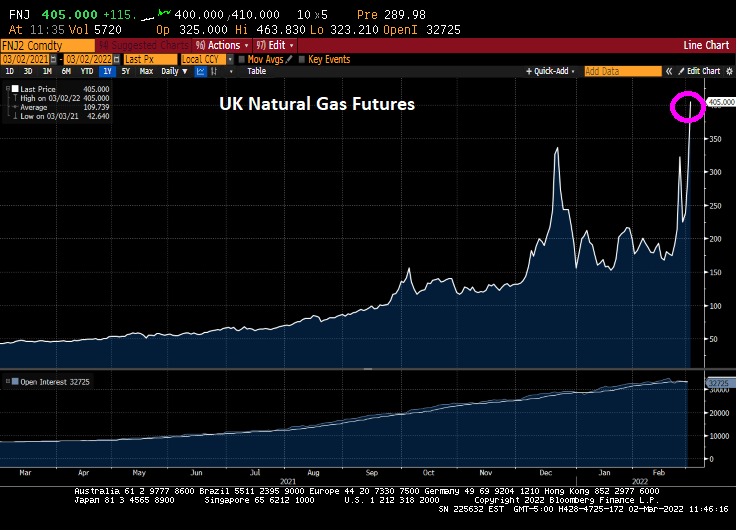
Energy prices are still soaring with UK Natural Gas prices up another 34.70% today with Brent Crude futures up 3.34%. Wheat futures are up 7.03%.
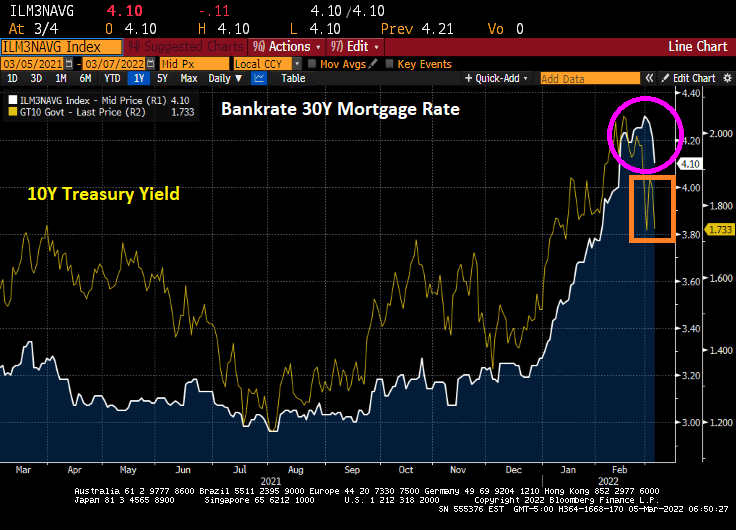
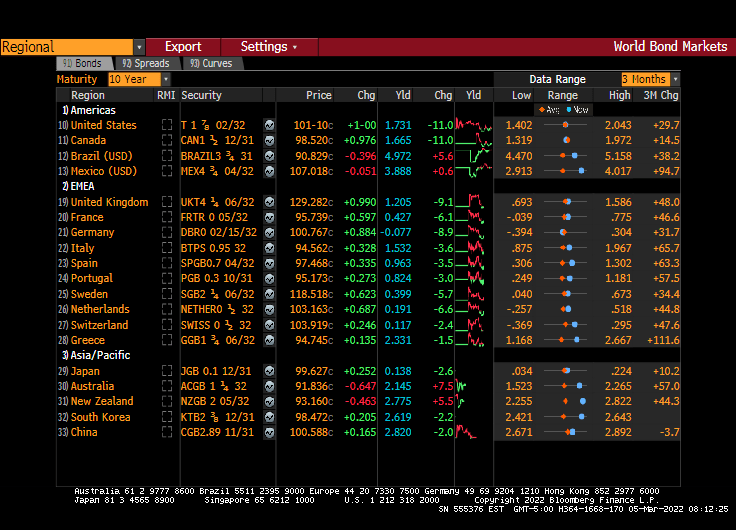
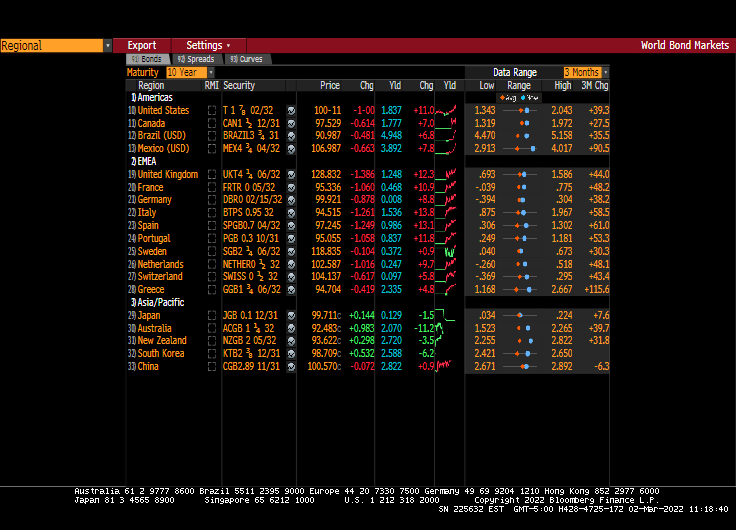
The US Treasury 10Y yield rose 6.8 bps this morning (UK takes the lead with a 10.3 bps increase).
The US Treasury 10Y-2Y yield curve slope continues to swoon to where it is now flatter than when President Biden entered office.
Gold is now at it highest level since before Biden was sworn-in as President as WTI Crude Oil soars.
Gold hit $2,000 before retreating back down.
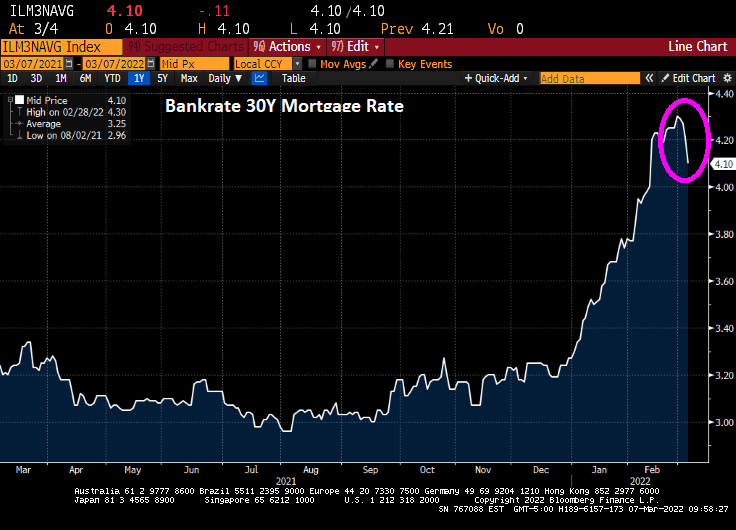
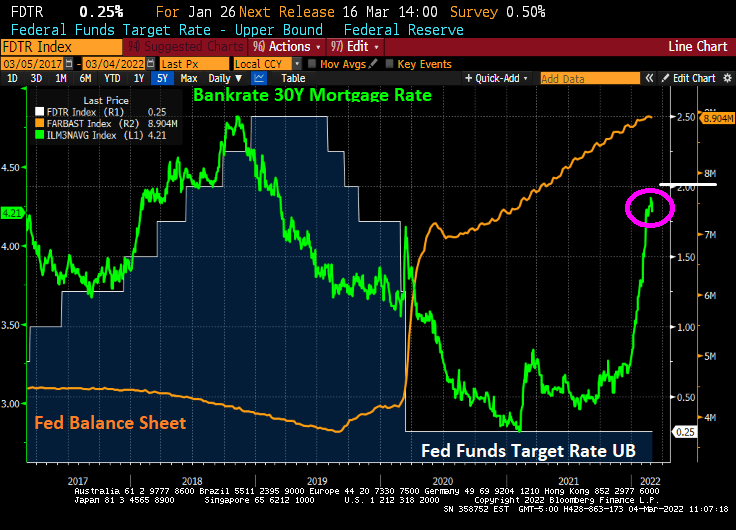
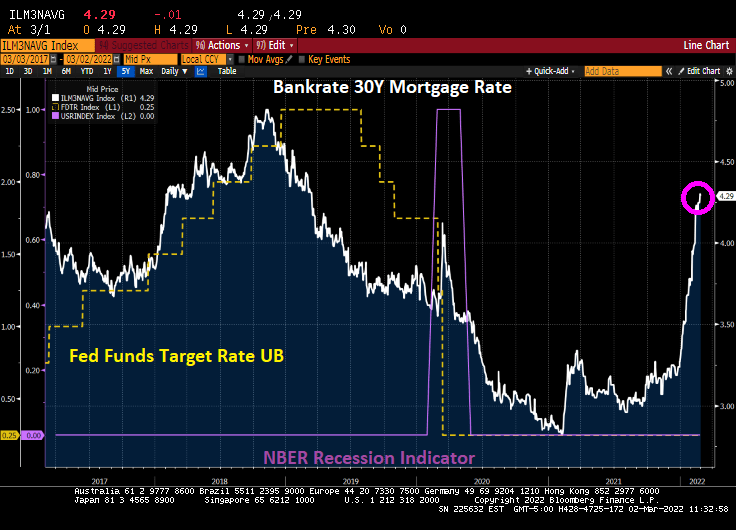
And Bankrate’s 30Y mortgage rate declined to 4.10%.
Russia is the world’s largest exporters of wheat and Ukraine is the 5th largest exporter.
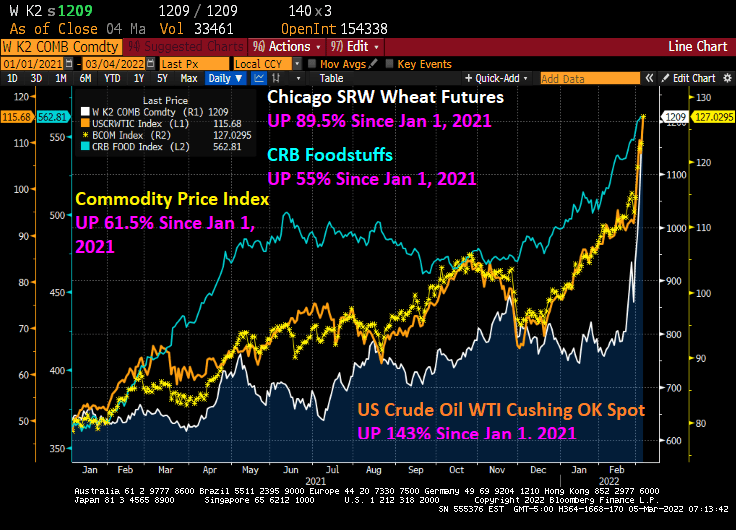
This has been a brutal week for consumers. With the Russia/Ukraine conflict raging and Congress seems determined to not allow for additional oil and gas production, and Biden’s anti-fossil fuel edicts still in place, we are seeing dramatic price increases in wheat (UP 89.5% since January 1, 2021), WTI Crude (UP 143% since January 1, 2021), and food stuffs (UP 55% since January 1, 2021).
Bankrate’s 30-year mortgage rate has actually been falling the last several days, which is good for prospective home buyers as the 10-year US Treasury Note yield has been declining.
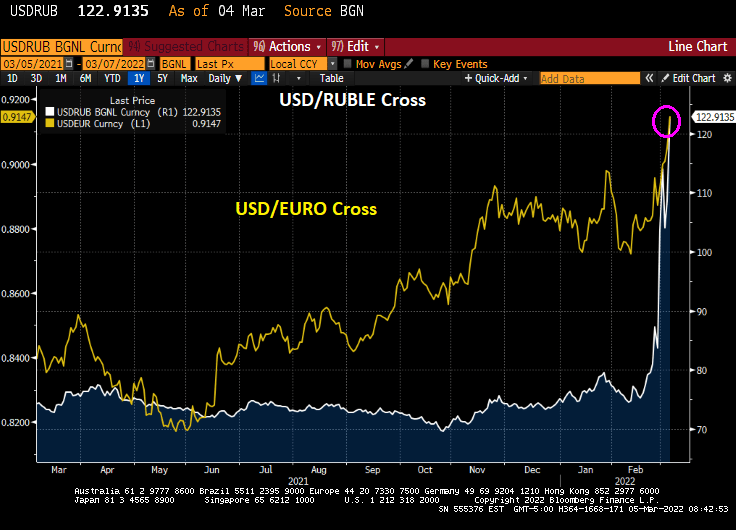
The USD/Russian Ruble cross is skyrocketing and the USD/Euro is doing likewise. Russians visiting the US will find that their trip is suddenly unaffordable (as do many American citizens will its rampant inflation). As Bruce Willis said in “Die Hard,” “Welcome to the party, pal.”
On Friday, the US Treasury 10-year yield declined 11 bps.
And energy prices continue to soar, particularly UK Natural Gas Futures that rose 19.85% overnight.
The US inflation data will be released on March 10th and the consensus is that February CPI inflation will rise to 7.9% YoY.
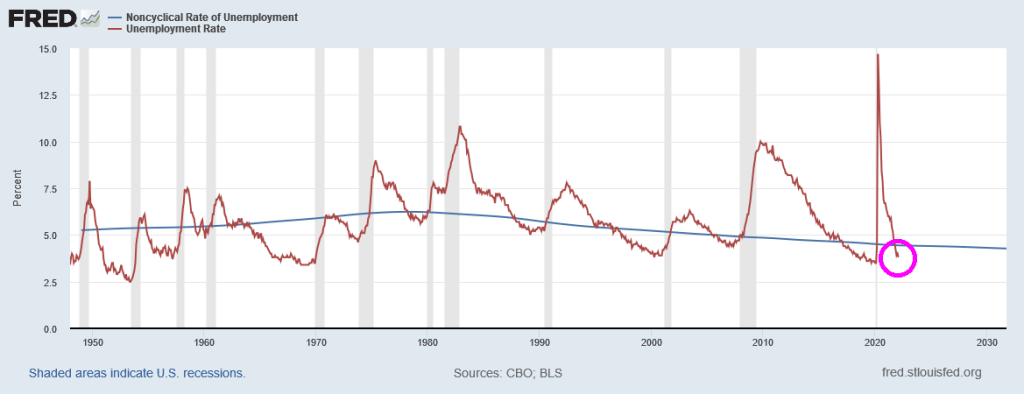
But even the latest unemployment rate report (3.8%) is signalling that The Fed should be raising interest rates since it is lower than the Natural Rate of Unemployment or NAIRU (4.44%).
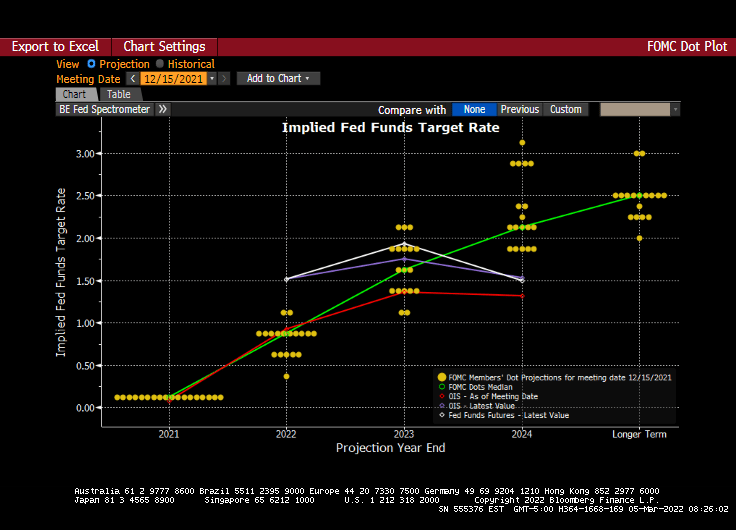
And we have the next Fed policy error on March 16th. The Fed dots plot looks like the glide slope for an aircraft, but the message is that rates will be going up at future meetings.
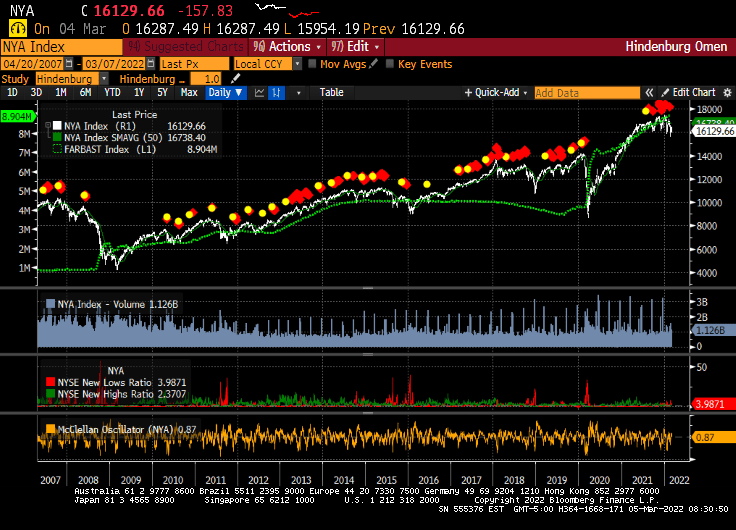
And just for amusement, I present to you the infamous Hindenburg Omen chart that forecast the 2008/2009 stock market correction. Since that correction, the Hindenburg Omen has been flashing “danger” but the only correction was the COVID-linked correction of early 2020. While the Hindenburg Omen is flashing red right now, The Federal Reserve’s balance sheet (green line) has protected against market corrections. Let’s see what happens if and when The Fed decides to remove the epic monetary stimulus.
Its anyone’s guess as to whether The Fed will actually tighten monetary policy.
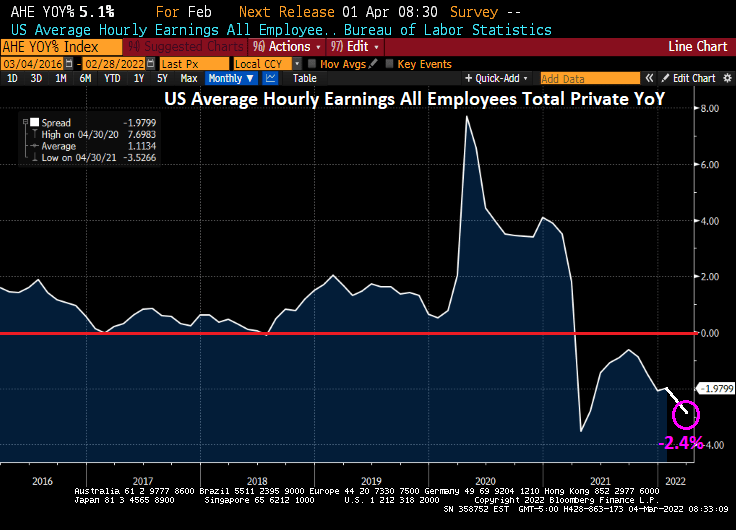
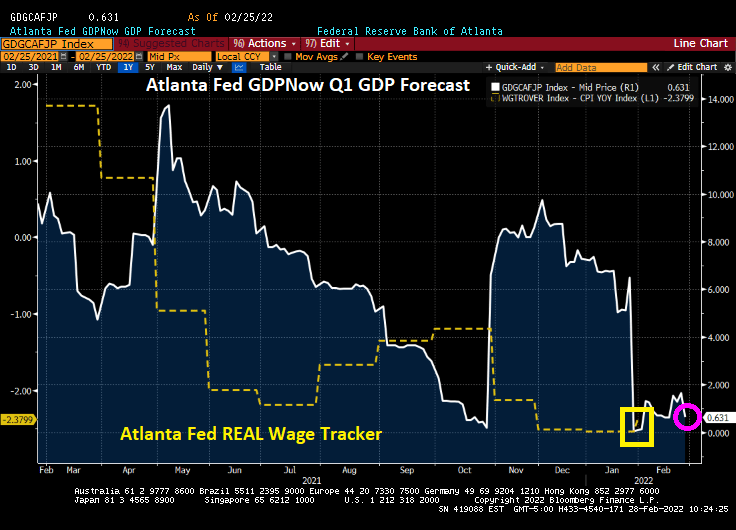
The bad: Month-over-month wage earning experienced 0% growth (although YoY growth declined to 5.1%).
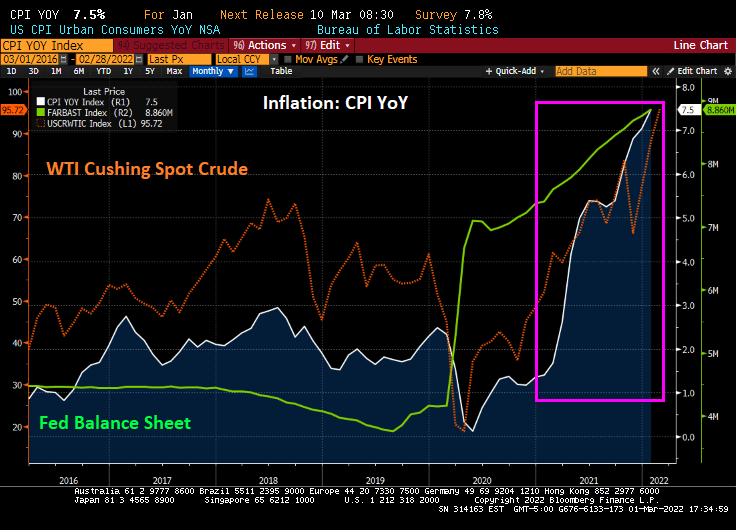
The ugly: inflation is still at 40 years highs of 7.5%. Meaning that REAL wage growth is -2.4%.
Here is the jobs report summary.
Of course, the leading sector for job creation was … leisure and hospitality with 179k added. Food services and drinking places (aka, bars) added 124k jobs.
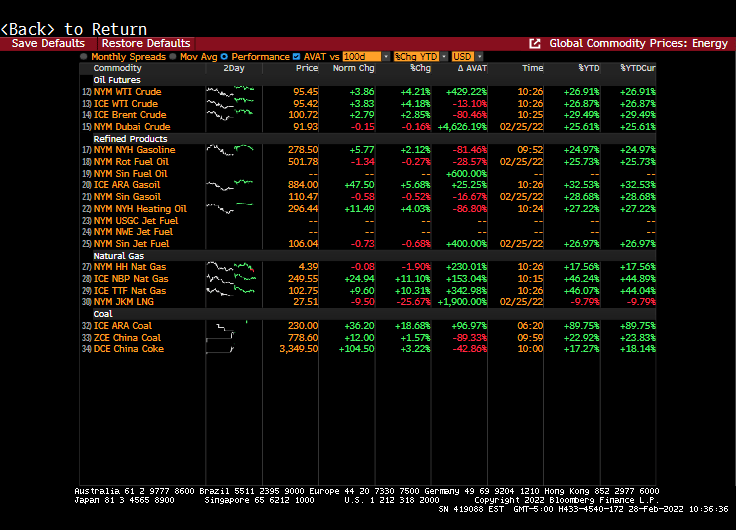
Energy prices are way up … again … which will fuel more price increases. WTI Crude is up over 4% overnight, NYH gasoline futures are up 4.33%, coal is up 22.48%.
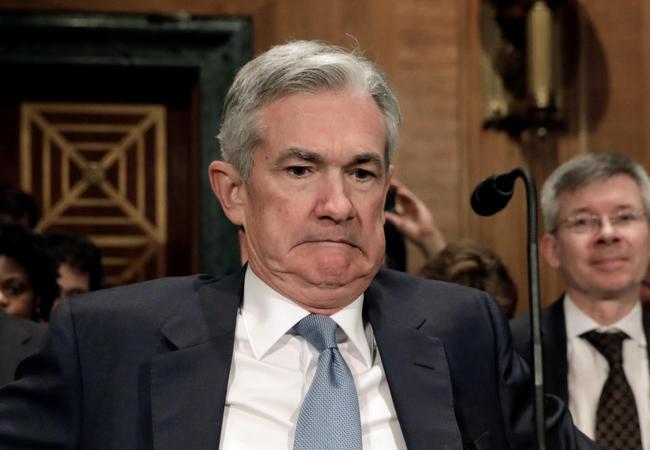
Stocks rose, while bonds fell after Jerome Powell said he was inclined to back a quarter-point U.S. rate hike in March to combat inflation that is “too high.”
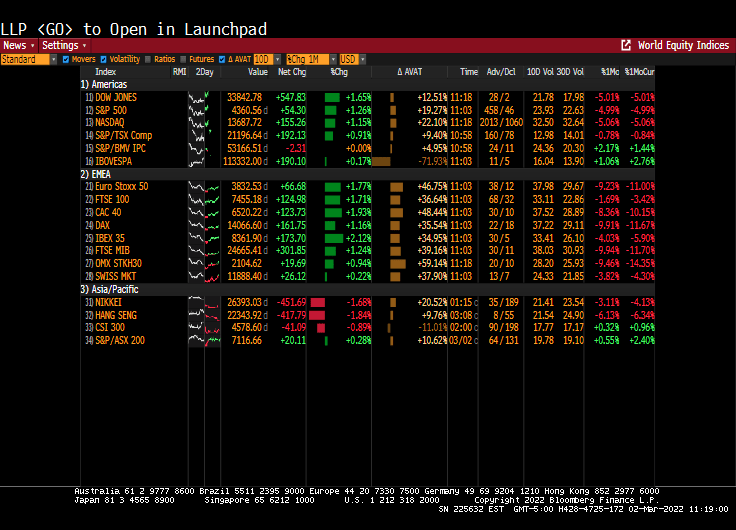
In a broad-based equity rally, financial and industrial companies led gains in the S&P 500. The two-year Treasury yield — which is more sensitive to imminent Federal Reserve policy moves — was near 1.5%. The Fed chief also noted that the central bank is prepared to be more aggressive if inflation is more persistent than expected, while adding that he’s open to “series of rate increases” in 2022. Investors also assessed the latest geopolitical developments, with oil paring gains after earlier topping $110 a barrel.
WTI Crude futures are up to $107.05 a barrel.
Natural Gas (UK) rose 34.58% to 100.28. Wheat is 7.62% to $1,059.
The 10-year Treasury yield jumped 11 Basis Points on Powell’s comments. And Eurozone yield are up nearly the same amount.
Powell signalling a more moderate rate expansion led to the Dow rising over 500 points (up 1.65%).
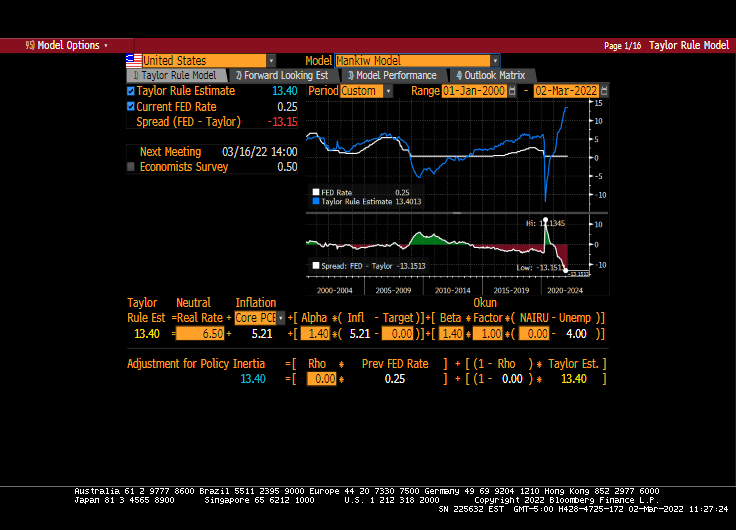
Based on core PCE growth of 5.21%, the Mankiw specification of the Taylor Rule model infers that The Fed Funds Target rate should be … 13.40%. Since The Fed’s target rate is only 25 basis points, a 25 basis point increase is modest indeed.
Mortgage rates are down slightly today, but you can see the separation between The Fed’s target rate and the 30-year mortgage rate.
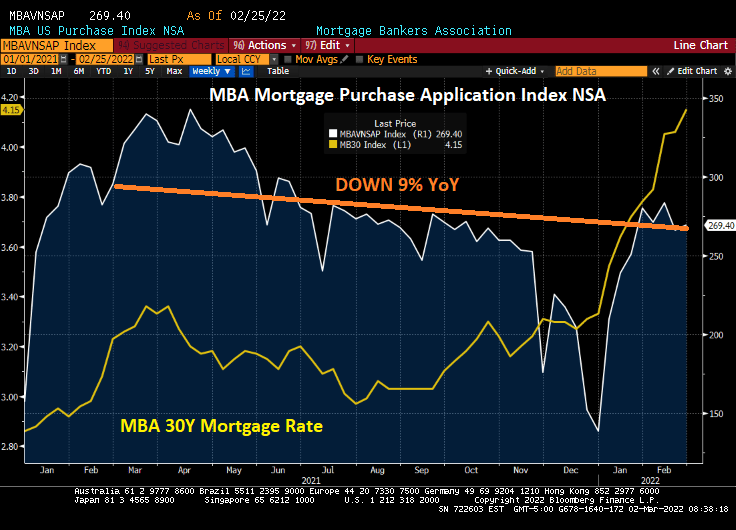
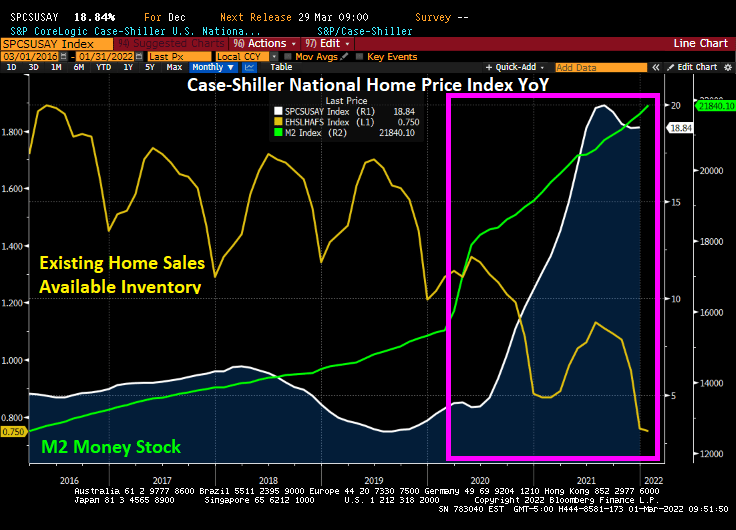
While Corelogic’s January home price index was hot, hot, hot (UP 19.1% YoY), today’s mortgage applications index for the week ending February 25, 2022 was not, not, not.
Mortgage applications decreased 0.71 percent from one week earlier, according to data from the Mortgage Bankers Association’s (MBA) Weekly Mortgage Applications Survey for the week ending February 25, 2022.
The seasonally adjusted Purchase Index decreased 1.76 percent from one week earlier. The unadjusted Purchase Index increased 1.16 percent compared with the previous week and was 9 percent lower than the same week one year ago.
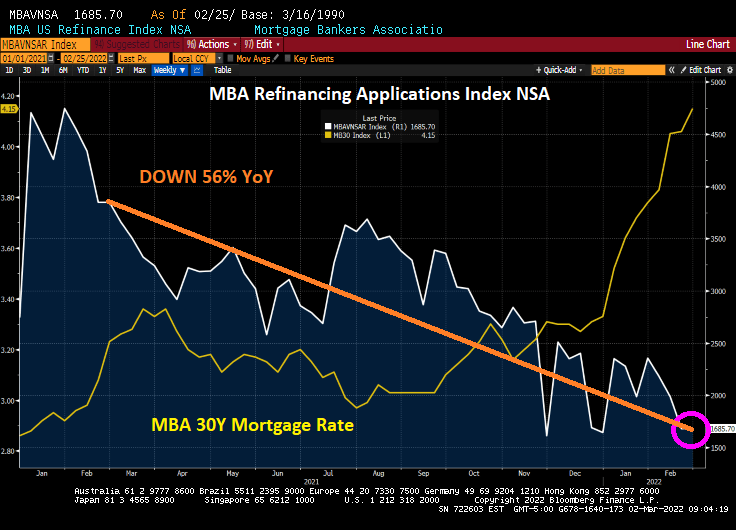
The Refinance Index increased 1 percent from the previous week and was 56 percent lower than the same week one year ago.
Yes, the mortgage industry is going through some difficult times. But not as difficult as trying to understand Biden’s State of the Union address: “Putin may circle Kyiv with tanks, but he’ll never gain the hearts and souls of the Iranian people.” Huh?
And then Biden’s closing remark was “Go get ’em!” What? Go get whom? The Russians? Inflation? Trump supporters?? I feel like Biden thought the SOTU was the annual Army-Navy football game.
President Biden is giving his first State of the Union address tonight with rebuttals from Iowa Governor Kim Reynolds and The Squad’s Rashida Talib (yes, a Republican is giving the rebuttal to Biden’s SOTU speech, and a Democrat is rebutting a Democrat President??)
Let’s look at a short list of Biden’s economic triumphs. I will ignore Biden’s catastrophic Afghanistan withdrawal and his weak response to the Russian invasion of Ukraine.
If you want higher oil and gasoline prices, Biden is a tremendous success.
If you like rampant government spending, then Biden is your man. Home price growth is up to 18.84%, making housing unaffordable for millions of American families.
Wages? They are up, but declining after 7.5% YoY inflation. And GDP is almost zero.
Biden can only point to rising average hourly wages, but not REAL average hourly wages.
Inflation? Highest in 40 years, due to excessive Federal spending, The Fed’s crazy printing and Biden’s energy mandates.
I am scratching my head to think of accomplishments for Biden to mention in the SOTU. But I am sure that he will say something positive. Otherwise, Biden’s SOTU speech should be the Billy Preston song “Nothing from Nothing.“
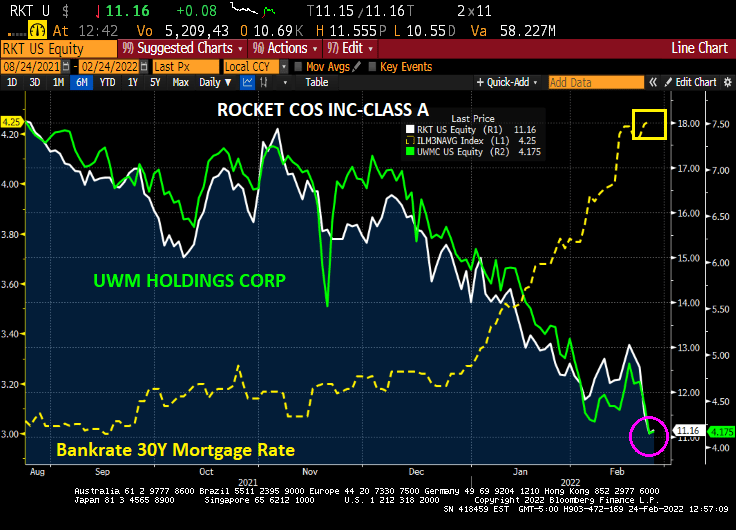
As The Federal Reserve threatens to tighten monetary policy, 30-year mortgage rates have risen to 4.25% leading two major mortgage companies, Rocket Mortgage and United Wholesale Mortgage, to decline to all-time lows.
But wait, Federal Reserve officials signaled they remain on track to raise interest rates next month despite uncertainty posed to the global economy by Russia’s invasion of Ukraine.
While acknowledging the risks created by the conflict, which has triggered one of the worst security crises in Europe since World War II and caused oil prices to surge, U.S. central bankers stressed the need to confront the hottest U.S. inflation in 40 years.
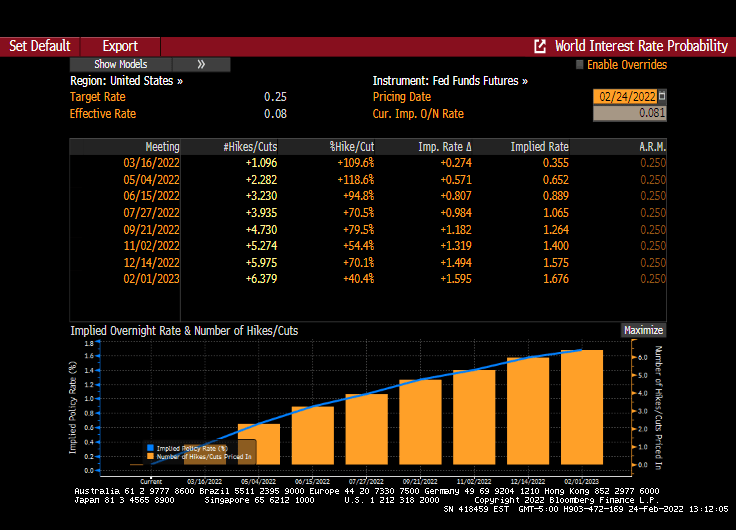
So, The Fed plans to raise rates to fight inflation, even if it tanks the housing and mortgage markets? Fed Funds Futures are still signaling 6 rate hikes over the next year.
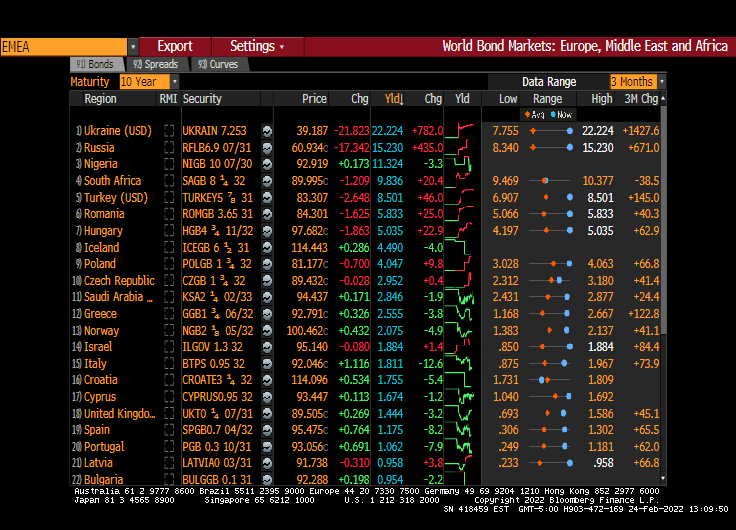
At least US Treasury 10Y yields are down just 7.6 bps. Look at 10Y Russian and Ukraine sovereign yields. Now THAT is a yield surge!
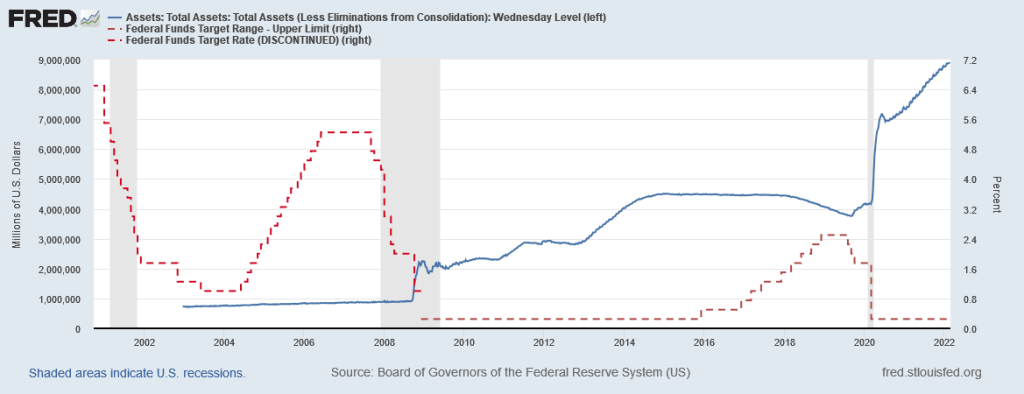
It has been almost 14 years since The Federal Reserve under Ben Bernanke unleashed zero interest rate policies (ZIRP) and quantitative easing (QE) in late 2008. And Fed monetary stimulypto is still running strong after almost 14 year of monetary mismanagement and asset bubble stimulation.
The Federal Reserve under Bernanke and Yellen raised their target rate exactly once under President Obama before the election of Donald Trump. After Trump was elected, The Fed raised their target rate 8 times, lowered it 5 times. There have been no rate hikes under Biden.
There seemingly never-ending Fed monetary stimulus has resulted in the top 1% seeing their share of total net worth soar relative to the share of net worth of the bottom 50%. But note that starting in 2014 just as The Fed was engaged in QE 3. But the real divergence occurred after The Federal government heaped trillions in fiscal stimulus on top of the skyrocketing monetary stimulus.
In terms of income inequality (as measured by the GINI coefficient), it just keeps getting worse and worse.
Let’s see if The Fed actually delivers by reducing their monetary stimulypto.
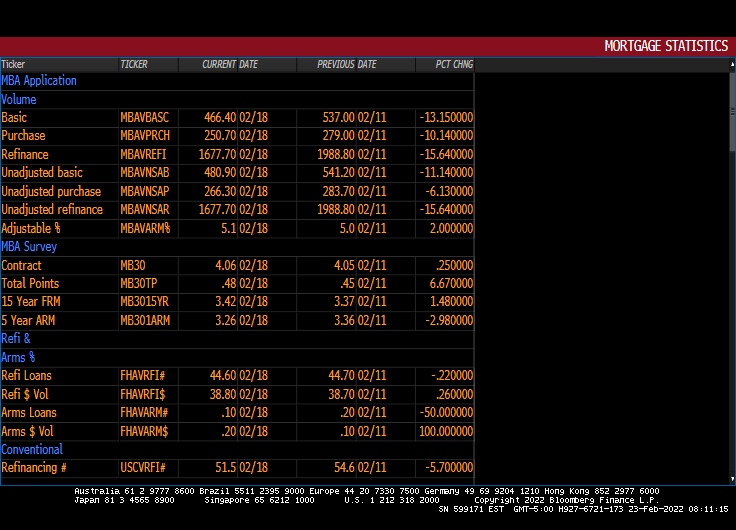
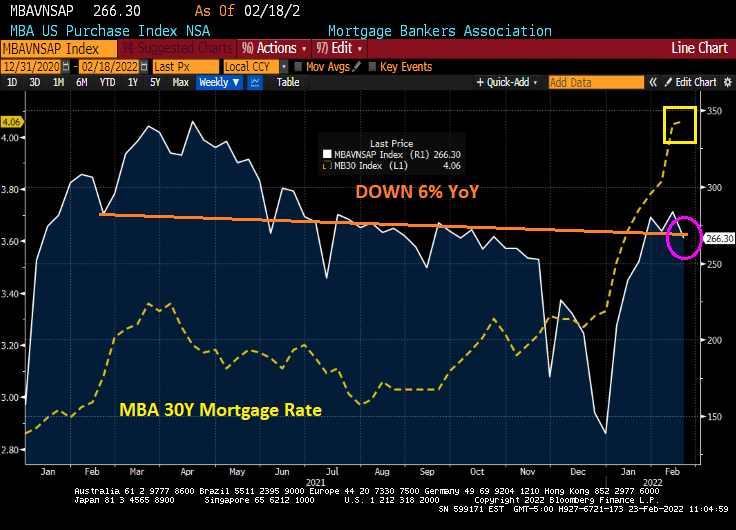
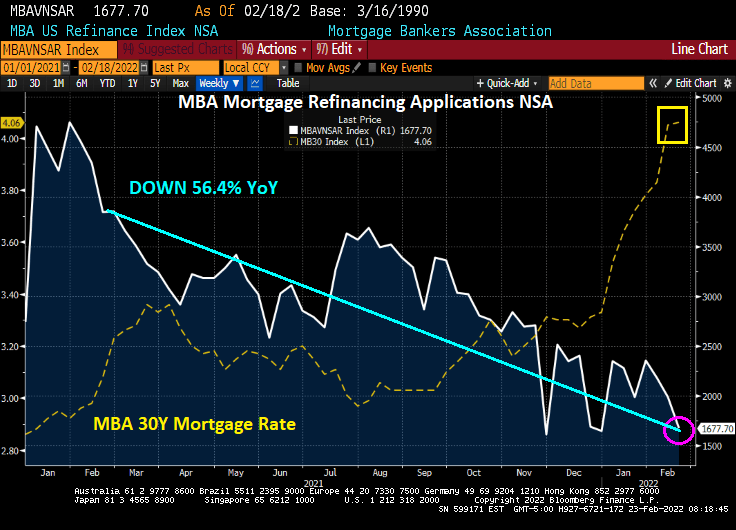
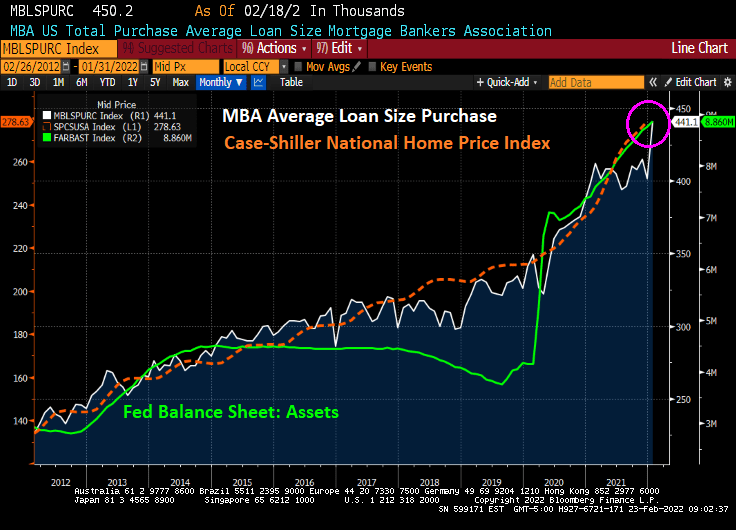
It is not surprising that applications for a residential mortgage have crashed and burned after The Federal Reserve’s announced intentions to raise their target rate and trim the ballast in the economic tanks. But dang!
Mortgage applications decreased 13.1 percent from one week earlier, according to data from the Mortgage Bankers Association’s (MBA) Weekly Mortgage Applications Survey for the week ending February 18, 2022.
The seasonally adjusted Purchase Index decreased 10 percent from one week earlier. The unadjusted Purchase Index decreased 6 percent compared with the previous week and was 6 percent lower than the same week one year ago.
The Refinance Index decreased 16 percent from the previous week and was 56.4 percent lower than the same week one year ago.
While the average loan size did not increase this week, it remained close to the survey’s record high.
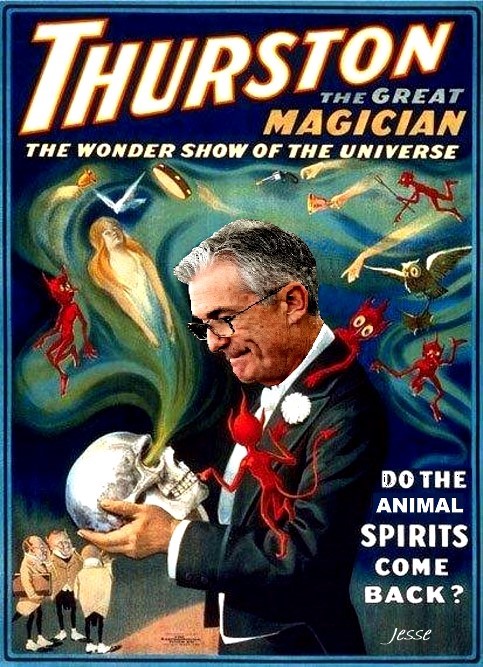
What The Fed giveth, The Fed can taketh away. Let’s see if Thurston Powell The Great Magician can raise rates and NOT crash the housing and mortgage markets.


















You must be logged in to post a comment.