Inflation started with Biden’s misguided war on US energy, then Biden/Congress helped inflation with an epic spending splurge. The Federal Reserve counterattacked with Fed rate hikes.
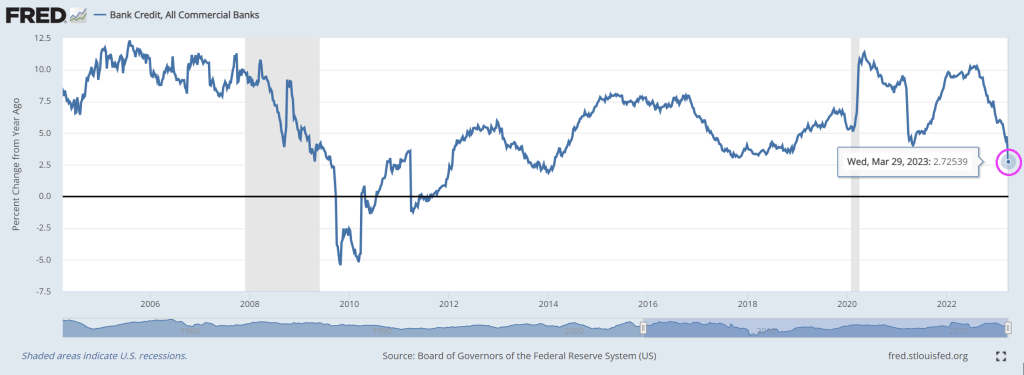
Over the past year, The Fed Funds Effective rate has risen and US bank credit has crashed to 2.73% year-over-year.
Do I detect a trend?
Since 2005, the crash in US bank credit is looking like 2008/2009 all over again.
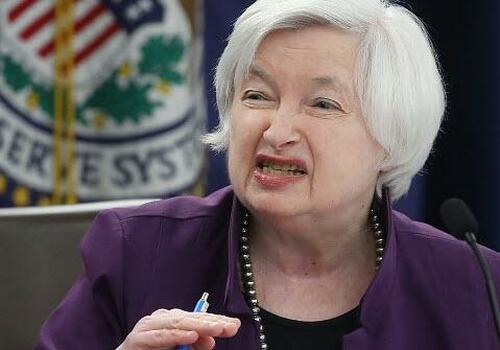
Whether Biden is Cap’n Crunch or Jerome Powell or Janet Yellen, they are all crunching the US economy.
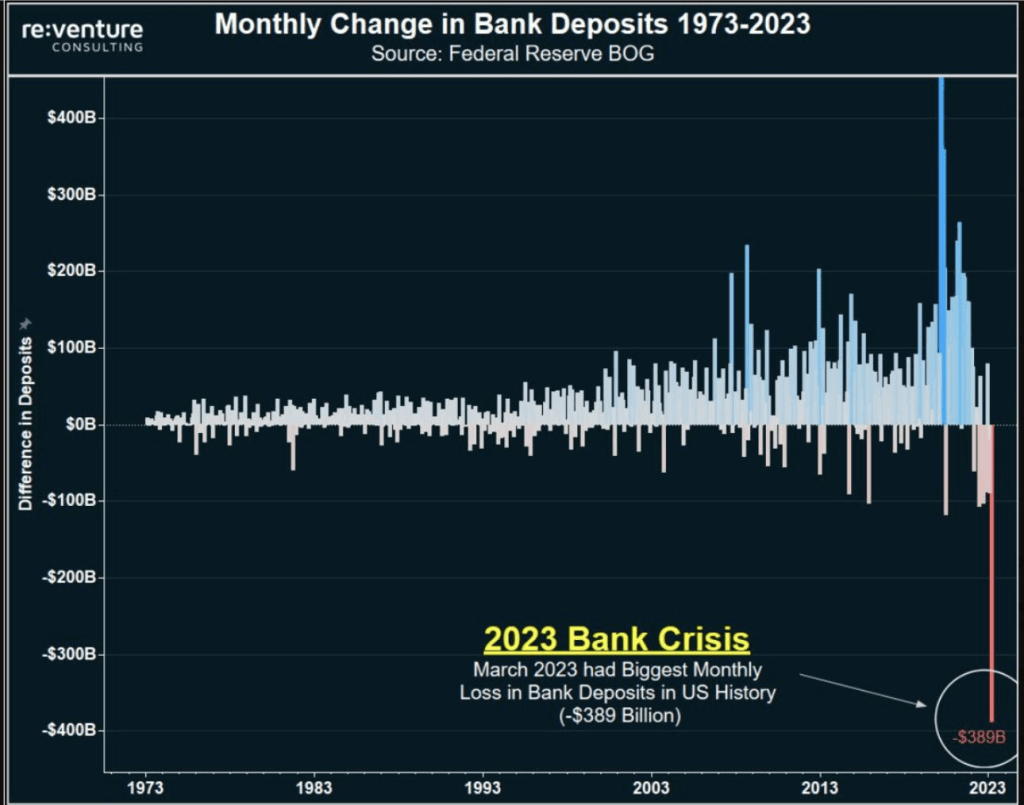
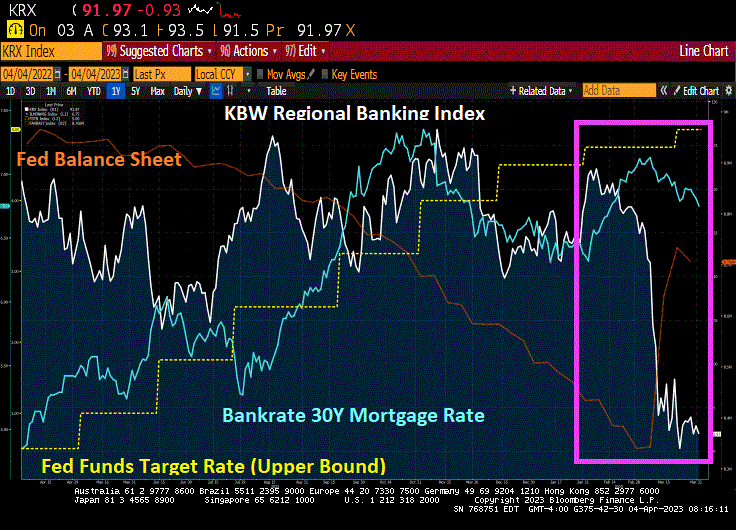
US commercial banks deposits (red line) had been slowly declining even before Silicon Valley Bank failed. Along with Signature Bank and First Republic Bank, not to mention Credit Suisse. And The Teutonic Titanic, Deutshe Bank, is on the ropes. But the failure of SVB saw an acceleration of the decline in commercial bank deposits as banks accelerated borrowing.
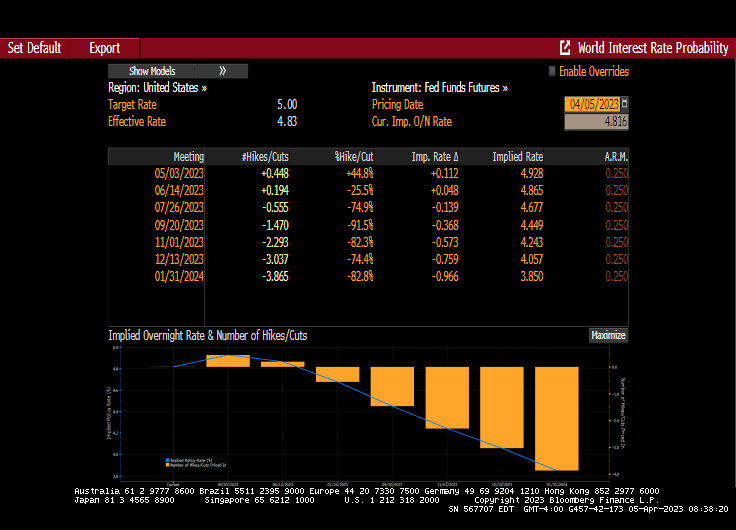
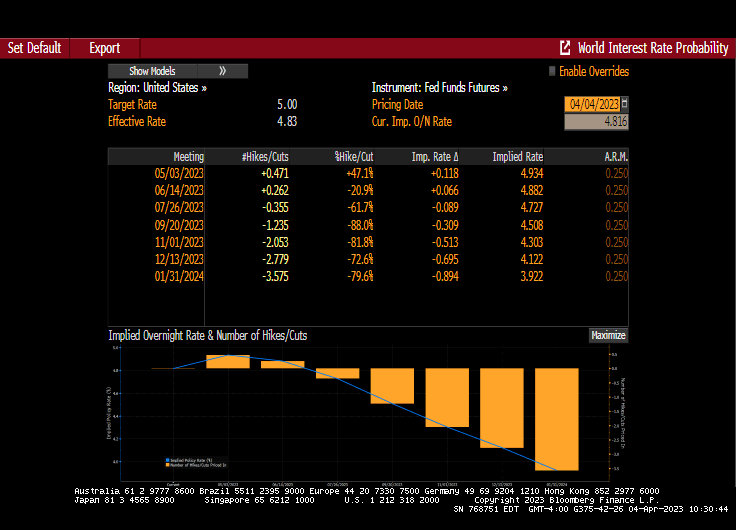
But never fear! The Fed will raise rates once or twice more, then drop them again.
“The banks will never behave on my watch as US Treasury Secretary, you have my word!” And don’t worry. Biden will bail them all out … again. Call it “The Biden Bailout Shake!”
Joe Biden loves to brag about “his” great economic successes, particulary in jobs added. But the jobs added in March were not in higher-paying factory jobs, but Biden’s building from the bottom-up approach is mostly low-paying leisure and hospitality jobs.
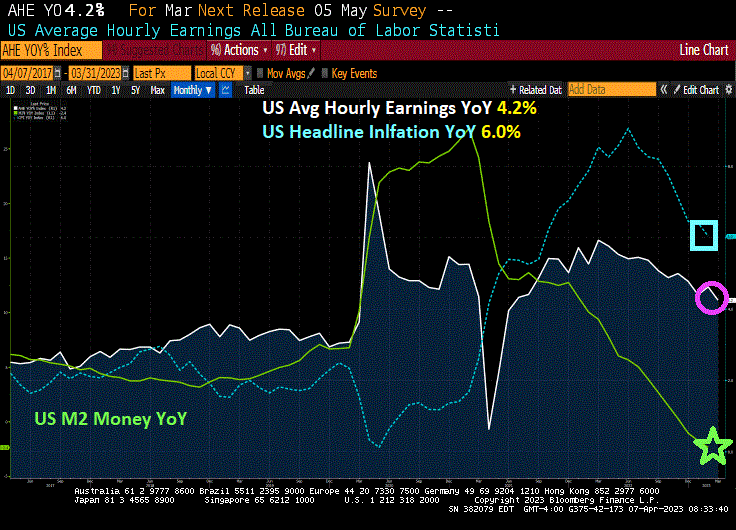
And here is the rub on wages. Average hourly earnings growth fell to 4.2% YoY, too bad inflation is 6% and expected to rise with the summer.
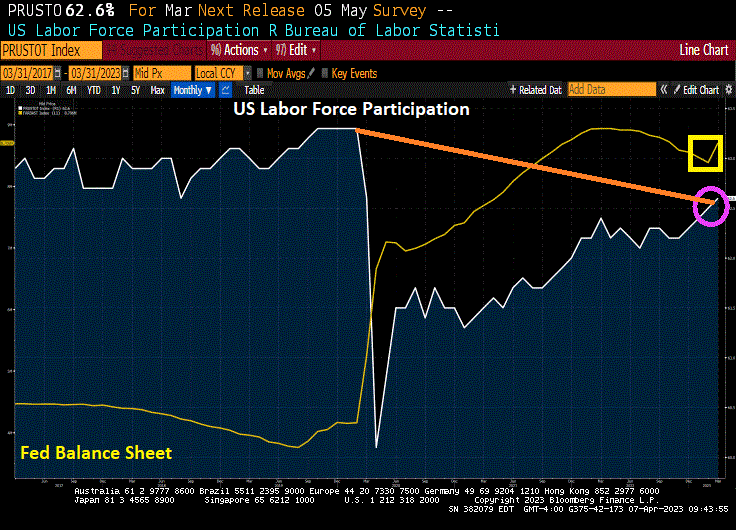
236k jobs added in March, down from a revised 326k jobs added in February. The unemployment rate fell to 3.5% and labor force participation rose slightly to 62.6%.
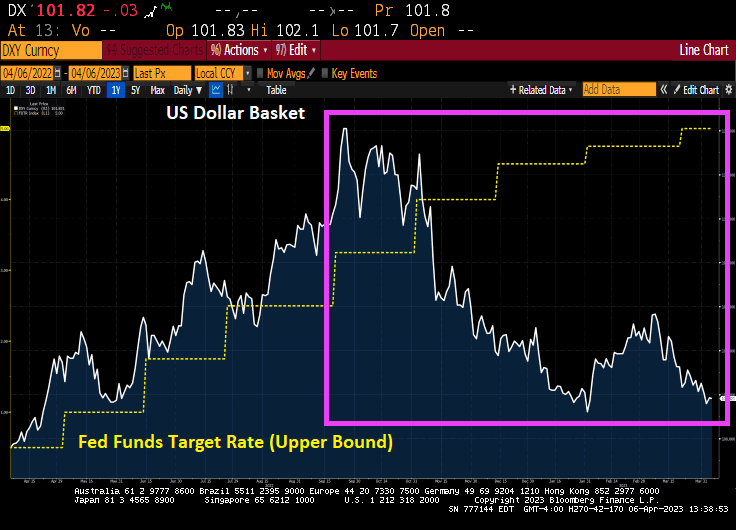
Biden, The Federal Reserve and insane Federal spending are killing King Dollar. Countries that used to use the US Dollar as reserve currency are dumping the dollar like a month old burrito.
What countries are dumping the dollar?
A lengthy list of countries are moving away from using the US dollar, which has long been the reserve currency of the world. The following countries are in the process of reducing their dependency on the dollar.
Russia
China
Iran
Brazil
Argentina
Saudi Arabia
UAE
India
The result?
Biden has vacationed 40% of the days he has been President. In his defense, he has probably needed that time to hunt down the classified documents has left strewn around his his home, vacation home, the Penn-Biden Center and Chinatown in DC.
We are truly addicted to gov! Or at least cheap money from The Federal Reserve.
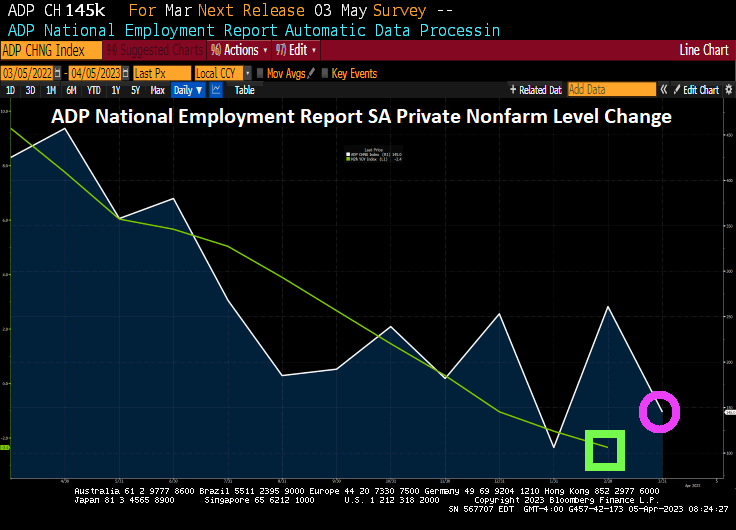
March’s ADP job report shows the US economy only added 145k jobs as The Fed removes its punch bowl. For the moment.
Its simply irresistable for the government to turn back on the printing press.
And then we have domestic banks reporting stronger demand for C&I Loans and real estate loan (for construction and development purposes) slumping to financial crisis lows.
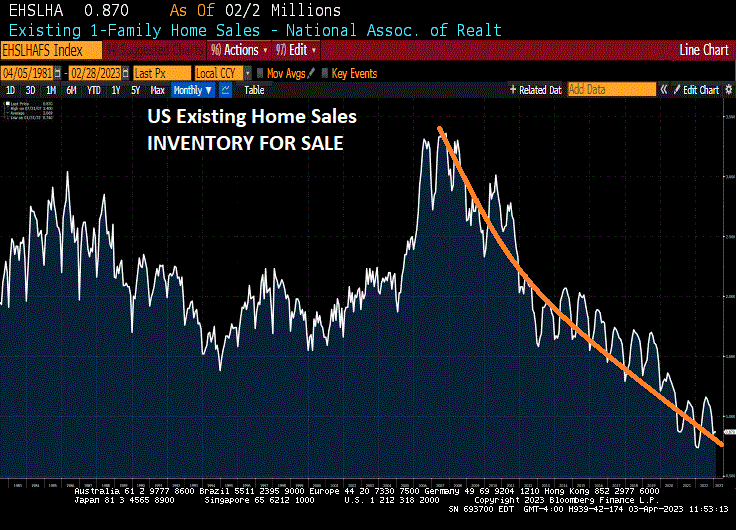
My friend Phill Hall asked me about the state of the US housing market yesterday. My answer? “Chaos.” Why chaos? Here is why: 23 consecutive months of NEGATIVE real wage growth, declining availability of homes for sale, still expensive home prices following the Covid spending surge, and rising mortgage rates as The Fed fights inflation.
And now we have mortgage demand shrinking 4.1% from the previous week according to the Mortgage Bankers Association’s (MBA) Weekly Mortgage Applications Survey for the week ending March 31, 2023.
The Market Composite Index, a measure of mortgage loan application volume, decreased 4.1 percent on a seasonally adjusted basis from one week earlier. On an unadjusted basis, the Index decreased 4 percent compared with the previous week. The Refinance Index decreased 5 percent from the previous week and was 59 percent lower than the same week one year ago. The seasonally adjusted Purchase Index decreased 4 percent from one week earlier. The unadjusted Purchase Index decreased 3 percent compared with the previous week and was 35 percent lower than the same week one year ago.
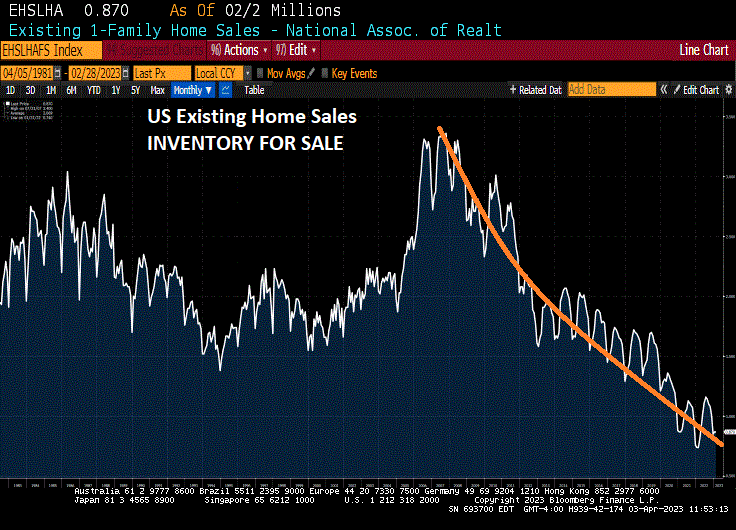
Throw in the declining inventory of homes for sales, and we have chaos.
Not to mention 23 consecutive months of negative REAL wage growth.
Well, at least REAL home prices are growing more slowly (-3.86% YoY) than REAL weekly wage growth -1.9% YoY). So much for housing as a hedge against inflation!
Thanks to Yellen’s catestrophic Too-Low-For-Too-Long (TLFTL) and insane Federal spending, we are seeing the aftermath of The Fed trying to fight inflation. A fire sale of failed bank assets!!
With interest rates still rising, prices retreating and credit evaporating—and a stressed-out banking system moving to shore up balance sheets—expect more fire sales of older CMBS loans and an acceleration of plunging CRE values in markets across the US.
Last month, a fire sale of CMBS loans was lit as $72B in assets from the failed Silicon Valley Bank (SVB) were sold. The SVB assets—including about $13B in real estate exposure and at least $2.6B worth of CRE loans—were sold at a discount of $16.5B, which translates into about 77 cents on the dollar, according to a report in MarketWatch.
The Federal Deposit Insurance Corp. has lit a fuse on an even larger fire sale of assets—a bonfire in terms of CRE loans—for NYC-based Signature Bank, which like SVB was a regional bank that collapsed and was taken over by regulators last month.
FDIC last week tapped Newmark to sell $60B in assets held by Signature, according to the Wall Street Journal, including nearly $36B in CMBS loans backed primarily by multifamily properties, the lion’s share of them in New York City. Since 2020, Signature initiated more than $13.4B in loans backed by NYC buildings, the most of any lender.
Experts who specialize in pricing CRE loans believe a discounted sale as large as the disposal of Signature’s assets will speed a markdown of valuations by banks who until recently have been reluctant to set off a downward spiral. The 77 cents on the dollar benchmark established by the SVB sale likely will be the top end of where prices are heading, the experts say.
“The SVB trade created a baseline for the market. To me, that’s the top end, not the bottom end, for CRE loans,” David Blatt, CEO of CapStack Partners, told MarketWatch. CapStack is a credit fund that buys CMBS loans from banks and originates short-term bridge loans and mezzanine debt.
“What everybody has been operating under is this hold-to-maturity veneer,” Blatt said, referring to banks that have continued to value loans at 100 cents on the dollar, known as par.
In the wake of the SVB asset sale, “there’s just no way these things get resolved at par,” Blatt said, adding “the write-down is kind of implied.”
“Everybody is dusting off their old playbook. There just hasn’t been [as] much distress for years,” Jack Mullen, founder of Summer Street Advisors, told Marketwatch. “People are not going to let it carry into next year. On the regulatory side, it’s coming to the front of the line. People are super-mindful about it.”
The rising cost of debt was cutting into the value of older, low-coupon loans before SVB and Signature were shut down. Now, everyone is guessing how low will prices go on CMBS loans in the wake of the fire sales of the fallen lenders’ portfolios.
A recent advisory from Cohen & Steers estimates the decline in values will likely be at least 25%. Loans associated with multifamily properties won’t be immune from the valuation hit; apartment rents declined for the fifth time in six months from January to February.
For office properties, especially in Manhattan, the decline in value will be much steeper. Older NYC office properties are facing a cliff-diving plunge of up to 70%.
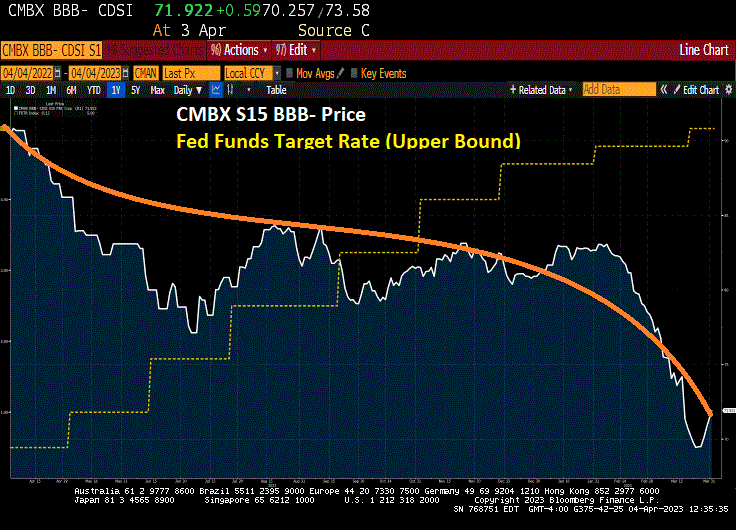
CMBX S15 is plummeting like a paralyzed falcon after The Fed started raising rates.
As bank deposits continue to crash and burn.
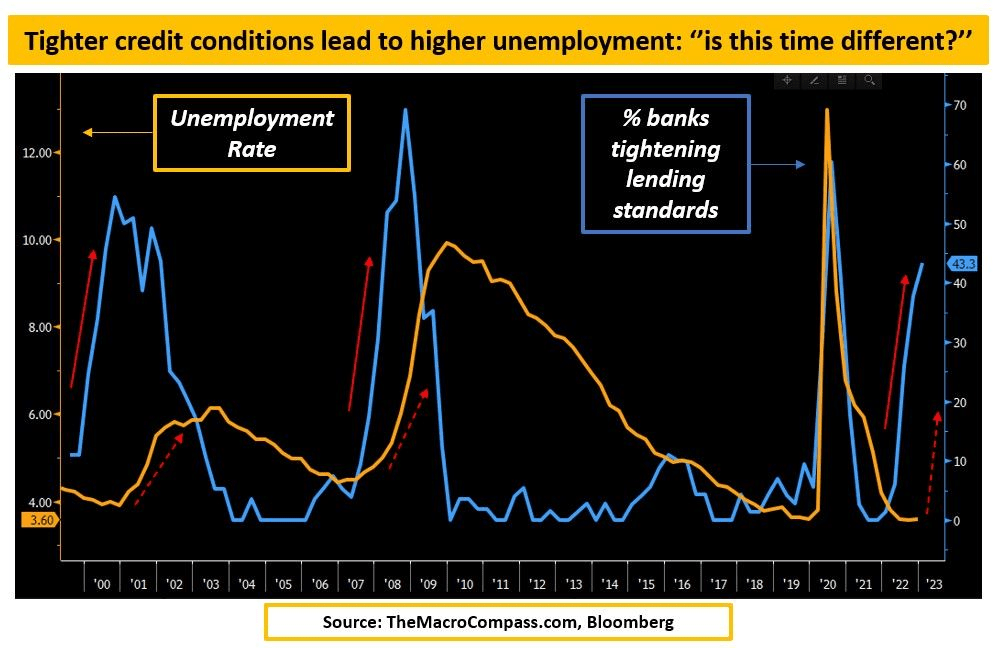
Now we have banks tightening lending standards.
So instead of The Boston Strangler, we have the DC Strangler.
Talk about an economy that seems dependent on Federal government money printing. The US economy seems hopelessly addicted to gov money printing.
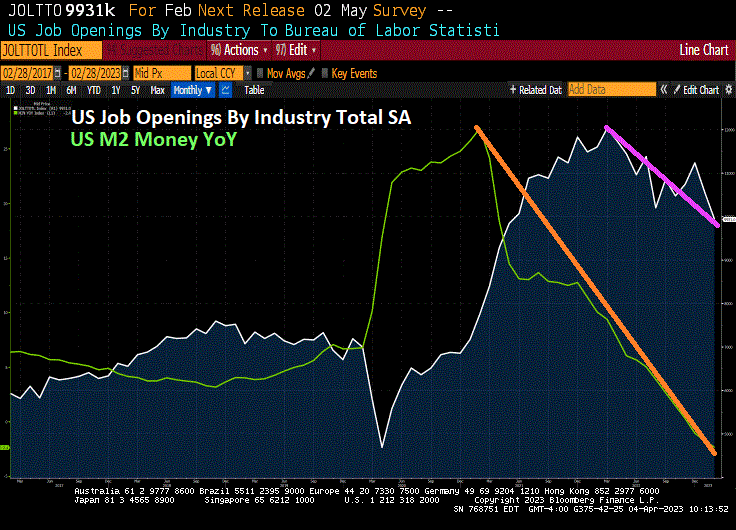
Today, US job openings fell in February to 9,931k. While that is still a large number, look at the chart of job openings and M2 Money printing. There is a one year lag between maximum printing and job openings. But M2 Money growth has collapsed.
Silicon Valley Bank’s blunders were encouraged by US regulation, went untested by the Federal Reserve and were “hiding in plain sight” until Wall Street and depositors grew alarmed.
That’s JPMorgan Chase & Co. Chief Executive Officer Jamie Dimon’s assessment of the US banking crisis that sent markets careening last month, an episode he predicts is “not yet over” and will be felt for years. He said US authorities shouldn’t “overreact” with more rules.
In his wide-ranging annual letter to shareholders on Tuesday, Dimon described his firm’s aspirations for using artificial intelligence and ChatGPT, weighed in on geopolitics, and provided updates on JPMorgan’s activities in Ohio. This time, many of his sharpest remarks ripped at regulation, including capital rules that pushed banks to binge on low-interest assets that lost value as interest rates shot up.
“Ironically, banks were incented to own very safe government securities because they were considered highly liquid by regulators and carried very low capital requirements,” Dimon said. “Even worse,” he added, the Federal Reserve didn’t stress-test banks on what would happen as rates jumped.
When Silicon Valley Bank’s uninsured depositors realized it was losing money selling securities to keep up with withdrawal requests, they raced to pull their cash. Regulators then intervened and seized it.
Yes. Banking regulators were so focused on credit-exposure of banks (remember the subprime crisis of 2008?) that they really screwed up by having banks load-up on low credit-risk assets that usually have interest rate risk associated with them like Treasuries and mortgage-backed securities (MBS). What could go wrong?
What went wrong was that interest rates rose and unrealized losses on Treasuries and Agency MBS exploded.
Here is a chart of urealized losses on investment securities that banks have accumulated.
Apparently, The Fed and FDIC (and the myriad of Federal and State regulators) sit high on a mountain top and ignore interest rate risk.
















 Confounded Interest - Anthony B. Sanders
You must be logged in to post a comment.