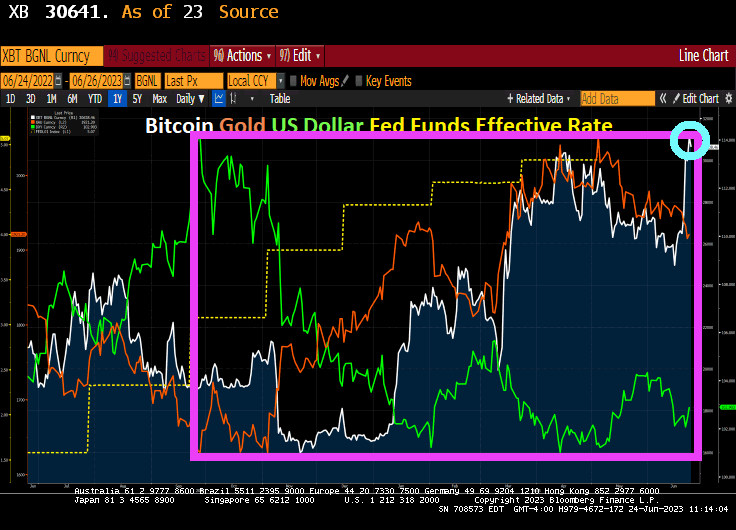
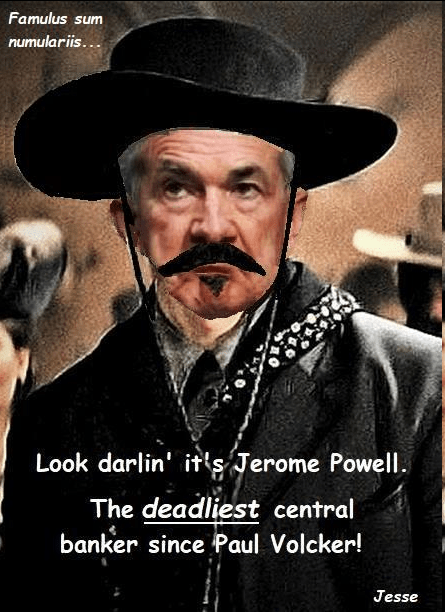
Well, with Jerome Powell And The Fed tightening monetary policy (about half way there!), we have seen competitors to the US Dollar Bitcoin and Gold have soared since September 26, 2022. Bitcoin is up 61%, Gold is up 18% and the US Dollar is down -10%.
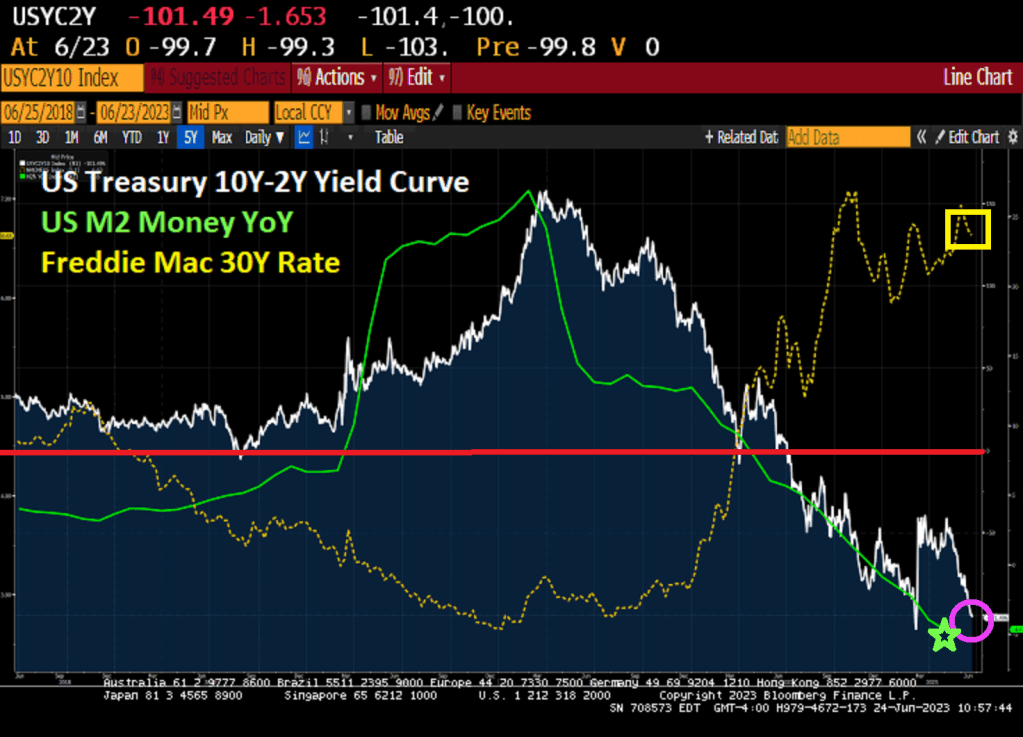
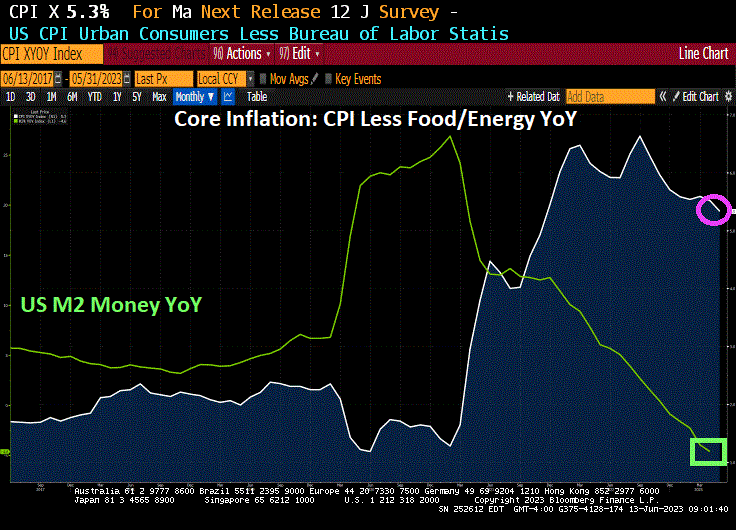
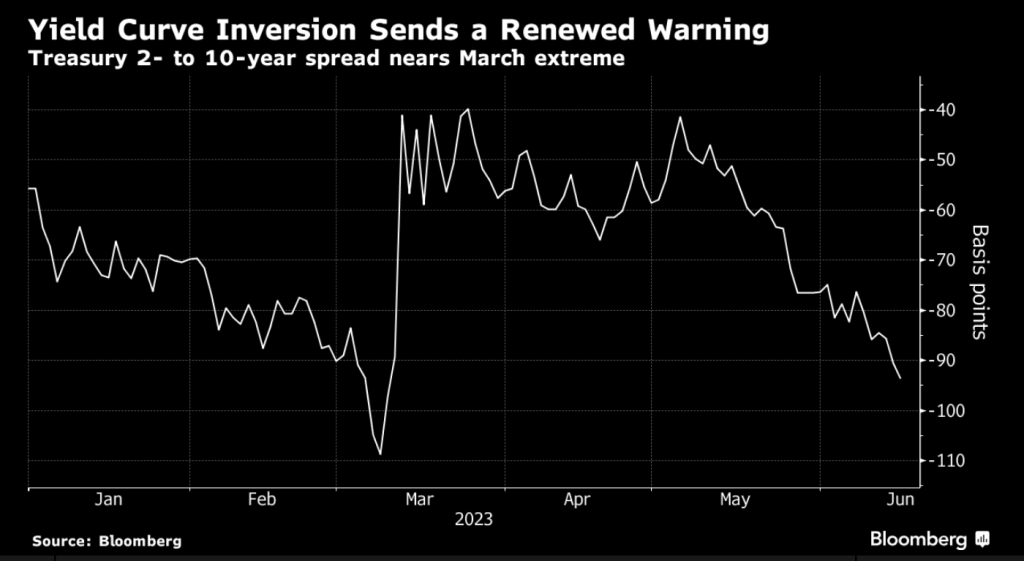
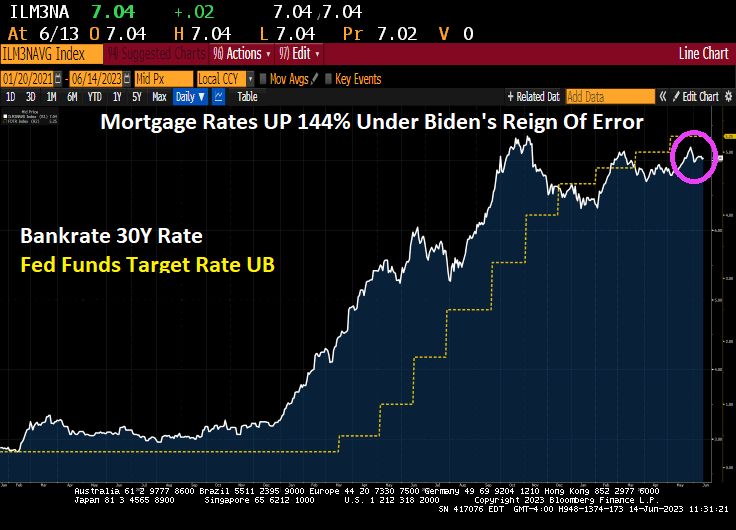
Mortgage rates hover around 7% as the US Treasury 10-2Y curve inverts to over -100 basis points with M2 Money growth crashed and burned.
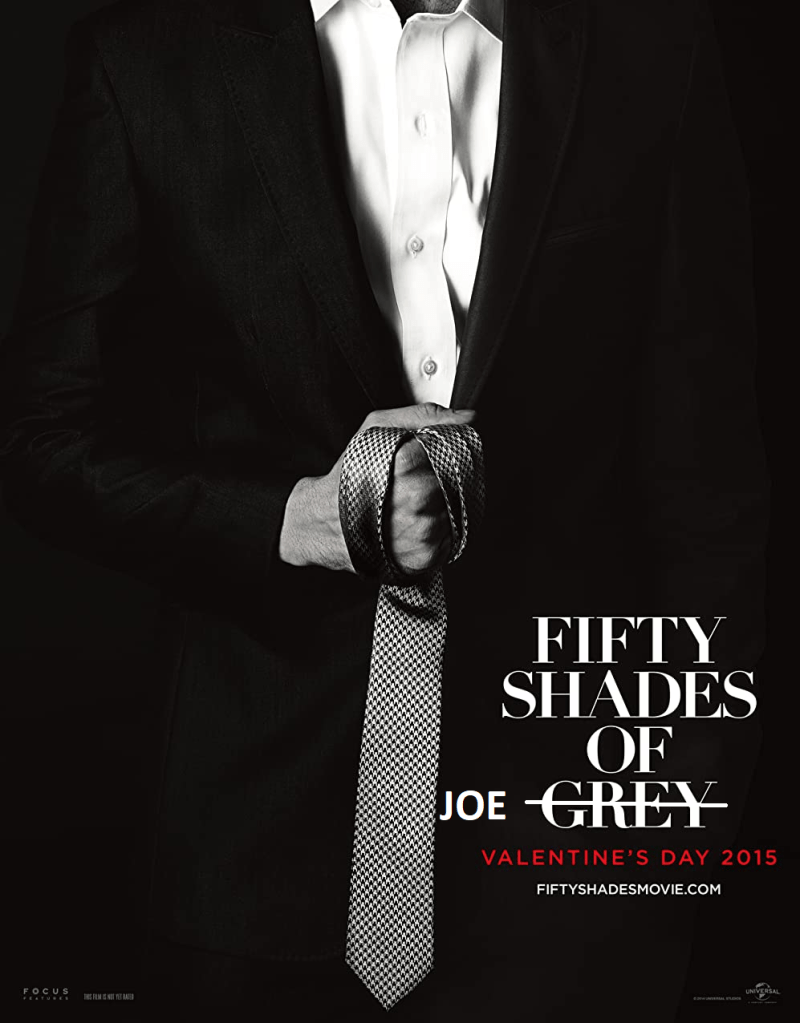
I could have used 3 shades of Joe, but 50 shades of Joe sounds better!
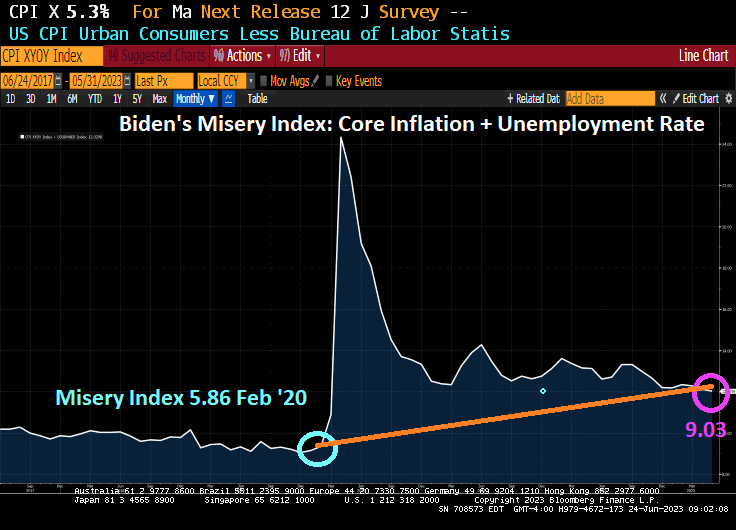
But the fact remains that Americans are far more miserable under Biden than they were under Trump before the Chinese Wuhan Covid virus was unleashed. 9.03 today (Core CPI YoY + U-3 Unemployment) than it was in February 2020 under Trump (5.86). While not twice as bad, inflation is continues to cause serious problems for America’s middle class and low-wage workers.
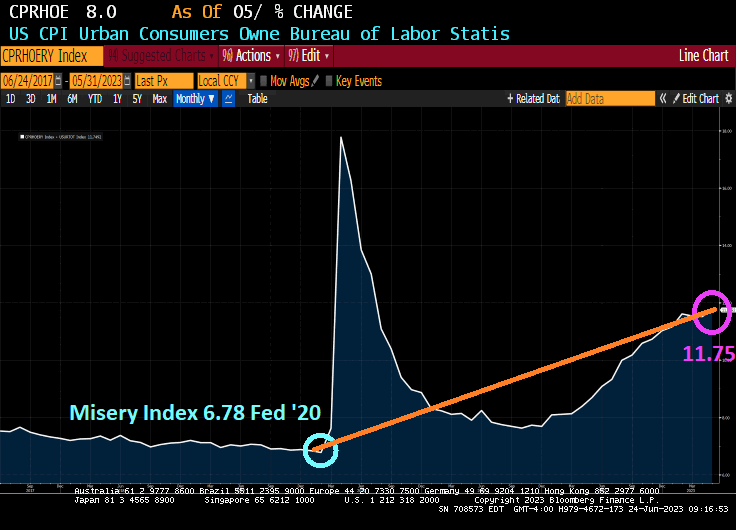
Speaking of the middle class and low wage workers, let’s look at the Renter’s Misery index (CPI Owner’s equivalent rent YoY + Unemployment rate). It was 6.78% in February 2020 under Trump and before Covid struck and is now 11.75% under Inflation Joe.
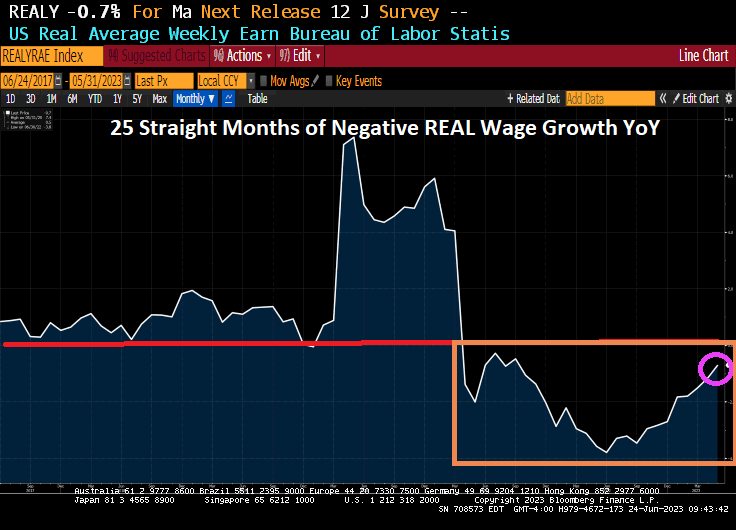
Speaking of misery, how 25 straight months of negative REAL wage growth? Real weekly wage growth went negative in April 2021, just a few months after Biden was installed as President.
Now, there was winners under Biden. Green energy donors, the big banks, big pharma, big tech, but media … essentially any big donors from big entities got massive payoffs. The middle class and low-wage workers? As Jerry Reid once sang, “They got the coal mine and we got the shaft.”
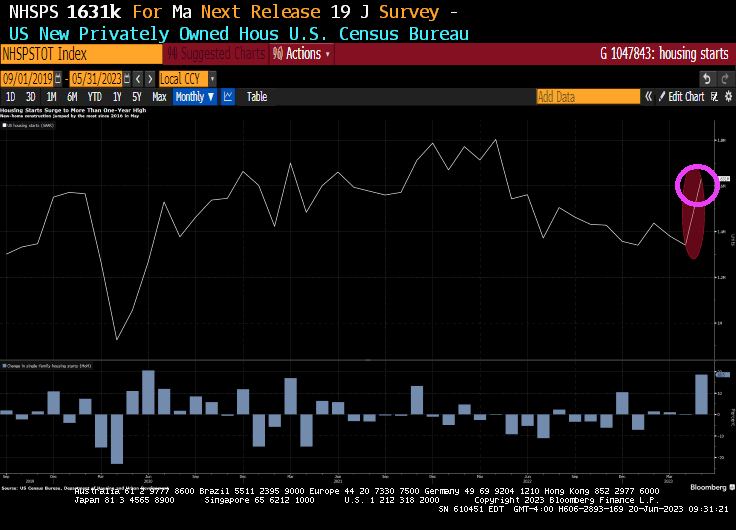
Well, not really unexpected since the housing sentiment index for home builders was above 50 yesterday. But with The Fed pausing rate hikes, housing starts are soaring!
US housing starts unexpectedly surged in May by the most since 2016 and applications to build increased, suggesting residential construction is on track to help fuel economic growth.
Beginning home construction jumped 21.7% to a 1.63 million annualized rate, the fastest pace in more than a year, according to government data released Tuesday. The pace exceeded all projections in a Bloomberg survey of economists. Single-family homebuilding rose 18.5% to an 11-month high.
Applications to build, a proxy for future construction, climbed 5.2% to an annualized rate of 1.49 million units. Permits for one-family dwellings increased.
Metric
Actual
Est.
Housing starts (SAAR)
1.63 mln
1.4 mln
One-family home starts (SAAR)
997,000
na
Building permits (SAAR)
1.49 mln
1.425 mln
One-family home permits (SAAR)
897,000
na
The figures corroborate Federal Reserve Chair Jerome Powell’s comments last week that the housing market has shown signs of stabilizing. Homebuilders, which are responding to limited inventory in the resale market, have grown more upbeat as demand firms, materials costs retreat and supply-chain pressures ease.
The housing starts data will feed into economists’ estimates of home construction’s impact on second-quarter gross domestic product. Prior to the report, the Atlanta Fed’s GDPNow forecast had residential investment subtracting about 0.1 percentage point from gross domestic product. Homebuilding last contributed to growth in the first quarter of 2021.
At the same time, elevated mortgage rates are crimping affordability, suggesting limited momentum in housing demand.
The increase in starts from a month earlier was the biggest since October 2016 and reflected gains in three of four US regions. Starts of apartment buildings and other multifamily projects jumped more than 27%.
The number of homes completed increased to a 1.52 million annualized rate. The level of one-family properties under construction were little changed at 695,000.
Existing-home sales data for May will be released on Thursday, while a report on new-home purchases is due next week.
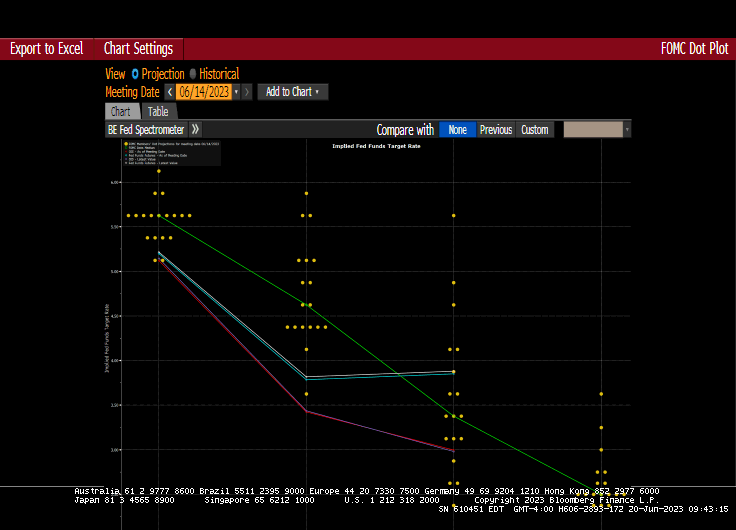
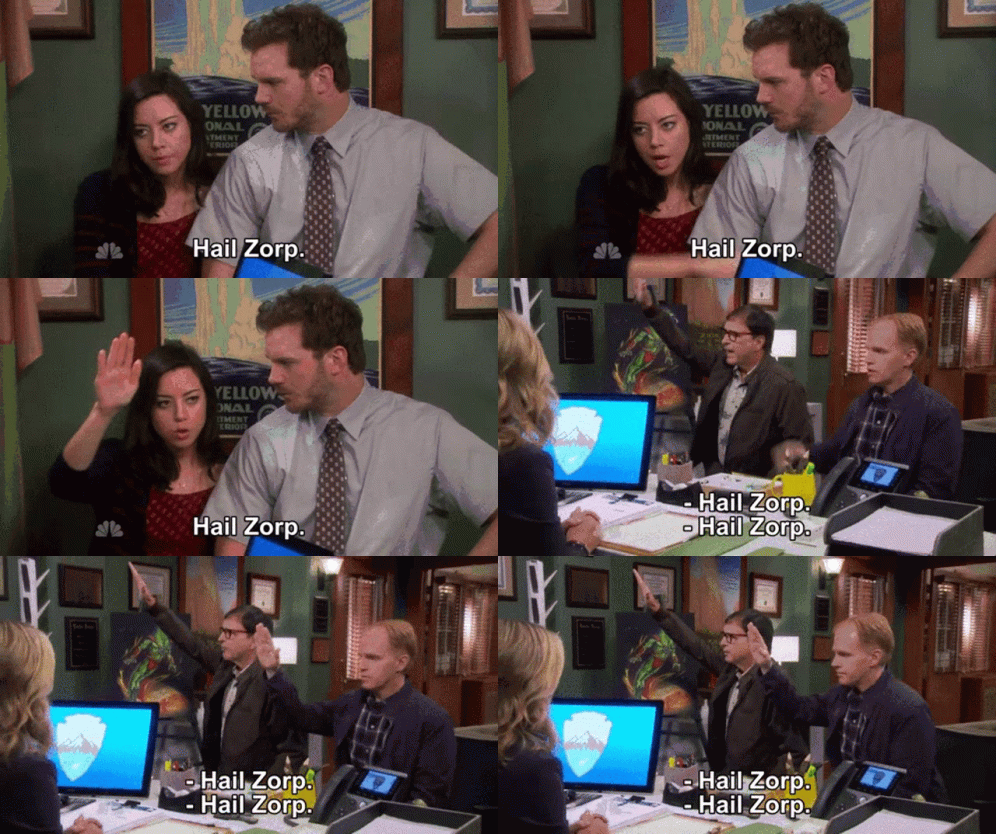
Now only has The Fed paused, but the most recent Fed Dots Plot reveals that Fed open market committee (FOMC) members see The Fed slashing rates over the coming years. Just in time for creepy, demented Grandpa Joe to be reelected as President. In other words, the return of ZORP (zero outrageous rate policy).
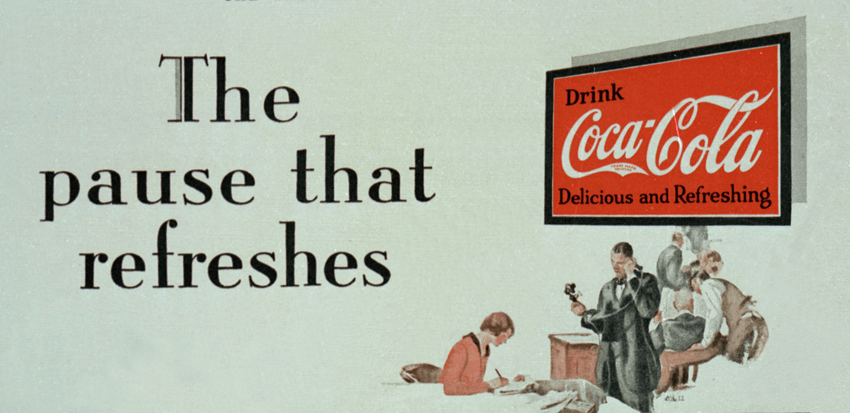
Maybe The Fed should adopt the Coca Cola slogan “The Pause That Refreshes!”
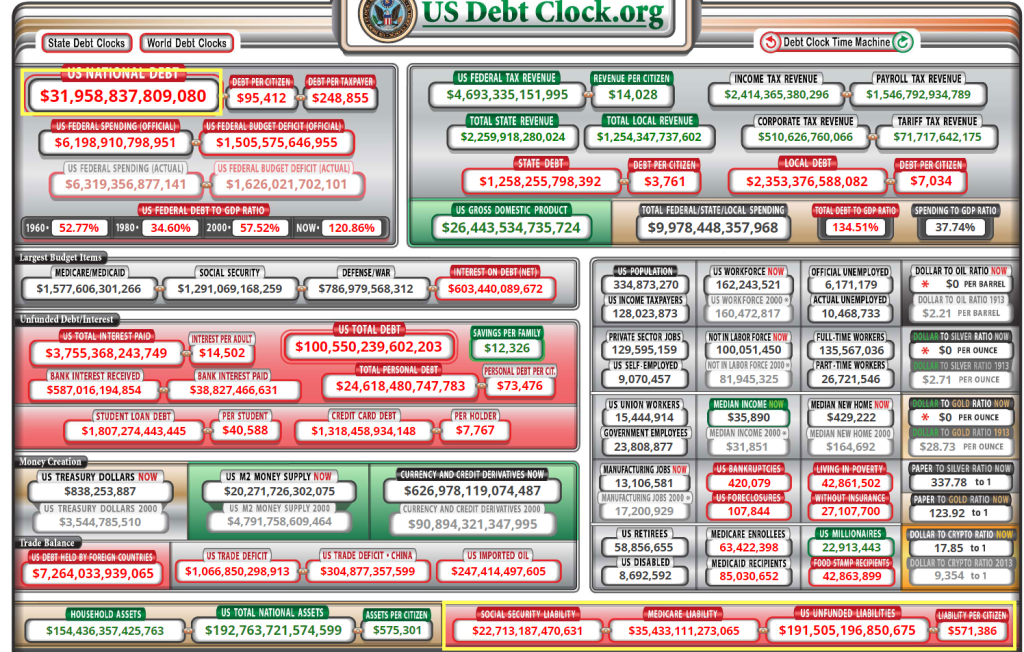
So, since the coronation of King Barack in 2009, US public debt has grown by 200% and just breached $32 trillion. US M2 Money is up 152% since Obama/Biden and The Fed’s Balance sheet is up 275% and M2 Money Velocity is down -30% since Obama/Biden.
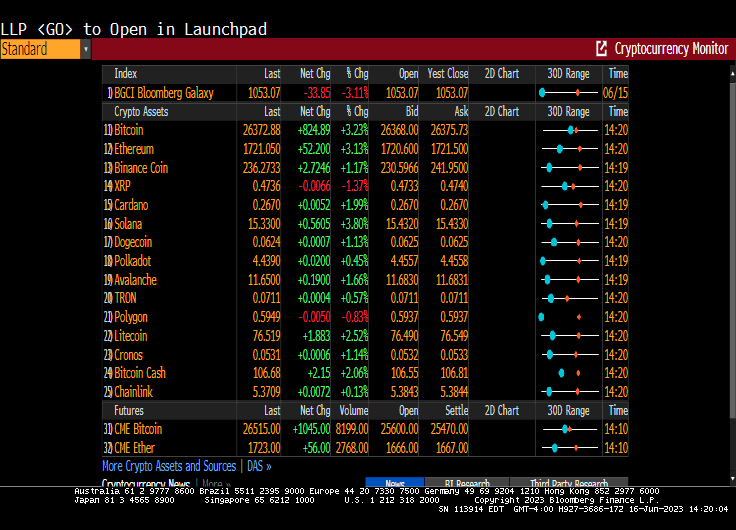
Fridays are always fun in the market. Bitcoin is up 3.23% as The Fed took a pause yesterday.
Note that bitcoin and gold are moving together since March 2023 as the US Dollar deteriorates. And expectations of Fed rate hikes (yellow dashed line) increases.
On the housing front, the University of Michigan Buying Conditions for Houses rose to 50, far below the 142 level before Covid and Gov’t Gone Wild!!
Fed Governor Christopher Waller said Friday headline inflation has been “cut in half” since peaking last year, but prices excluding food and energy (aka, CORE inflation) has barely budged over the last eight or nine months.
“That’s the disturbing thing to me,” Waller said during a question-and-answer session following a speech in Oslo, Norway. “We’re seeing policy rates having some effects on parts of the economy. The labor market is still strong, but core inflation is just not moving, and that’s going to require probably some more tightening to try to get that going down.”
At a separate event Friday, Richmond Fed President Thomas Barkin said inflation remained “too high” and was “stubbornly persistent.”
“I want to reiterate that 2% inflation is our target, and that I am still looking to be convinced of the plausible story that slowing demand returns inflation relatively quickly to that target,” Barkin said in a speech in Ocean City, Maryland. “If coming data doesn’t support that story, I’m comfortable doing more.”
The Federal Open Market Committee paused its series of interest-rate hikes Wednesday, but policymakers projected rates would move higher than previously expected in response to surprisingly persistent price pressures and labor-market strength.
The consumer price index this week showed headline inflation slowed, but core prices excluding food and energy continued to rise at a pace that’s concerning for Fed officials. Employers continued adding jobs at a rapid clip in May, and job openings climbed in April, recent data showed.
Barkin warned that prematurely loosening policy would be a costly mistake.
“I recognize that creates the risk of a more significant slowdown, but the experience of the ’70s provides a clear lesson: If you back off inflation too soon, inflation comes back stronger, requiring the Fed to do even more, with even more damage,” he said. “That’s not a risk I want to take.”
Policy Report
Separately, the Fed released a new report Friday that said tighter US credit conditions following bank failures in March may weigh on growth, and that the extent of additional policy tightening will depend on incoming data.
“The FOMC will determine meeting by meeting the extent of additional policy firming that may be appropriate to return inflation to 2% over time, based on the totality of incoming data and their implications for the outlook for economic activity and inflation,” the Fed said in in its semi-annual report to Congress.
Read More: Fed Says Tighter Credit Conditions to Weigh on US Growth
The Fed report, which provides lawmakers with an update on economic and financial developments and monetary policy, was published on the central bank’s website ahead of Chair Jerome Powell’s testimony before the House Financial Services Committee on June 21. He will appear before the Senate banking panel the following day.
“Evidence suggests that the recent banking-sector stress and related concerns about deposit outflows and funding costs contributed to tightening and expected tightening in lending standards and terms at some banks beyond what these banks would have reported absent the banking-sector stress,” the report said.
61% of Bloomberg terminal respondents (including me, by the way) see Fed hikes leading to recession.
Bond traders are stepping up wagers that the Federal Reserve will steer the US economy into a recession.
Policy-sensitive front-end Treasuries led a selloff Thursday, while longer-date bonds lagged, a day after Fed officials indicated that they’re prepared to raise interest rates by another half-point this year following the first pause in the central bank’s 15-month hiking campaign. That sent the yield-curve inversion, as measured by the gap between two- and 10-year securities, to 95 basis points — a level last sustained in March — and approaching this cycle’s 109-basis-point extreme.
The price action suggests bond traders are skeptical that policymakers can avoid a so-called hard landing as they continue to press the case for higher borrowing costs in an effort to get a handle on inflation that remains more than double their 2% target.
“The Fed runs the risk of solving one policy error of being too easy for too long with another policy error as they ignore the growing credit contraction and persistent losses from higher rates,” said George Goncalves, head of US macro strategy at MUFG. “The catch-22 is that for them to ease, something now has to break or the economy has to crack.”
It’s not just bond traders who are growing concerned.
Sixty-one percent of respondents in a Bloomberg poll of terminal users conducted in the hours after the Federal Open Market Committee decision said tighter monetary policy will ultimately cause a recession at some point in the next year.
“The Fed was clearly trying to send a hawkish message that they are not quite done yet and don’t think they have made enough progress on inflation,” said Michael Cudzil, portfolio manager at Pacific Investment Management Co. “You see curve flattening and rates not pricing in the full extent of hikes, so the thinking is that these hikes may bite and the Fed is closer to the end.”
Officials left their target range for the federal funds rate unchanged at 5% to 5.25% Wednesday, but projected the key rate will rise to 5.6% by the end of this year, implying two more quarter-point increases, up from 5.1% in March. They also revised higher estimates of core inflation for year-end to 3.9%, from 3.6%, owing to what Chair Jerome Powell called surprisingly persistent price pressures.
Still, markets aren’t convinced borrowing costs will rise as high as central bankers project.
The highest rate on swap contracts for future meetings by early Thursday was around 5.32% for both September and November, with July at 5.27%, compared to a current Fed effective rate of 5.08.
The Fed’s aggressive outlook for rate hikes through year-end may be an effort to dash bond-market expectations for cuts in the months ahead, according to Michael de Pass, global head of linear rates at Citadel Securities.
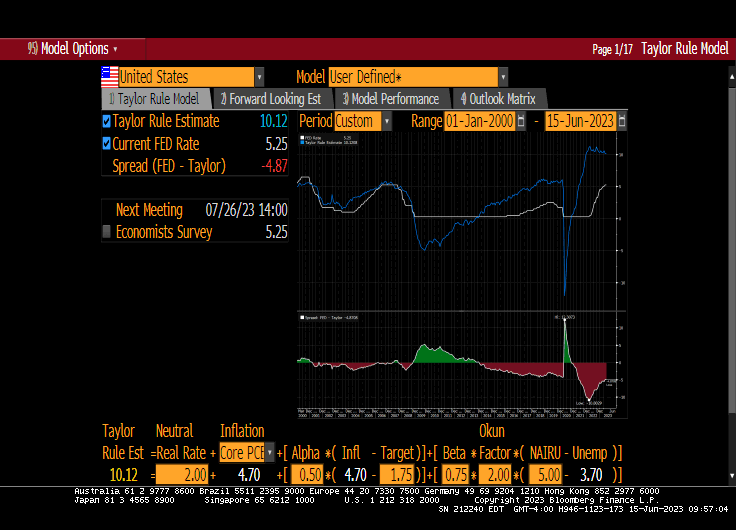
While The Fed paused at their recent FOMC meeting, they are expected to raise their target rate at the July meeting …. then stop. Despite being only a little over 50% of where they should be (10.12%) to cool inflation.
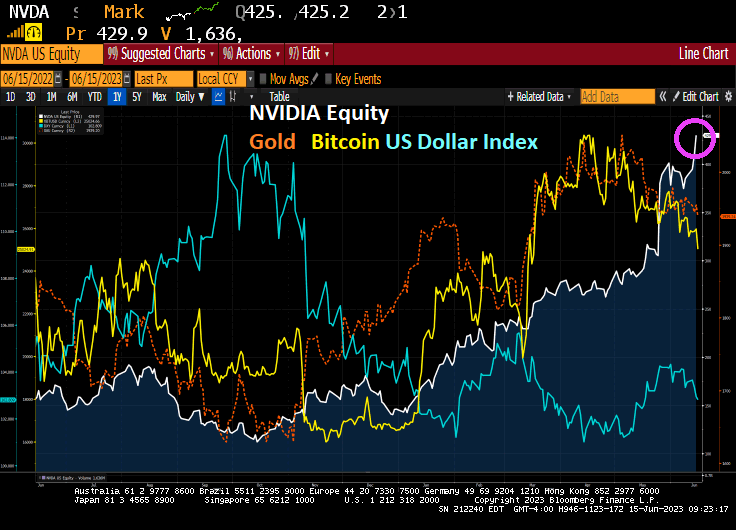
The Artificial intelligence (AI) boom is resulting in Nvidia’s stock soaring to 429.9. At the same time, Bitcoin (yellow), the US Dollar (blue) and Gold (gold) are declining.
Of course, markets are dynamic and gold/silver are likely to start up again along with bitcoin and other cryptos..
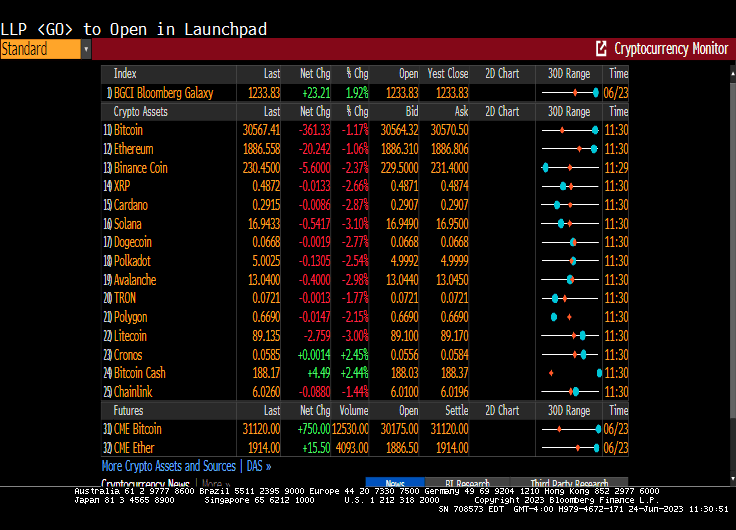
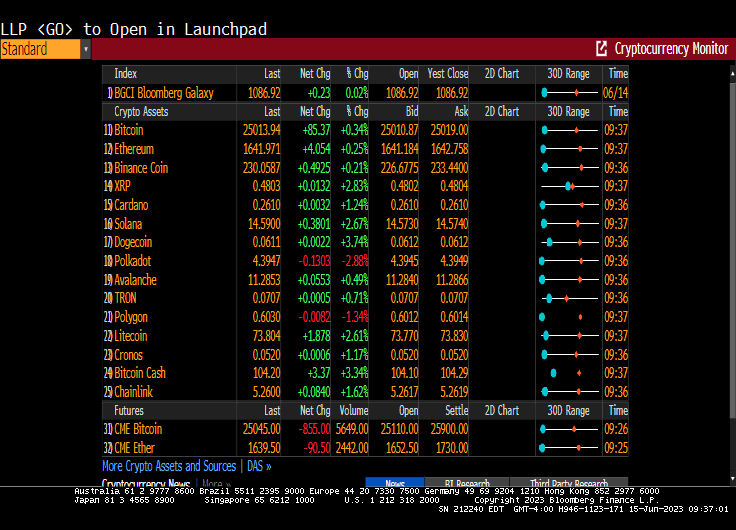
The leading crypto today? Dogecoin!
AI versus no intelligence. I give you Resident Joe Negan.
Now that I know that the US is building a railroad from the Pacific Coast to the Indian Ocean (according to Resident Joe Negan), I feel so much better. /sarc
On the other hand, The Philadelphia Fed’s Business Outlook index for June fell to -13.7.
On the positive side, retail sales surprised to the upside which would ordinarily trigger more rate hikes from The Fed. +0,3% MoM in May versus -0.2% MoM expected.
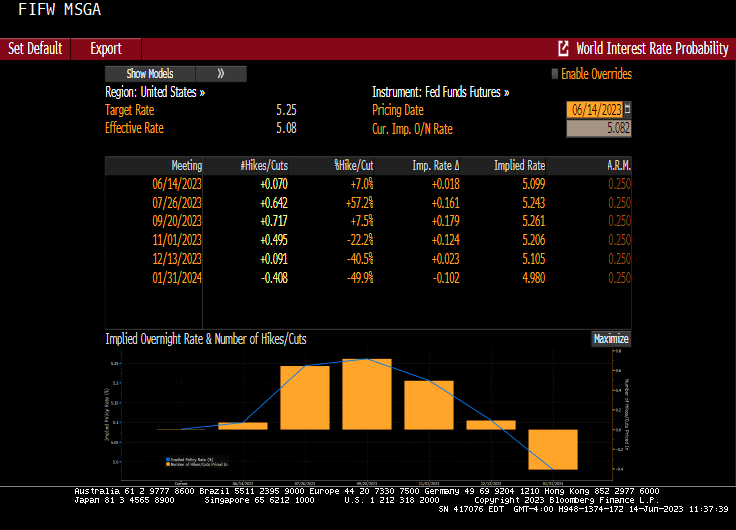
Now Fed Funds Futures are pointing to a rate hike at the July FOMC meeting.
Biden’s “reign of error” is horrific. The inflation caused by Biden’s policies, The Federal Reserve and insane Federal spending has caused mortgage rates to soar 144% since Biden took office.
While The Fed is likely to pause today, but Fed Funds are pricing in a July rate hike.











 Confounded Interest - Anthony B. Sanders
You must be logged in to post a comment.