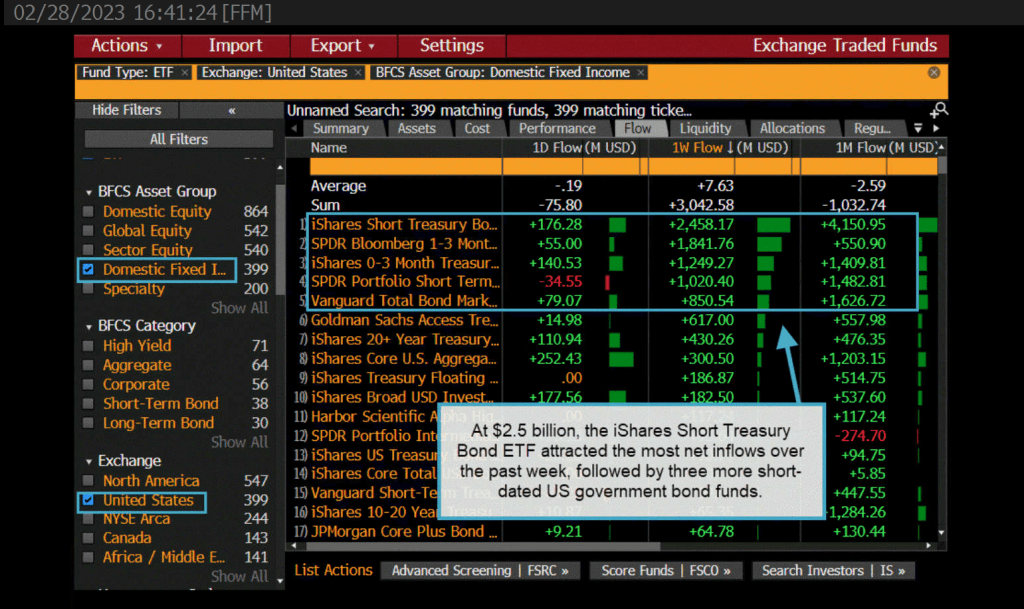
As The Federal Reserve reaffirms their draining of the monetary punch bowl, we are seeing investors flock towards the bond market. Particularly the iShares Short Treasury ETF. $2.5 BILLION to be exact.
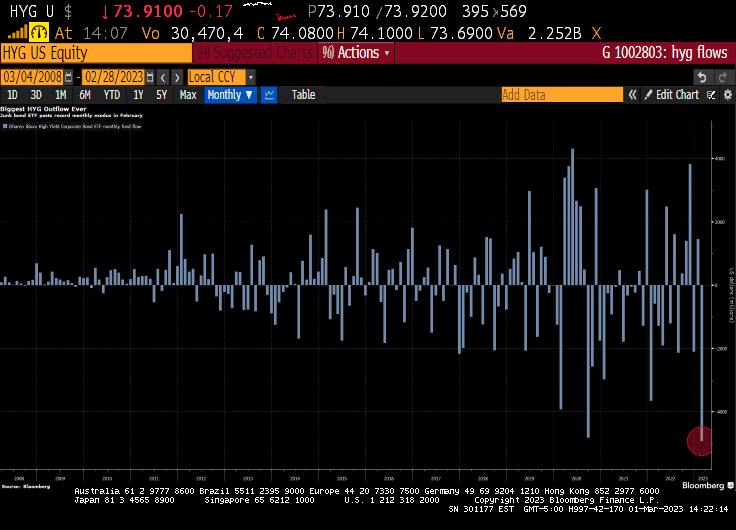
Meanwhile, credit ETFs are hammered by record outflows of almost $12 Billion.
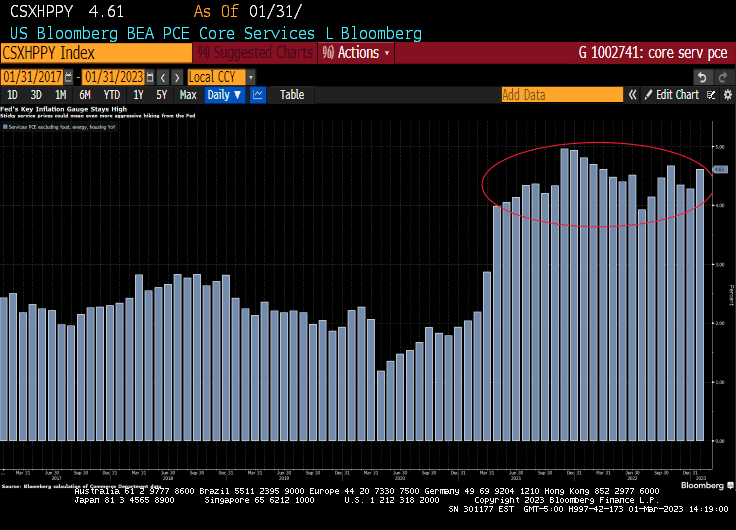
The reason why? Inflation remains elevated which is leading The Fed to keep their foot on the monetary brake pedal.
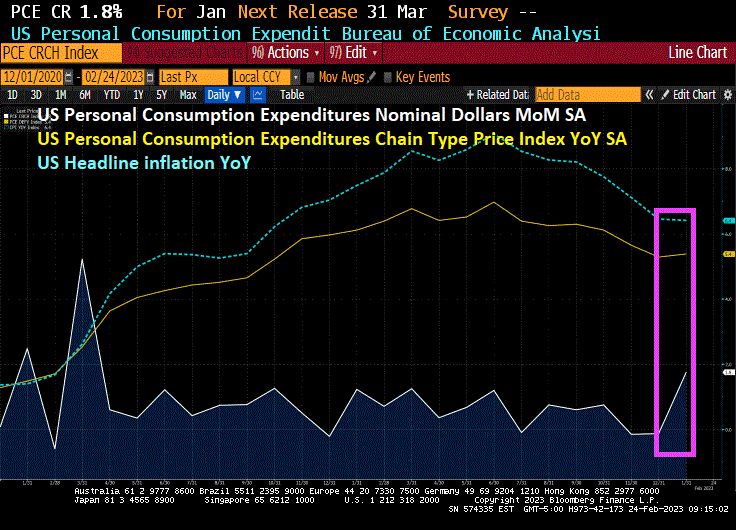
Not really a surprise, but January’s personal spending numbers came in hot at 1.8% MoM. Also, Personal Consumption Expenditures PRICE index (aka, inflation) rose to 5.4% YoY.
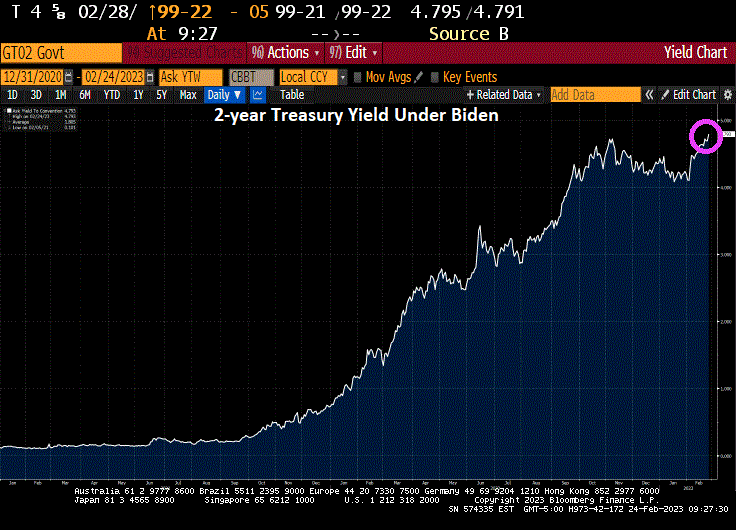
Here comes The Fed! The 2-year Treasury yield rose 10 basis points this morning.
The good news for Americans? The global slowdown is helping to lower US Treasury yields which, in turn, helps to help to lower US mortgages rates. Kind of a perverse “good news” story when you think about it.
The bigger picture is the slowdown caused by 1) a global economic slowdown and 2) the tightening of Fed monetary policy to fight inflation.
Look at the Case-Shiller national home price growth YoY (blue line) against M2 Money growth YoY (green line). Just move the green line to the right and it covers home price growth. Both are slowing down with anticipated Fed rate hikes (red line) now at 50 basis points for the December 14th FOMC meeting. And note that The Fed’s balance sheet (orange line) has barely budged.
Things are getting interesting in DC, to say the least. The US is 100% likely to face a recession in the next 12 months while The Federal Reserve is on its crusade to fight inflation caused by … The Federal Reserve, Biden’s green energy shenanigans and massive, irresponsible Federal spending that even Former Obama economist Lawrence Summers warned would cause inflation. So what will The Fed do? Lower rates and expand their assets purchases to fight the impending recession OR keep tightening to fight Bidenflation? But where we are now is that the fixed-income market could be in big, big trouble.
For months, traders, academics, and other analysts have fretted that the $23.7 trillion Treasuries market might be the source of the next financial crisis. Then last week, U.S. Treasury Secretary Janet Yellen acknowledged concerns about a potential breakdown in the trading of government debt and expressed worry about “a loss of adequate liquidity in the market.” Now, strategists at BofA Securities have identified a list of reasons why U.S. government bonds are exposed to the risk of “large scale forced selling or an external surprise” at a time when the bond market is in need of a reliable group of big buyers.
“We believe the UST market is fragile and potentially one shock away from functioning challenges” arising from either “large scale forced selling or an external surprise,” said BofA strategists Mark Cabana, Ralph Axel and Adarsh Sinha. “A UST breakdown is not our base case, but it is a building tail risk.”
In a note released Thursday, they said “we are unsure where this forced selling might come from,” though they have some ideas. The analysts said they see risks that could arise from mutual-fund outflows, the unwinding of positions held by hedge funds, and the deleveraging of risk-parity strategies that were put in place to help investors diversify risk across assets.
In addition, the events which could surprise bond investors include acute year-end funding stresses; a Democratic sweep of the midterm elections, which is not currently a consensus expectation; and even a shift in the Bank of Japan’s yield curve control policy, according to the BofA strategists.
The BOJ’s yield curve control policy, aimed at keeping the 10-year yield on the country’s government bonds at around zero, is being pushed to a breaking point.
Well. Bidenflation certainly isn’t helping, but Statist Economist and Cheerleader Janet Yellen can’t bring herself to blame green energy policies, rampant Federal spending or irresponsible Federal Reserve policies for the crisis.
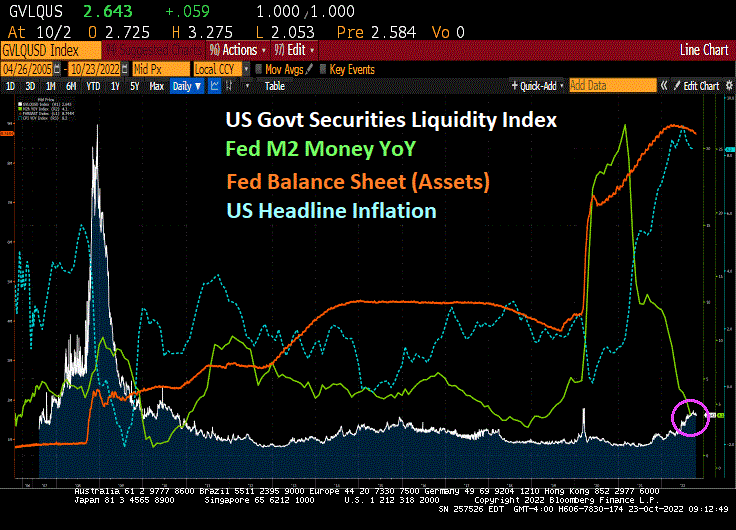
You will note the differences between today and the financial crisis of 2008-2009. The financial crisis gave us a massive surge in government securities liquidity thanks to then Fed Chair Ben Bernanke imitating Japan’s Central Bank and buying US government securities. Fast forward to today and the liquidity index hasn’t budged much since 2010 (except for a little blip around the Covid Fed intervention of early 2020), but we are now seeing near 40-year highs in inflation and a barely declining Fed balance sheet. And M2 Money YoY (mostly commercial bank deposits) are crashing.
I am guessing that The Fed will pivot given that stock futures are way up for Monday. The Dow Jones mini is up 770 points and the S&P 500 mini is up 88.75 points.
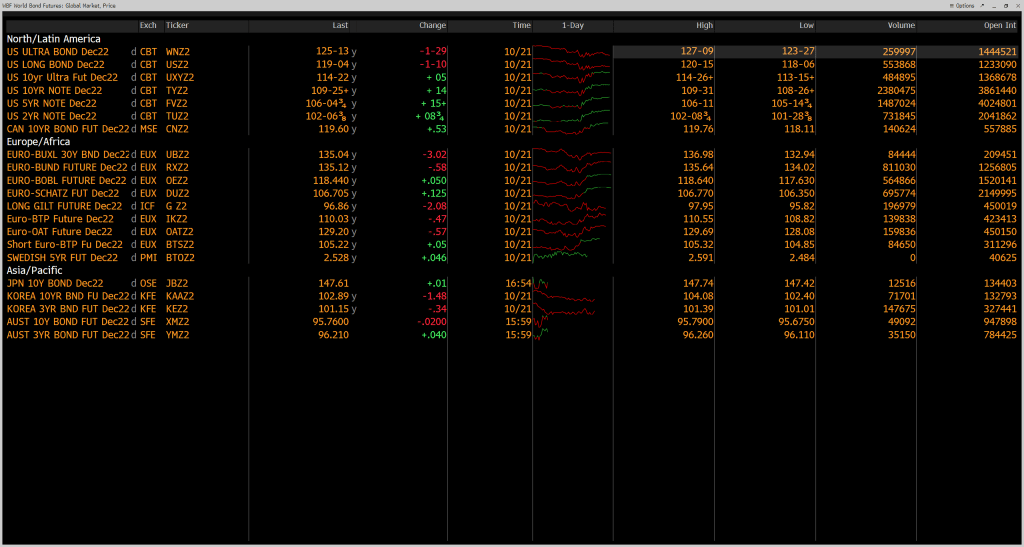
Bond market futures (specifically the US Ultra Bond) is down for Monday, meaning yields will be climbing.
I remember giving a speech at The Brookings Institute in Washington DC. Talk about stranger in a strange land. One person who I was debating got frustrated and said “You are such a … Republican!!!” As if that was the worst slur he could throw at me.
I love to teach, but my students at Chicago, Ohio State and George Mason would fall asleep when I would discuss repurchase and reverse repurchase agreements (or REPOs and Reverse REPOs). But repos and reverse repos are a critical part of the banking system.
In short, the Repo market is a window into what’s going on behind the scenes.
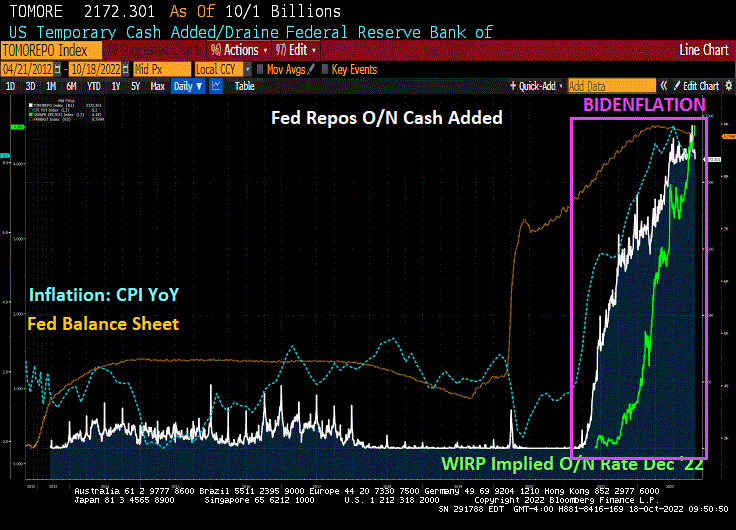
As Bidenflation soars, and The Fed counterattacks, we see Fed’s repo market remains elevated. Note that The Fed’s balance sheet (orange line) is only slowly being reduced.
Right now, the risk lurking in the shadows is Balance Sheet Runoff. The Fed, the markets, the regulators, have limited experience with the Fed shrinking the balance sheet. Bottom line: there’s a risk that Balance Sheet Runoff will breaking something.
The global stock market is up again today, despite Fed tightening and a war in Ukraine. The Dow is up 1.38% and the S&P 500 is up 1.75%.
Likely cause? Rumors that The Fed and other global central banks will pivot sooner than later.
It is likely that The Fed will pivot to prevent a crash and the stock market in pricing in that pivot.
Bernanke, Yellen and Powell are NOT Paul Volcker. In fact, I am coining a new nickname for Fed Chair Jerome Powell: Pivot Powell.
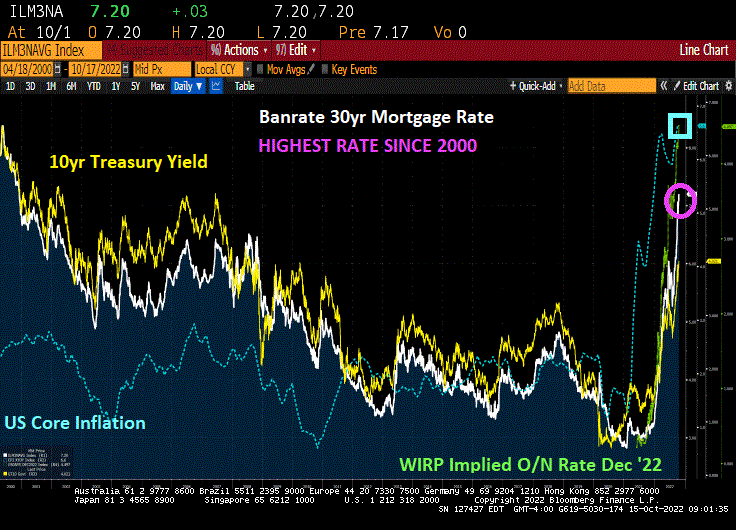
The US 30yr Mortgage rate just hit a new high since 2000 as The Federal Reserve counterattacks the highest core inflation rate (6.60%) since 1982.
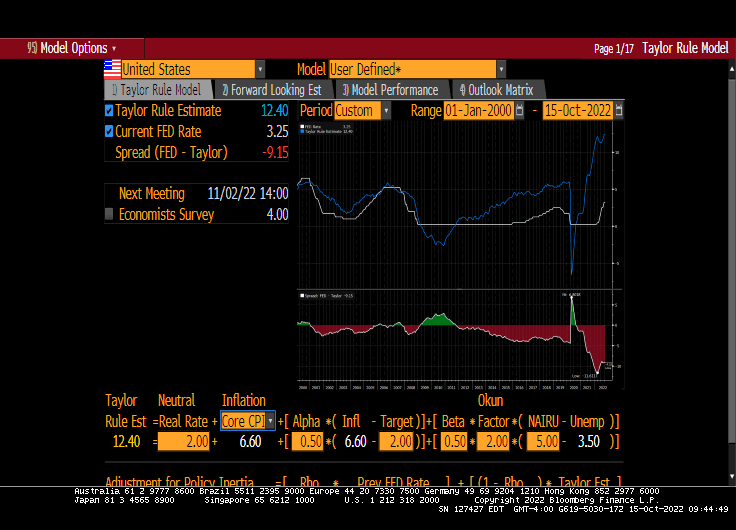
According to the Taylor Rule (which The Fed has chosen to ignore), a 6.60% core inflation rate implied a Fed target rate of 12.40%. Not likely since Fed Funds Futures data points to …
A maximum target rate of 4.963% at the May 2023 FOMC meeting, significantly lower than the needed rate of 12.40%. The Fed is like the world’s worst bar bouncer.
Rather than accepting blame for the horrific inflation rate crushing the American middle class and low wage workers, Biden is twisting the night away.
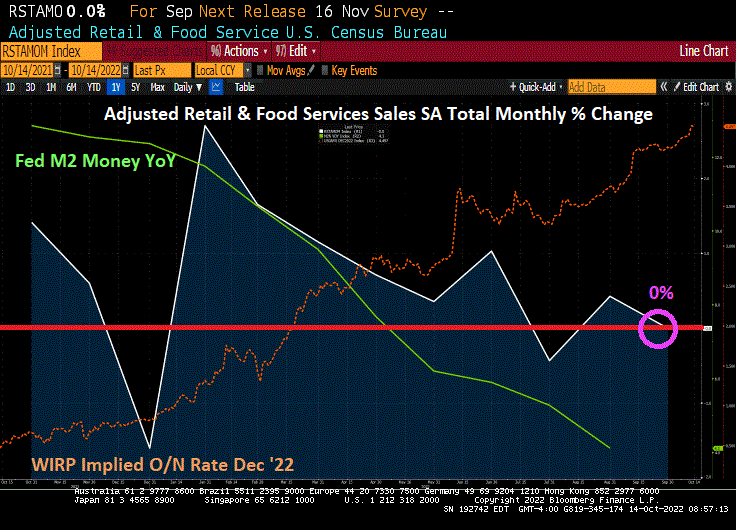
Bidenflation is just killing us. Now rising prices and The Fed’s counterattack are killing retail sales for American consumers.
US retail sales were sluggish last month, suggesting shoppers are becoming more guarded about discretionary purchases in the worst inflationary environment in decades.
The value of overall retail purchases were little changed in September after an upwardly revised 0.4% gain in August, Commerce Department data showed Friday. Excluding gasoline, retail sales were up 0.1%. The figures aren’t adjusted for inflation.
The median estimate in a Bloomberg survey of economists called for a 0.2% advance in retail sales. Seven of 13 retail categories declined last month, according to the report, including a drop in receipts at auto dealers, furniture outlets, sporting goods stores and electronics merchants. The value of sales at gas stations fell 1.4%, reflecting cheaper fuel prices, but they’re now climbing.
At least Export Prices YoY are down below 10%! I hope exporting inflation to the world isn’t Secretary of State Antony Blinken’s idea of good foreign policy.
My favorite headline of the day is “Macron Reminds Biden to Think Before Speaking: “Biden’s Reckless Rhetoric puts World at Risk”“
Well, The Federal Reserve is doing what they wanted … crushing the housing market as they fight inflation.
Today we get our first glimpse of the carnage in the housing market from August. With mortgage rates having soared and homebuilder sentiment tumbling (and permits plunging), it should be no surprise that existing home sales were expected to fall for the 7th straight month (-2.3% MoM vs -5.9% MoM in July).
Somewhat surprisingly, existing home sales ‘only’ fell 0.4% MoM in August (from a revised 5.7% MoM drop in July), but that is still 7 consecutive drops. This left existing home sales down 19.87% YoY.
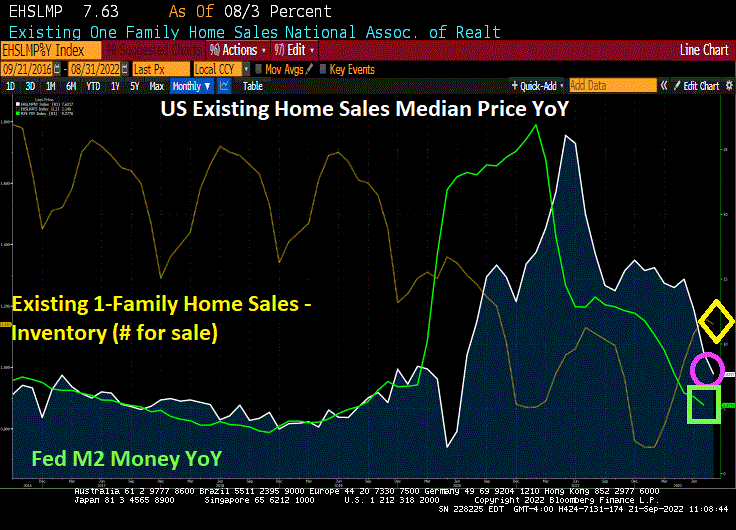
Look at existing home sales YoY as M2 Money Yoy crashes.
Median prices YoY for existing home sales plunged to 7.63% while inventory for sale (yellow line) remains depressed.
The Philadelphia Fed Business Outlook fell almost -10% in September as The Federal Reserve tightens monetary policy.
On a related note, the share of total net worth held by the bottom 50% in the US (red line) was always higher than the share of total net worth held by the top 1% (blue line) … until The Federal Reserve began QE in late 2008. Under Obama, the top 1% surpassed the bottom 50% in terms of share of total net worth. it equalized under Trump and before Covid. Then the massive QE (and surge in Federal spending) to battle Covid seemingly made the rich even richer and the bottom 50% even poorer. This is Biden’s America … massive Federal subsidies to the wealthy, crumbs for the bottom 50%.
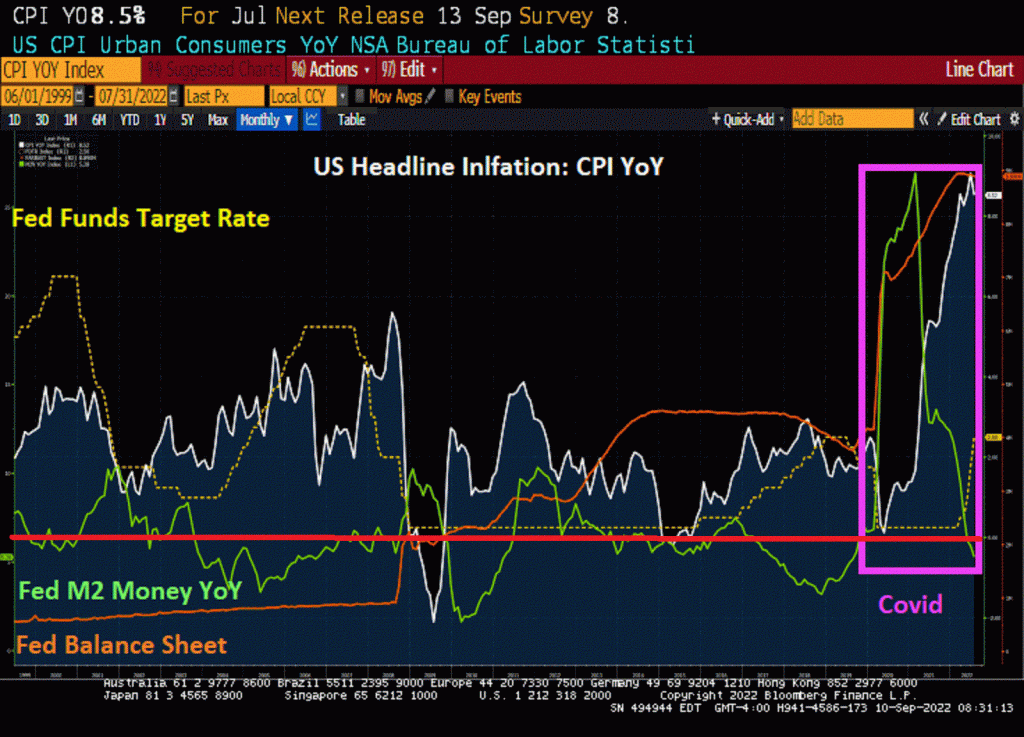
The Federal government reaction to the Covid outbreak in early 2020 included massive monetary stimulus, Federal government spendathons and Biden’s green energy policies have resulted in a sizzling 8.5% inflation rate (update on Monday morning).
The problem is that The Federal Reserve is far behind the inflation curve with their target rate at only 2.5%. And The Fed’s balance sheet remains near $9 TRILLION in assets held.
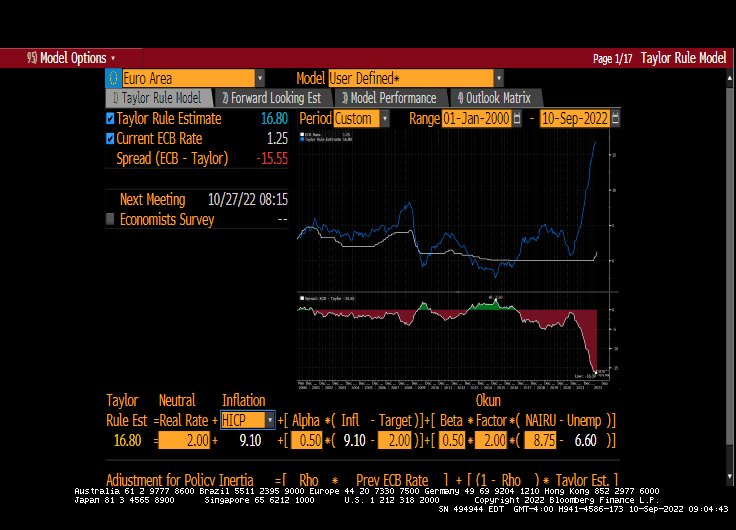
In Euroland, we are seeing a similar problem (Frankfurt, we have a problem!). The Eurozone inflation rate is at 9.1% while their version of The Fed Funds Target rate is only 0.75%, a large catch-up gap.
If we look at the Taylor Rule for the US using headline inflation, we see that The Fed needs to raise their target rate to … 21.72% to crush inflation.
In Euroland, the problem is similar. At 9.10% inflation, the ECB will have to raise their version of The Fed’s target rate to 16.80% to combat inflation. As if that will happen in either the US or Euroland.
On a different note, is it my imagination or does US Democrat Senate candidate from Pennsylvania John Fetterman look like the alien from the flick “Battleship”?

















 Confounded Interest - Anthony B. Sanders
You must be logged in to post a comment.