The Fed Never Died! Deutsche Bank Slumps in Resurgence of European Bank Worries As Fed Balance Sheet Expands … Again

The Federal Reserve never died. In fact, The Fed is growing its balance sheet again. Why? A slowing economy and weakness in the banking sector (thanks to inflation and the Fed trying to get inflation back to 2%.
And the banking fiasco keeps rolling, particularly in Europe where Credit Suisse has been in the news for failing and now my former employer, Deutsche Bank (aka, The Teutonic Titanic).

Deutsche Bank AG became the latest focus of the banking turmoil in Europe as ongoing concern about the industry sent its shares slumping the most in three years and the cost of insuring against default rising.

The bank, which has staged a recovery in recent years after a series of crises, said Friday it will redeem a tier 2 subordinated bond early. Such moves are usually intended to give investors confidence in the strength of the balance sheet, though the share price reaction suggests the message isn’t getting through.

“It is a clear case of the market selling first and asking questions later,” said Paul de la Baume, senior market strategist at FlowBank SA. “Traders do not have the risk appetite to hold positions through the weekend, given the banking risk and what happened last week with Credit Suisse and regulators.”

Deutsche Bank slumped as much as 15%, the biggest decline since the early days of the pandemic in March 2020. It was the worst performer in an index of European bank stocks, which fell as much as 5.7%. Crosstown rival Commerzbank AG, Spain’s Banco de Sabadell SA and France’s Societe Generale SA also saw steep drops.

The widespread declines undermine hopes among authorities that the rescue of Credit Suisse Group AG last weekend would stabilize the broader sector. Central banks from the Federal Reserve to the Bank of England this week raised interest rates once again, keeping their focus on inflation amid hopes that the worst of the financial turmoil was past. 

All week, regulators and company executives have sought to reassure traders about the health of the banking industry. Deutsche Bank management board member Fabrizio Campelli said Thursday that the government-brokered takeover of Credit Suisse by UBS is “no indication” of the state of European banks.

Standard Chartered Plc Chief Executive Bill Winters said Friday that while there are still some issues to be addressed, “it seems that the acute phase of the crisis is done.”

The latest moves in Europe follow losses in US banks, which tumbled Thursday even after Treasury Secretary Janet Yellen told lawmakers that regulators would be prepared for further steps to protect deposits if needed. 

And apparently bank bailouts never died. They just got relabeled.
And on growing banking fears, the 10-year Treasury yield is down -11.7 basis points.

The Fed’s “Doomsday Machine”! Catching Up From Bernanke/Yellen’s “Too Low For Too Long” Policies (US Treasury 2-Year Yields UP 16.1 Basis Points)

I feel like I am watching the Star Trek original series episode “The Doomsday Machine” as former Fed Chair and current US Treasury Secretary effectively just guaranteed ALL US bank deposits. Aka, a massive bank bailout. The episode was about a robot space vehicle that destroy planets … and anything in its path. And if it changed course to destroy something, it gradually returned to its original destructive path. Like The Federal Reseve.

But after a few days of declining Treasury yields because of the mess created by Bernanke/Yellen’s too low for too long policies, and the Biden/Congress insane spending, the US Treasury 2-year yield is up 16.1 basis points.

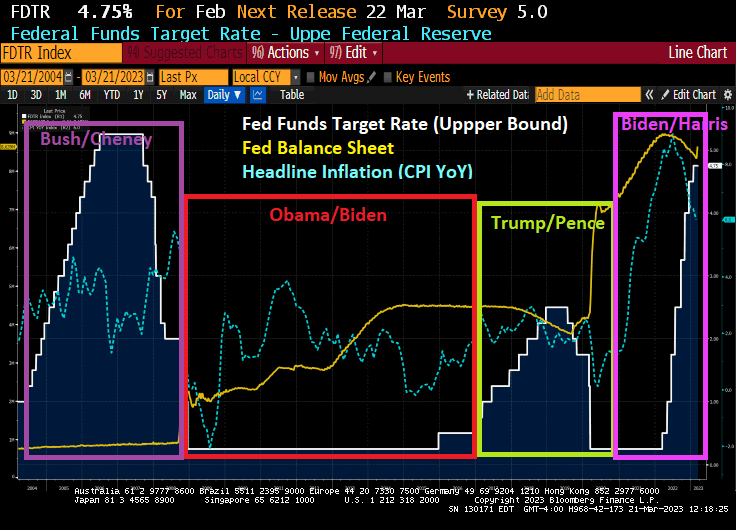
Whether it was politcally motivated to protect Obama/Biden or Obama/Biden’s economic recovery was terrible, The Fed only raised their target rate once before Trump’s election. And then Yellen raised rates like crazy. Only to hand her mess off to Powell who had to drop rates like a rock and massively expand the balance sheet … again … to fight Covid.

The Federal Reserve from a car on Constitution Avenue in Washington DC.

US Existing Home Sales Plunge -22.64% YoY In February As Fed Withdraw … For The Moment (Median Prices Decline -0.2% YoY)

I have good news bad news for you.

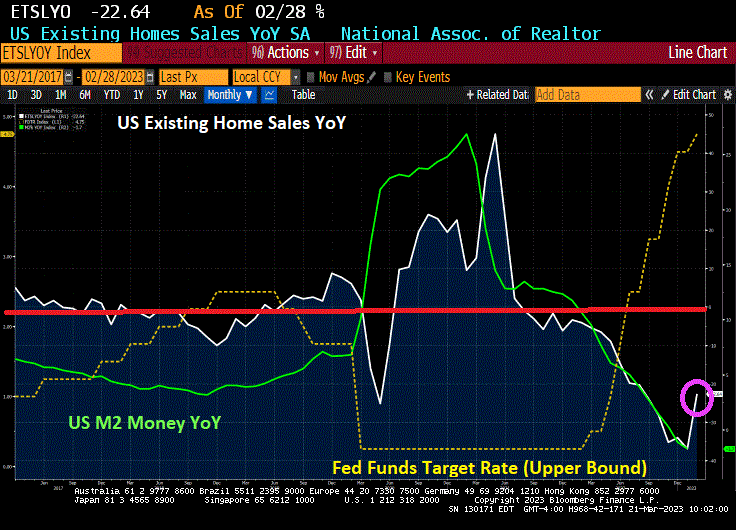
The good news? US existing home sales SOARED in February. Up 14.5% MoM in February to 4.58 million units SAAR sold.

The bad news? On a year-over-year basis, existing home sales plunged -22.64%.

And the median price of existing home sales declined slightly to -0.2% YoY.

Dr. Jill Biden gets a professional clothing designer to rate her wardrobe.

Philly Fed Non-manufacturing Sentiment Index Signals Recession (Down -12.8) As Fed Retreats … For The Moment

It’s not always sunny in Philadelphia.

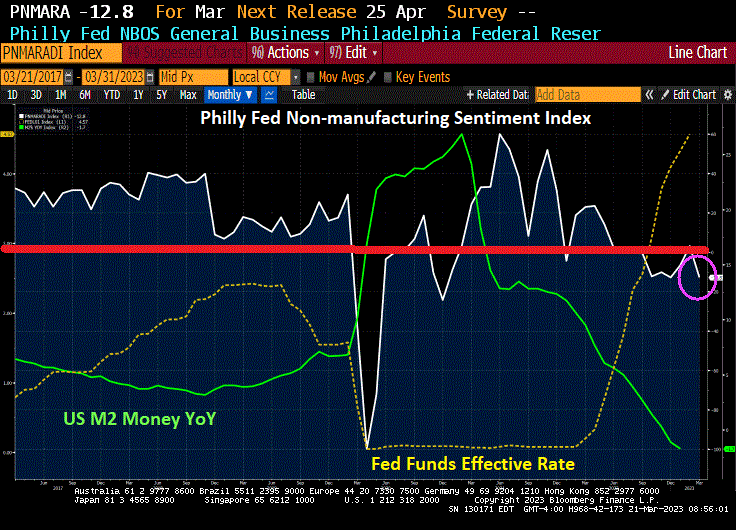
The Philly Fed non-manufacturing sentiment index just tanked to -12.8 as The Federal Reserve removes its Covid-related stimulus.

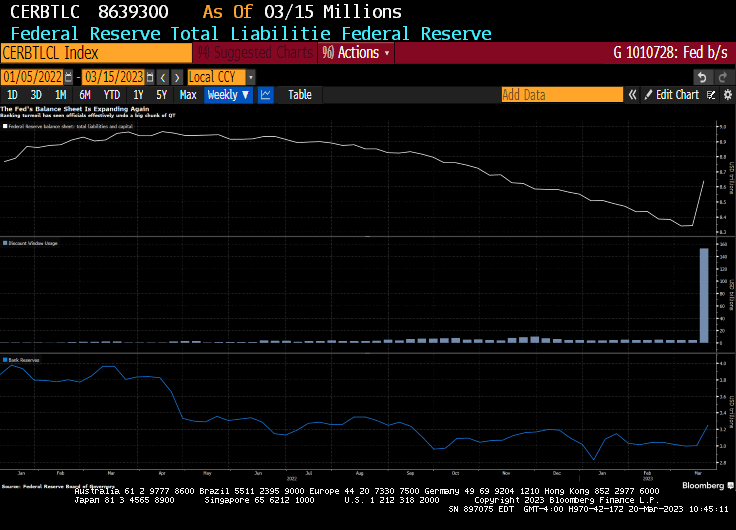
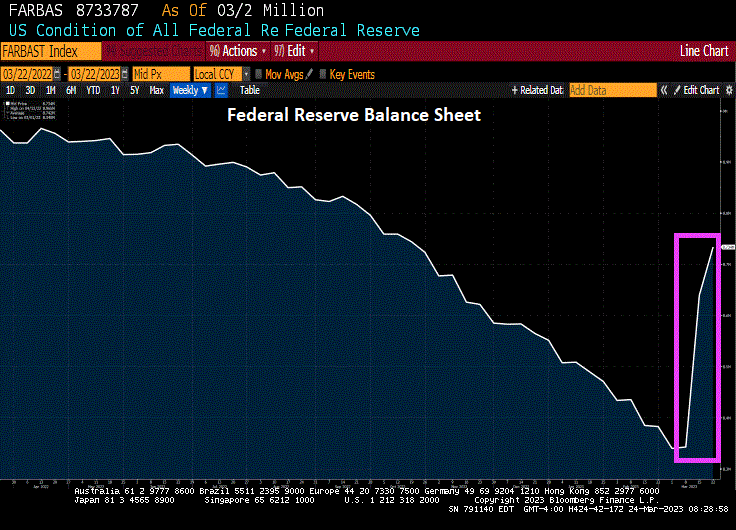
The banking fiasco (SVB, Signature, etc.) has caused The Fed’s balance sheet to expand … again.

And Fed Funds Futures are pricing in a meager 20 basis points increase at tomorrow’s FOMC meeting (some betting on no change, some betting on 25 basis points). Then another rate hike at the May FOMC meeting, then all downhill from there.

Call this the Powell retreat.

Undun! Fed’s $8.6 Trillion Balance Sheet in Focus as Banks Seek Cash (25 BPS Increase At Next Meeting Then DOWN To 3.820% By Jan 2024)

Undun. The Fed’s balance sheet, that is.

For all the focus on whether the Federal Reserve is about to pause its interest-rate hikes, there’s another critical policy decision sure to draw plenty of attention come Wednesday: What the central bank does with its massive pile of bond holdings.

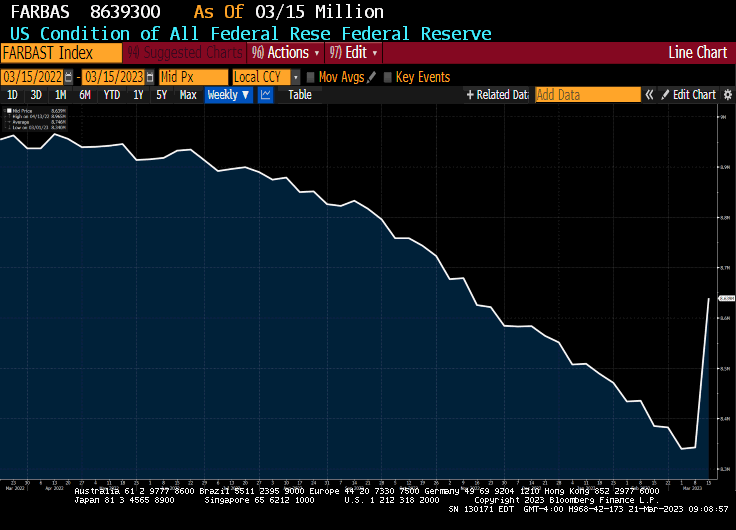
The banking-sector turmoil that has only appeared to deepen, combined with a previous increase in funding pressures, has left financial markets keenly attuned to what the Fed will say about its $8.6 trillion balance sheet. 

Until this month the stash had been shrinking as part of the Fed’s efforts to return it back to pre-pandemic levels. But now it has started to expand again as the Fed acts to bolster the banking system through a slate of emergency lending programs. Its latest step came Sunday, when it moved with other central banks to boost US dollar liquidity.

Some say financial-stability concern may spur policymakers to dial back the runoff of its bond portfolio, a process known as quantitative tightening that’s designed to drain reserves from the system. Still, others argue that even if the Fed does pause its rate increases, the central bank’s overarching goal of taming inflation means it’s unlikely it will signal any shift this week in efforts to shrink the holdings of Treasuries and mortgage-backed debt. The one exception, they note, would be if stress in the banking sector were to become much more severe.

The Fed’s move to backstop US banks “clearly expands the Fed’s balance sheet,” said Subadra Rajappa, head of US rates strategy at Societe Generale SA. If usage of the Fed’s liquidity facilities is “small and contained they probably continue QT, but if the take-up is large then they probably stop as it then starts to raise concerns over reserve scarcity.”

The fate of the Fed’s portfolio is a subject of debate after the collapse of several US lenders led the central bank to create a new emergency backstop, known as the Bank Term Funding Program, which it announced March 12. Banks borrowed $153 billion from the Fed’s discount window — lenders’ traditional liquidity backstop — in the week ended March 15, Fed data show, a record that eclipsed the previous all-time high set during the 2008 financial crisis. They also tapped the new program for $11.9 billion.

The central bank’s various liquidity programs added about $300 billion to the Fed’s balance sheet last week, reversing about half of the reduction the Fed has achieved since the runoff began last June. But some economists say the two programs can work in tandem, with the banking efforts targeting financial stability and QT remaining a steady part of the Fed’s plan to remove the support it provided during the pandemic.

It looks like a 25 basis point increase at the next meeting, then cuts in The Fed Funds Target Rate to 3.820% by January 2024.

The labor market is still tight. So tight, we get this!!

Fed Panics, Announces “Coordinated” Daily US Dollar Swap Lines To Ease Banking Crisis As 2-year Treasury Yield Drops -10 Basis Points (Again)

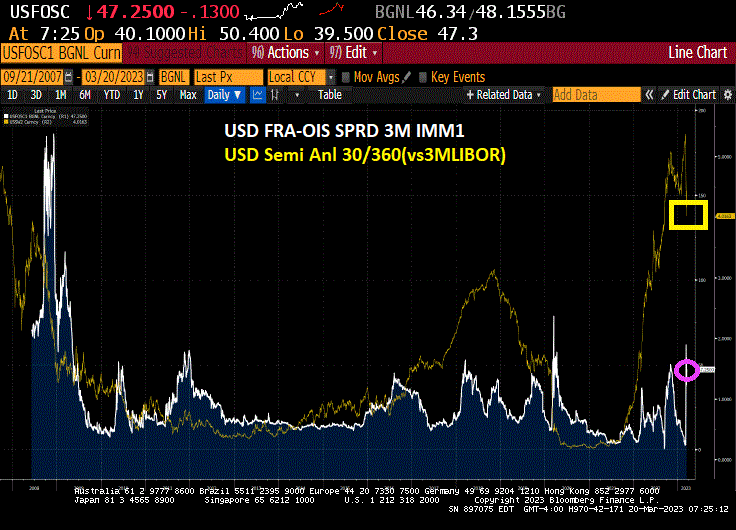
Its the start of a new week after the closure of several US banks (SVP, Signature) and the failure of Credit Suisse. But swaps spreads have calmed down a bit and are no where near the credit crisis highs of late 2008. Or the plain vanilla swap between fixed and variable contracts (white line) has simmered down a bit. BUT was never as high as it was during the financial crisis. Panic by The Fed and FDIC much?

And the 2-year Treasury yield dropped -10 basis points … again.

… and at exactly 5pm the Fed announced “coordinated central bank action to enhance the provision of U.S. dollar liquidity” by opening daily Dollar Swap lines with all major central banks, in a carbon copy repeat of the Fed’s panicked post-covid crisis policy response playbook.

The Bank of Canada, the Bank of England, the Bank of Japan, the European Central Bank, the Federal Reserve, and the Swiss National Bank are today announcing a coordinated action to enhance the provision of liquidity via the standing U.S. dollar liquidity swap line arrangements.

To improve the swap lines’ effectiveness in providing U.S. dollar funding, the central banks currently offering U.S. dollar operations have agreed to increase the frequency of 7-day maturity operations from weekly to daily. These daily operations will commence on Monday, March 20, 2023, and will continue at least through the end of April.

The network of swap lines among these central banks is a set of available standing facilities and serve as an important liquidity backstop to ease strains in global funding markets, thereby helping to mitigate the effects of such strains on the supply of credit to households and businesses.

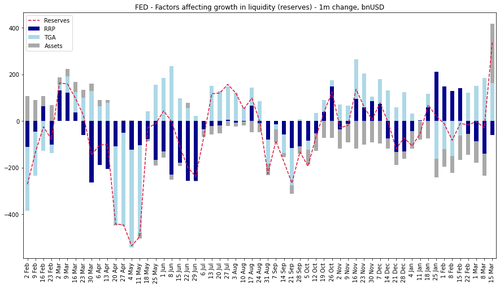
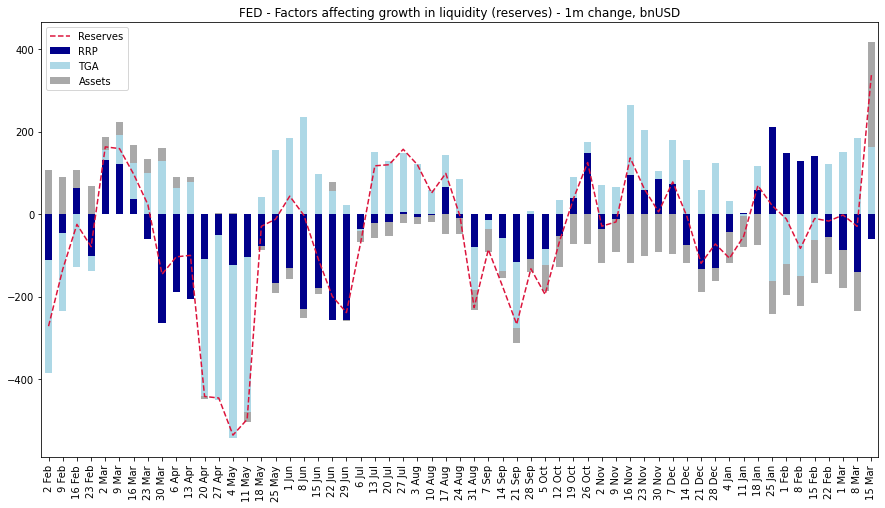
And once the USD swap lines are reopened, the rest of the cavalry follows: rate cuts, QE (the real stuff, not that Discount Window nonsense), etc, etc. In fact, we have already seen a near record surge in reserve injections:

The Fed may as well formalize it now and at least preserve some confidence in the banking sector, even if it means destroying all confidence left in the “inflation fighting” Fed, with all those whose were in charge handing in their resignation for their catastrophic handling of this bank crisis.

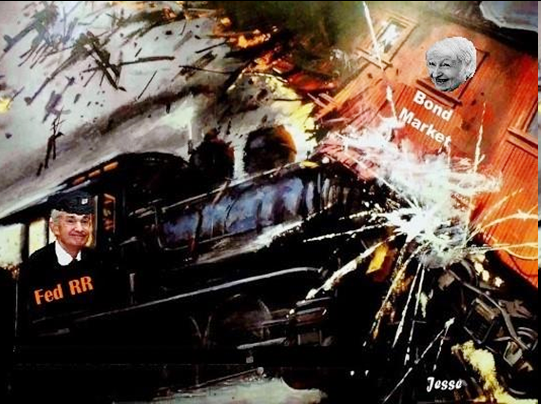
The bank bailout express!

US Leading Economic Indictors Plunge -6.5% YoY In February, Consumer Sentiment Falls (S&P 500 Down -1%)

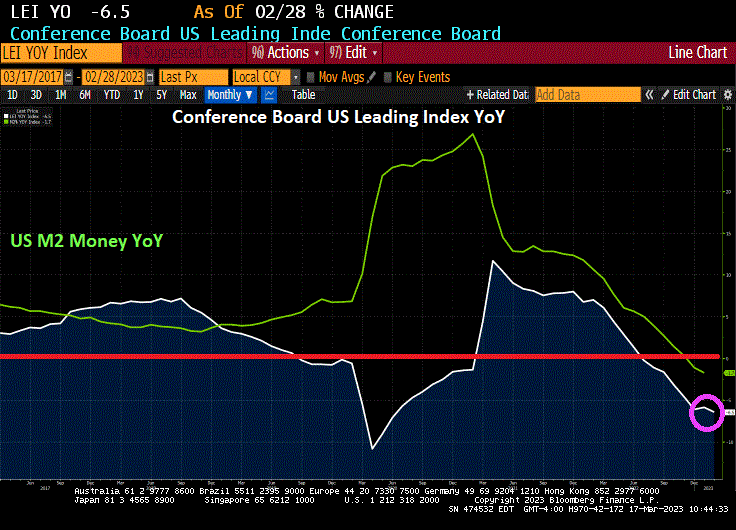
Apparently, the only thing that is strong in the US economy is low-paying jobs. The economy as a whole is sucking wind as we can see with the Conference Board’s Leading Indictors plunging -6.5% Year-over-year (YoY) in February.

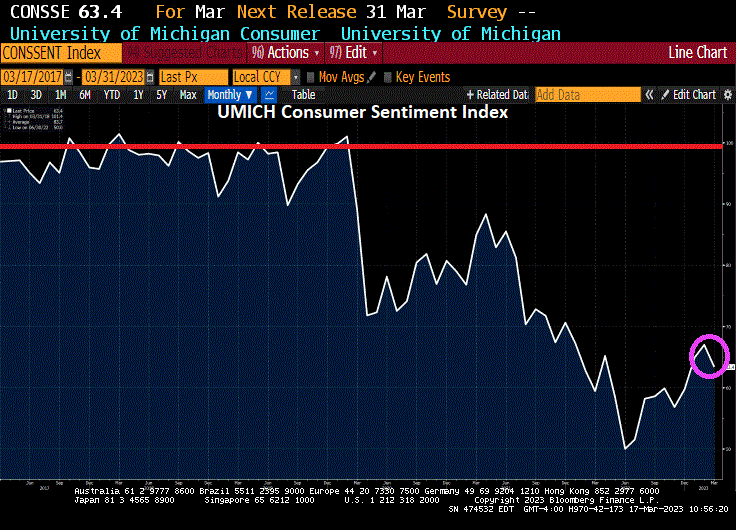
US consumer sentiment fell again … and has not been near 100 (baseline) since Covid struck.

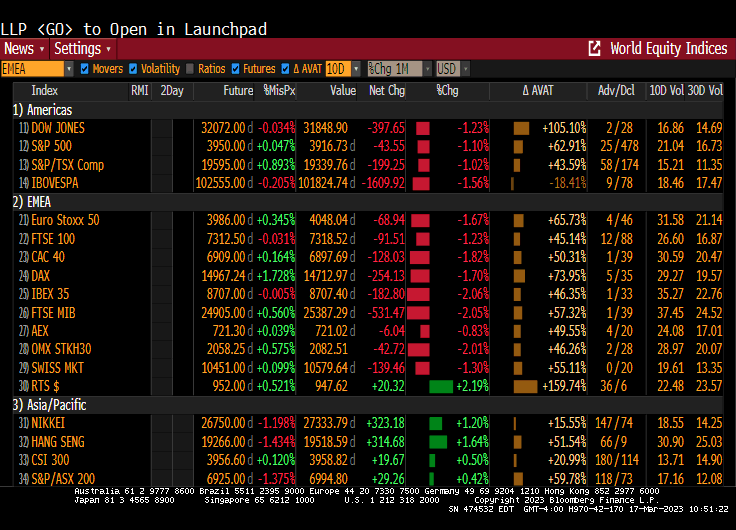
And on the fears that the banking system is not well, the S&P 500 index is down -1.1% this morning.

Argentina Raises Benchmark Leliq Rate By 300 Basis Points To 78% To Fight Inflation Of 102.5% (While Fed INCREASES Balance Sheet To Fight Banking Crisis)

Cry for Argentina! Their central bank boosted its benchmark Leliq rate by 300 basis points to 78%. The monetary authority’s board considered the increase in response to accelerating inflation and after leaving the key rate unchanged for several months. 

Of course, the US Federal Reserve is going in the opposite direction to combat the US banking crisis created by inflation and Yellen’s “Too low for too long” Fed policies.

I am beginning to wonder in Treasury Secretary Janet Yellen and Chicago Mayor Lori Lightfoot are the same person. Both complete Statist screw-ups.

Snookered! US Housing Starts Rise 9.77% In Feburary, Mostly Multifamily At 24%, 1-Unit Starts Only 1.1% (23 Months Of Negative Wage Growth And Still High Home Prices Killing 1-Unit Starts)

Now that The Fed-induced-banking crisis has cooled … for the moment … I can focus on that mysterious positive homebuilder sentiment release from yesterday.

The sentiment was driven by 5+ unit (multifamily) starts which were up 24% in February, which 1-unit (single-family detached) starts were up only 1.10%. 23 consecutive months of NEGATIVE real wage growth and still ultra-high home prices begat lots of multifamily housing starts.

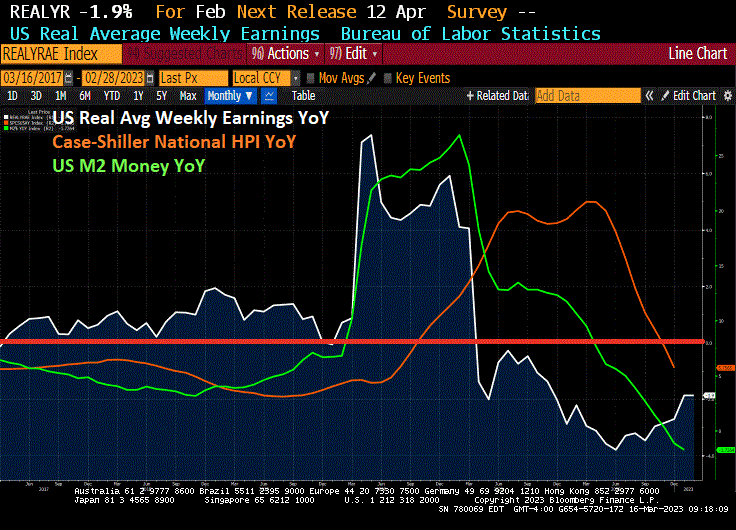
The problem for Americans is the real weekly wage growth has been negative for 23 consecutive weeks while home prices remain high, particularly after the Covid bailout by The Fed.

Here is the rest of the story.

So, 1-unit detached housing is snookered.

Reversal Of Fortune! Fed Expected To Hike Once By 25 BPS, Then Cut Rates By 125 BPS By End Of 2023

Market now expects FED to hike max. one more time by 25bps followed by 125bps cuts in total by end of 2023.

And bond volatility is up the most since … the last financial crisis.

No, not the Klaus von Bulow “Reversal of Fortune.” Just a Fed/Biden murder of the US economy.